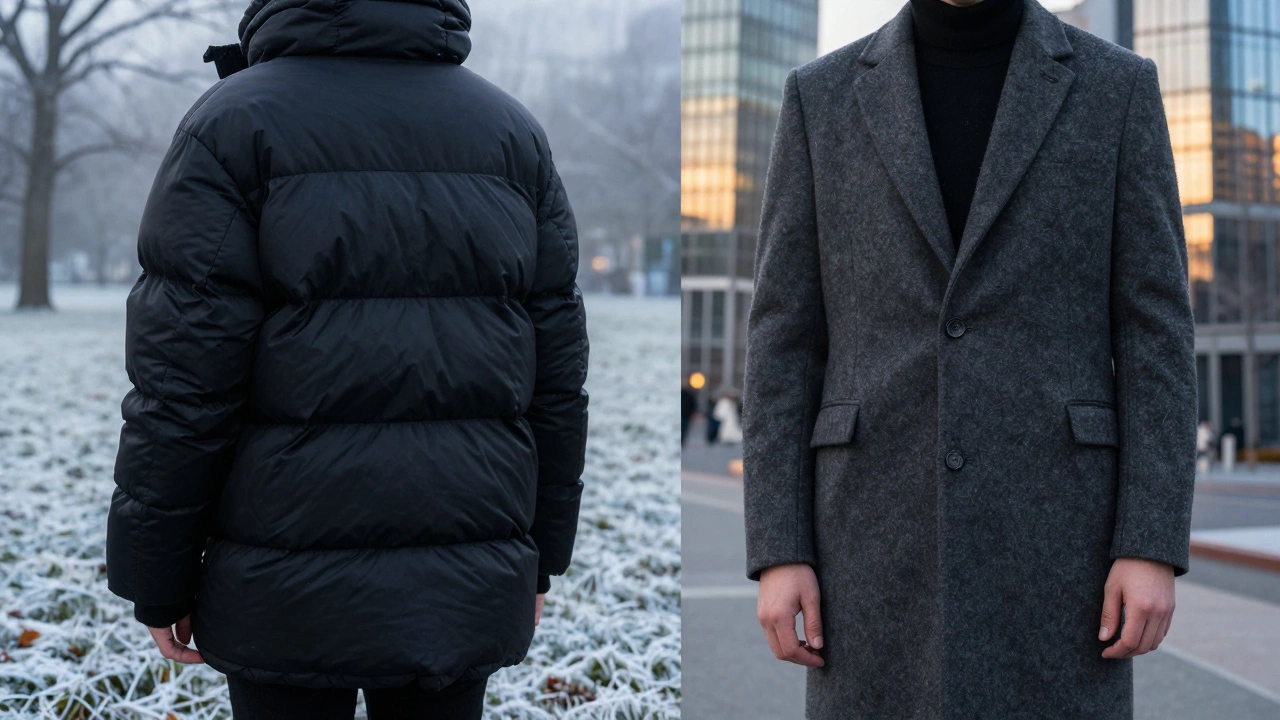
Winter Outerwear Recommendation Tool
Answer a few questions to find out which winter garment is best for your current situation.
1. What is your primary goal?
Maximum Warmth
I want to stay as warm as possible, regardless of the look.
Professional Style
I need to look sharp and maintain a structured silhouette.
Your Perfect Match
- Go for a Puffer: If you prioritize maximum warmth, water resistance, and a casual vibe.
- Go for a Coat: If you need to look professional, attend formal events, or prefer a structured silhouette.
- Best for Extreme Cold: Down-filled puffer jackets.
- Best for City Life: Wool overcoats or trench coats.
The Puffer Jacket: A Warmth Powerhouse
When we talk about a puffer jacket is a quilted coat filled with insulating material, typically down or synthetic fibers, designed to trap heat. Think of it as a wearable sleeping bag. The "puffs" aren't just for looks; those stitched compartments keep the insulation from sliding to the bottom, ensuring you have a consistent layer of warmth around your core.
If you've ever spent time in a place like the Southern Alps or a rainy Auckland winter, you know that wind is the real enemy. Puffer jackets, especially those with Nylon or Polyester shells, act as a shield. They stop the wind from cutting through your clothes and usually handle a light drizzle without soaking through immediately. They are the ultimate choice for anyone who values function over form.
The Classic Coat: Style and Structure
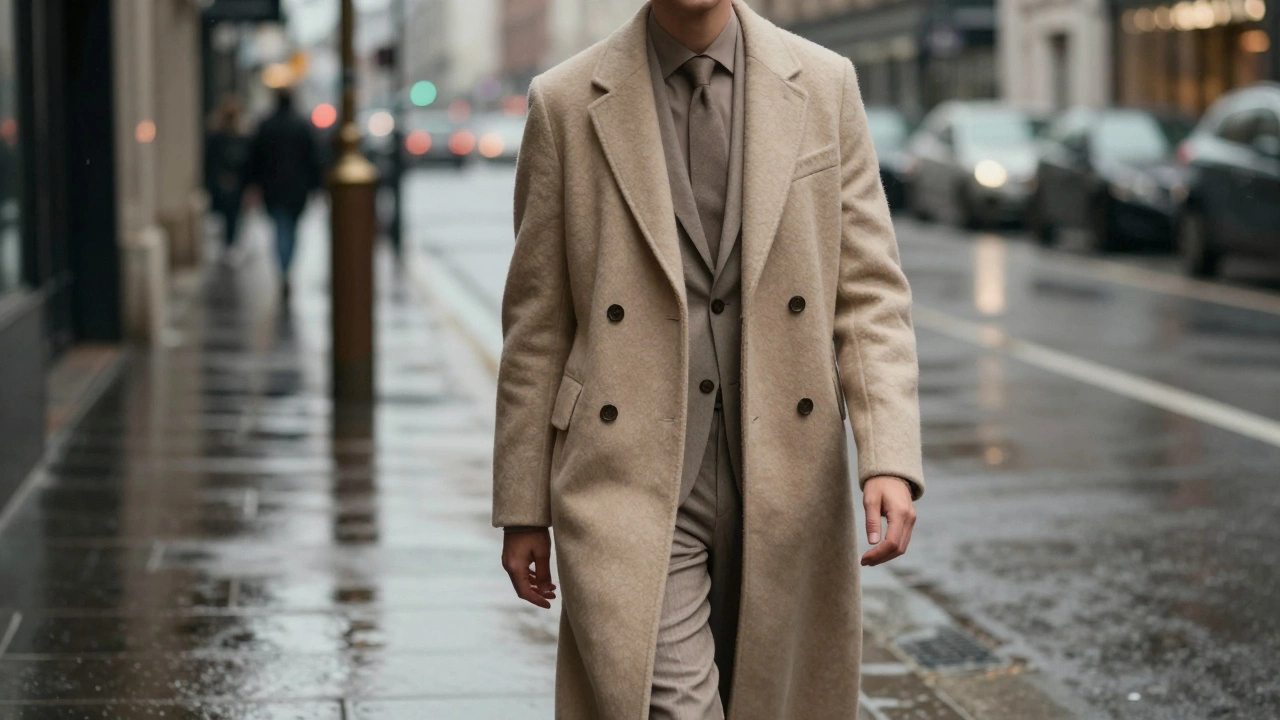
On the other side, we have the traditional overcoat, which is a long garment worn over other clothes, often made from heavier fabrics like wool or cashmere, providing a structured look. Unlike the puffer, a coat doesn't rely on trapped air for warmth. Instead, it uses the density of the fabric to block the cold. A heavy wool coat provides a level of sophistication that a puffer simply can't touch.
Imagine you're heading to a winter wedding or a corporate office. Showing up in a giant, shiny puffer can make you look like you're about to go on an expedition to the North Pole. A well-tailored wool coat, however, fits perfectly over a suit or a dress, maintaining your silhouette while keeping you decent. It's about the "vibe" as much as it is about the temperature.
Warmer vs. More Versatile: The Great Debate
If we're talking strictly about temperature, the puffer jacket wins every single time. Because it uses Down (the fluffy stuff from geese or ducks) or high-tech synthetic fills, it creates an insulating barrier that keeps your body heat locked in. A wool coat can keep you warm, but once the temperature drops below freezing and the wind picks up, you'll find yourself shivering unless you've layered three sweaters underneath.
However, versatility is a different story. A coat often transitions better between different settings. You can wear a trench coat in the autumn, a wool overcoat in the winter, and a light duster in the spring. Puffer jackets are very "all or nothing." You're either in a heavy winter puffer or a light "micro-puffer," but neither really fits the bill for a semi-formal dinner date.
| Feature | Puffer Jacket | Classic Coat (Wool/Overcoat) |
|---|---|---|
| Warmth Level | Extreme (High insulation) | Moderate (Fabric density) |
| Style | Casual/Sporty | Formal/Elegant |
| Weight | Lightweight for its warmth | Heavy due to fabric |
| Weather Resistance | Good (Water-resistant shells) | Poor (Wool absorbs water) |
| Packability | Highly compressible | Not packable |
When to Choose Which? Real-World Scenarios
To make this easier, let's look at how these pieces fit into your actual day. If your morning involves walking the dog in a frosty park or commuting via a drafty train, the puffer is your best friend. It’s easy to throw on, it’s cozy, and you don't have to worry about getting a splash of mud on it.
Now, imagine you're heading to a gallery opening or a business lunch. This is where the overcoat shines. It tells the world you've put thought into your appearance. If you live in a city where the weather is "damp and chilly" rather than "frozen," a heavy wool coat is often enough. But if you're dealing with actual snow or sub-zero temps, you might find yourself wearing a puffer *under* your fancy coat-a secret trick used by people in New York and London to survive the winter while looking posh.
Materials and Maintenance: What You Need to Know
You can't just buy any puffer and expect it to work. Look for the "fill power" if you're buying down. A higher fill power means the down is fluffier and traps more heat. For those who prefer ethics or have allergies, Synthetic Insulation (like Primaloft) is a great alternative. It's slightly heavier but still keeps you warm even if it gets wet, whereas down clumps up and loses its heat when soaked.
Taking care of a classic coat is a different game entirely. Wool is a natural fiber that needs breathing room. You can't just toss a cashmere coat in the washing machine; you'll end up with a garment that fits a doll. Dry cleaning is a must, and using a garment brush to remove lint and hair keeps it looking new. If you're someone who hates high-maintenance clothing, the puffer-which can often be machine-washed on a gentle cycle-is the way to go.
The Hybrid Option: The Puffer Coat
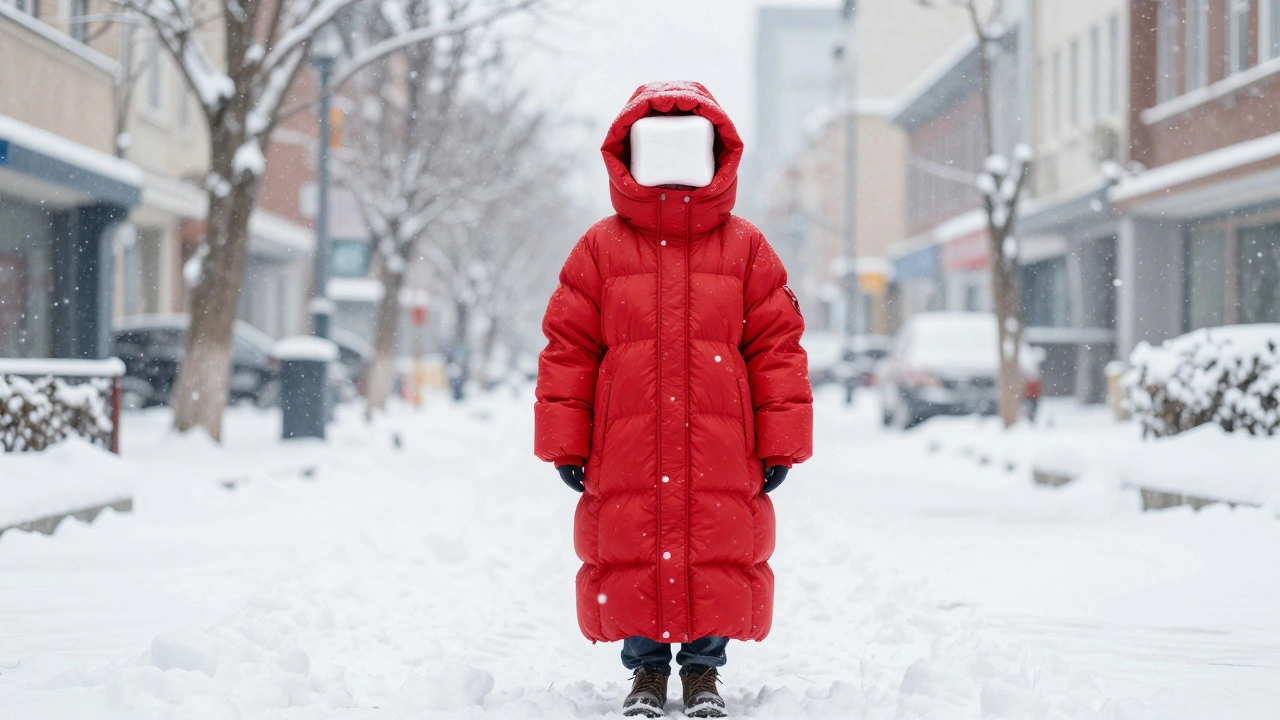
If you're still torn, there's a middle ground: the long puffer coat. These reach down to your knees or ankles, combining the extreme warmth of a puffer with the full-body coverage of an overcoat. They've become incredibly popular in urban fashion over the last few years. While they aren't exactly "formal," they protect your legs from the wind, which is a huge win if you're spending hours outdoors.
The only downside? You look like a giant marshmallow. But when it's -5 degrees Celsius outside, looking like a piece of confectionery is a small price to pay for not feeling your toes go numb. It's the ultimate "I give up on fashion for the sake of survival" choice.
Which is more breathable?
Generally, a wool coat is more breathable than a puffer. Puffer jackets often use synthetic shells (nylon/polyester) that can trap sweat and make you feel clammy if you're walking fast. Wool is a natural fiber that regulates temperature better, though it doesn't block wind as effectively.
Can I wear a puffer jacket to a formal event?
Usually, no. A puffer is considered casual wear. If you're attending a wedding or a corporate gala, an overcoat is the standard. However, for a "smart-casual" winter gathering, a sleek, matte-black puffer might pass, but a wool coat is always the safer, more elegant bet.
Is down warmer than synthetic fill?
Yes, down typically has a higher warmth-to-weight ratio than synthetic insulation. It traps more air and provides more heat for the same amount of material. The catch is that down loses its insulating properties when wet, while synthetic fills continue to provide some warmth even when damp.
How do I stop my wool coat from pilling?
Pilling (those tiny balls of fuzz) happens due to friction. You can remove them using a fabric shaver or a pill comb. To prevent it, avoid rubbing the coat against rough surfaces and store it on a wide, padded hanger to maintain its shape.
Do I need both a coat and a puffer?
For most people living in four-season climates, yes. They serve completely different purposes. The puffer is for utility, warmth, and outdoor activity; the coat is for style, professionalism, and mild winter days. Having both ensures you're prepared for any social or weather scenario.
Final Tips for Your Purchase
Before you hit the "buy" button, think about your daily routine. If you spend 90% of your time in a car or an office and only walk short distances, a wool coat will likely suffice. If you're a commuter who waits for buses in the wind or loves winter hiking, a puffer is non-negotiable.
One pro tip: check the labels for "water-repellent" versus "waterproof." Most puffers are water-repellent, meaning they handle light rain. If you live in a place where it pours, you'll want a dedicated waterproof shell over your puffer, or a treated coat that can actually withstand a storm without becoming a heavy, wet blanket.