
Ask a podiatrist if they like Crocs, and you’ll get a answer that’s not as simple as yes or no. It’s not about fashion. It’s not about trends. It’s about what actually works for feet - day after day, step after step. And when it comes to Crocs, the answer depends on who’s wearing them, why, and how often.
Why Podiatrists Notice Crocs
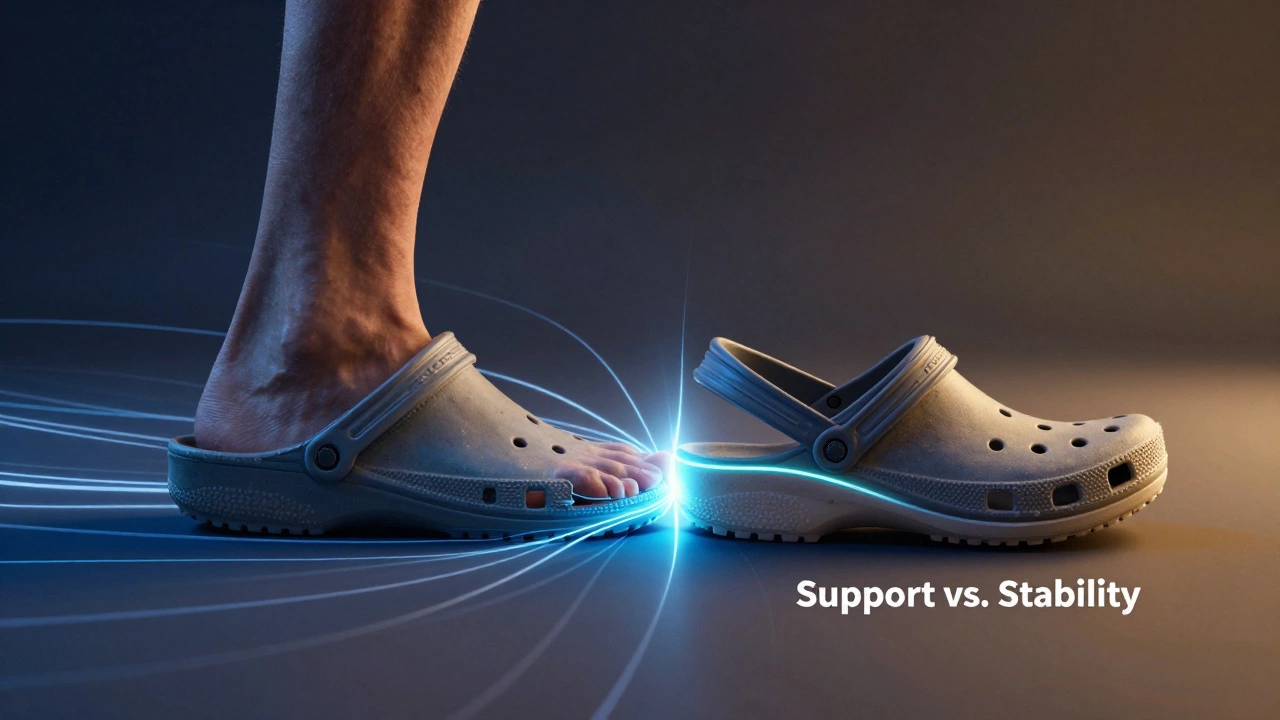
Crocs aren’t just a meme or a fad. They’re a medical device in disguise. The foam material - called Croslite - is lightweight, cushioned, and molds slightly to the foot. That’s why hospitals and clinics handed them out to staff during the pandemic. Nurses on 12-hour shifts, surgeons standing through operations, ER techs running between rooms - many found relief in Crocs when their feet were screaming from hard floors. Podiatrists see the results. Patients come in with plantar fasciitis, bunions, or heel pain. Some say, "I wear Crocs all day and my pain is better." Others say, "I wore them for a week and now my arches feel weak." The difference? Support versus stability.The Good: Where Crocs Actually Help
There are real situations where Crocs are a smart choice:- Post-surgery recovery: After foot or ankle surgery, patients need shoes that don’t press on healing tissue. Crocs open wide and fit over bandages.
- Diabetic foot care: People with neuropathy can’t feel pressure points. Crocs reduce the risk of ulcers because they’re roomy and don’t rub.
- Temporary relief: For someone with acute heel pain, Crocs give immediate cushioning while they wait for custom orthotics.
- Waterproof needs: Gardeners, cleaners, or pool staff benefit from the easy-to-clean, non-slip soles.
The Bad: Where Crocs Fall Short
Here’s what podiatrists worry about:- No heel support: The back of the shoe collapses. That means your Achilles tendon and calf muscles work harder to stabilize your foot. Over time, that leads to tightness and strain.
- No arch control: The flat, wide footbed doesn’t correct overpronation. People with flat feet or high arches end up compensating - which can cause knee or hip pain.
- Too much flexibility: A shoe should guide your foot, not let it flop around. Crocs don’t provide the resistance your foot needs to build strength.
- Worn-out soles: Croslite breaks down faster than EVA foam. After 6-8 months of daily use, the cushioning flattens. You’re walking on a pancake.
The Middle Ground: Modified Crocs Are Better
The real story isn’t "Crocs are good" or "Crocs are bad." It’s "Crocs can be better." Many podiatrists recommend Crocs with inserts. A firm, contoured orthotic - like those from Superfeet or Sole - adds the arch support and heel cupping the original shoe lacks. Suddenly, the same shoe becomes functional for longer walks or standing jobs. There’s also the Crocs Specialist Collection. These models have a heel counter, a strap that locks the foot in, and a more structured sole. They’re not fashion-forward, but they’re designed for medical and industrial use. Some clinics actually prescribe them. And don’t forget the Crocs Rx line - made in partnership with podiatrists. These have removable insoles, extra depth, and a rocker sole to reduce pressure on the ball of the foot. They’re sold through medical suppliers, not retail stores. You won’t find them on Amazon. But if you have diabetes or arthritis, they’re worth asking your doctor about.Who Should Avoid Crocs Completely?
Not everyone benefits. Avoid Crocs if you:- Have severe flat feet or overpronation
- Are recovering from a stress fracture
- Have Achilles tendonitis
- Walk more than 5 miles a day
- Are a child or teenager still growing
What Podiatrists Actually Recommend Instead
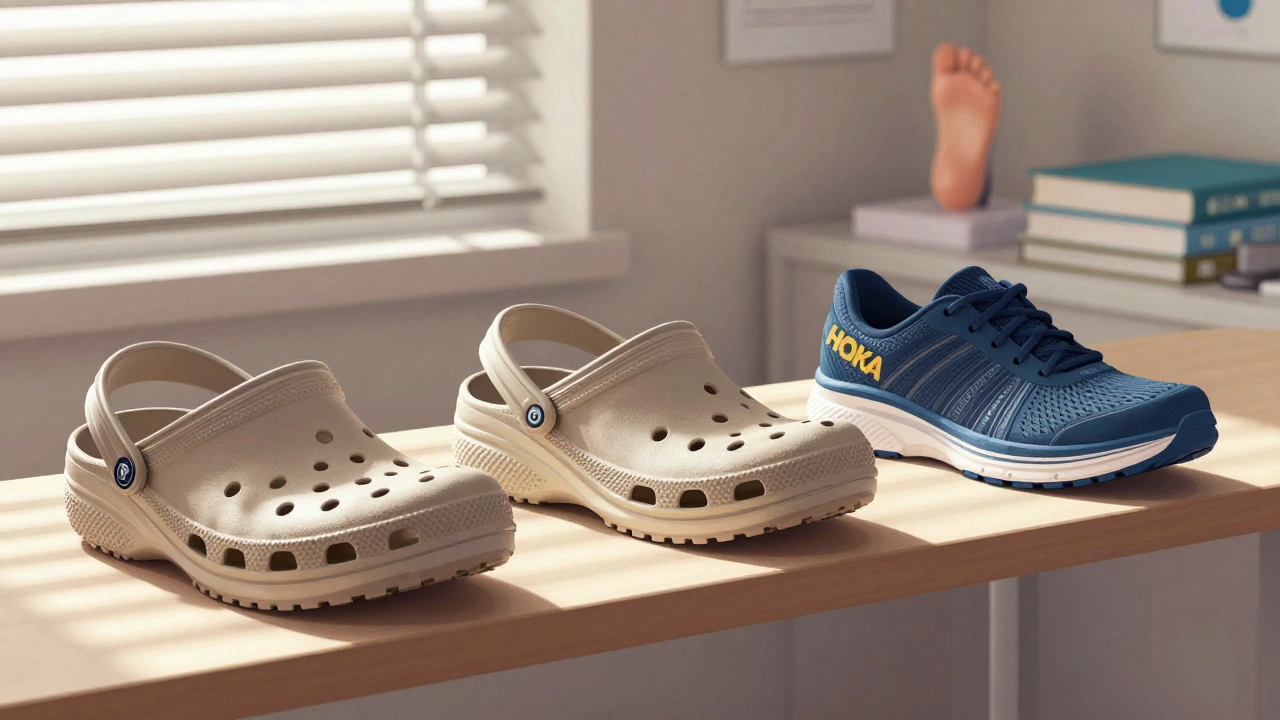
If you want the comfort of Crocs without the downsides, here’s what works better:| Feature | Crocs (Standard) | Recommended Alternatives |
|---|---|---|
| Heel Support | None - collapses | Structured heel counter (e.g., Brooks Ghost, Hoka Bondi) |
| Arch Support | Flat, no contour | Medium to high arch support (e.g., New Balance 860, Asics Gel-Kayano) |
| Sole Rigidity | Too flexible | Midfoot stability (e.g., Saucony Guide, Nike Air Zoom Pegasus) |
| Weight | Very light (150-200g) | Light but supportive (220-280g) |
| Durability | 6-12 months | 3-5 years with daily use |
Real Talk: It’s About Use, Not Brand
Podiatrists don’t hate Crocs. They hate when people treat them like everyday shoes. If you wear them for 10 minutes to grab the mail? Fine. For a 4-hour shift at the hospital? Maybe with inserts. For a 10-kilometer walk? No. The same way you wouldn’t wear flip-flops to hike a mountain, you shouldn’t wear Crocs to run errands all day. It’s not about the brand. It’s about matching the shoe to the task. In New Zealand, where wet weather and concrete floors are common, I’ve seen more patients switch from Crocs to waterproof clogs with arch support - like the Birkenstock Arizona or Aetrex LUNA. They’re still easy to slip on, still washable, but they actually hold the foot in place.Final Answer: Do Podiatrists Like Crocs?
They like them for the right person, in the right situation, for the right amount of time. Not as a daily driver. Not as a fashion statement. But as a temporary solution, a post-op aid, or a backup shoe with the right modifications. If you’re thinking of buying Crocs because you want comfort - go ahead. But buy the ones with the heel strap. Add a real orthotic. And don’t wear them to work unless you’re standing still or walking slowly. Feet don’t care about trends. They care about support. And if you want your feet to last, so should your shoes.Are Crocs good for plantar fasciitis?
Crocs can help with plantar fasciitis if they’re worn short-term and paired with a firm orthotic insert. The cushioning reduces impact, but the lack of heel support means they won’t fix the problem. For long-term relief, shoes with arch support and a rocker sole - like Hoka or Brooks - are far more effective.
Can kids wear Crocs every day?
No. Children’s feet are still developing, and Crocs don’t provide the heel stability or arch support needed for proper growth. Daily wear can lead to foot weakness, poor gait, and even alignment issues in the knees or hips. Stick to supportive sneakers with a firm heel counter for school and play.
Do podiatrists recommend Crocs for diabetics?
Yes - but only specific models. The Crocs Rx line, designed with input from podiatrists, is often recommended for diabetic patients because of its wide toe box, seamless interior, and removable insole. Regular Crocs can cause pressure sores and blisters, especially if worn without socks. Always check with your podiatrist before choosing any shoe for diabetic foot care.
Why do nurses wear Crocs?
Nurses wear Crocs because they’re lightweight, easy to clean, and cushioned - ideal for long shifts on hard hospital floors. Many use them as a temporary solution while waiting for custom orthotics or during recovery from foot injuries. But most switch to supportive clogs or athletic shoes once their feet stabilize.
Are Crocs better than flip-flops?
Yes, but only slightly. Flip-flops offer zero heel support and require toe gripping to stay on, which strains foot muscles. Crocs at least have a closed heel and more cushioning. But neither is a substitute for a supportive shoe if you’re on your feet for hours. For short trips, Crocs are the lesser evil.