School Uniform Impact Estimator
Adjust the sliders below to reflect your specific situation or hypothetical scenario. The tool calculates a weighted score indicating the likelihood of positive outcomes.
Analysis Result
Please calculate to see the detailed breakdown.
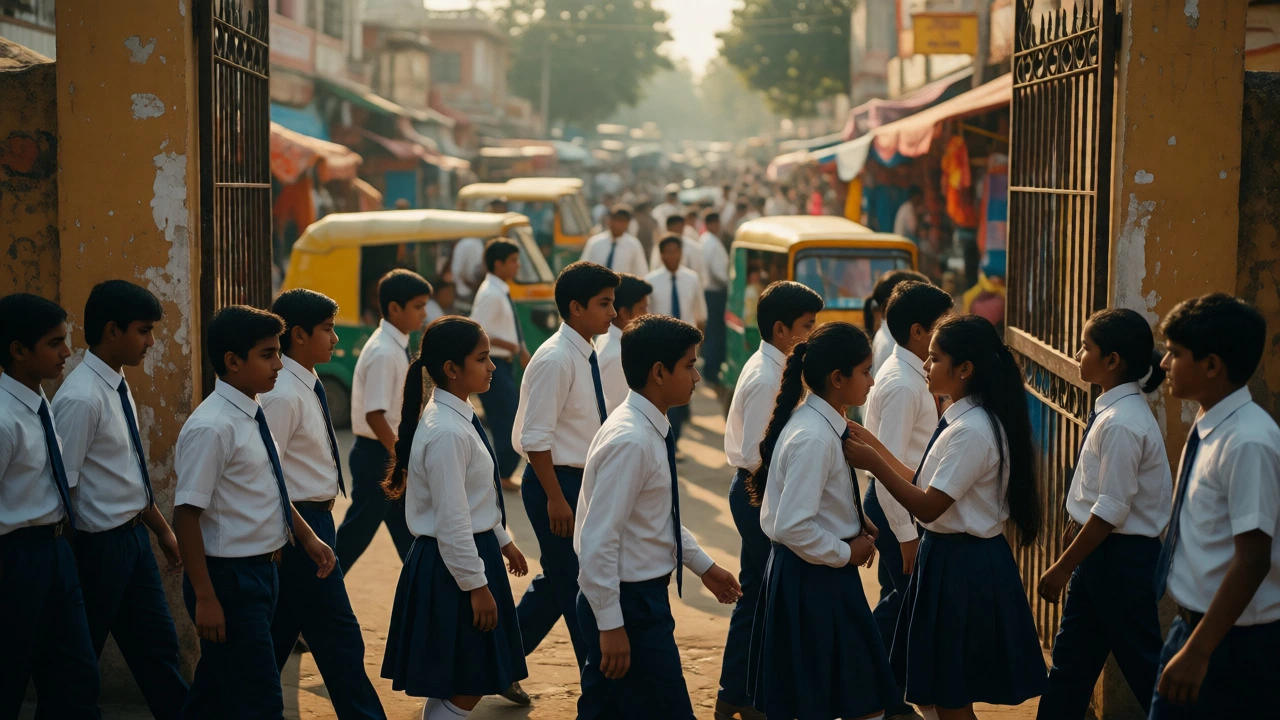
You drop your kid off at the gate. They’re wearing a crisp white shirt and navy trousers, looking like a miniature professional. You feel a pang of pride-or maybe just relief that you don’t have to argue about jeans with holes. But does that outfit actually make them behave better? It’s a question parents, teachers, and administrators have debated for decades. The short answer is: it’s complicated. While many schools swear by school uniforms as a tool for discipline, the link between fabric and conduct isn’t as straightforward as a straight pleat.
The Promise of Order Through Attire
Schools adopt uniform policies for specific reasons. It’s rarely just about aesthetics. Administrators often point to reduced peer pressure and fewer distractions. When everyone looks the same, the hierarchy based on brand labels or trendy cuts supposedly flattens out. This concept relies on the idea that visual equality reduces social friction. If no one can judge your shoes, maybe they won’t pick on you for them. And if they aren’t picking on you, maybe they aren’t acting out.
This logic appeals to our desire for control. Schools are chaotic environments. Thousands of young people, hormones raging, trying to figure out who they are while being told where to sit and when to speak. Adding a strict dress code feels like adding a guardrail. It signals that this is a place of work, not play. For many educators, seeing students in uniform triggers a psychological shift. It’s a cue to switch into "student mode." But does the clothing itself change the behavior, or does it just signal that rules are being enforced?
What the Data Actually Says
Let’s look at the evidence. It’s tempting to think there’s a clear study proving uniforms cut suspensions by half. There isn’t. Research on this topic is messy. A major review by the National Association of Elementary School Principals found that while many principals believe uniforms help, the data supporting improved academic performance or behavior is mixed at best.
Consider a study from the University of Nevada, Las Vegas. Researchers compared schools with mandatory uniforms against those without. They looked at metrics like attendance, test scores, and disciplinary referrals. The results? No significant difference in behavior or academic outcomes. In fact, some schools saw an increase in minor infractions, likely because students pushed back against the new restrictions. This suggests that uniforms don’t magically instill self-discipline. If a student doesn’t want to pay attention, a tie won’t keep their eyes open.
However, other studies show different trends. Some districts report a decrease in gang-related conflicts after implementing uniforms. In these contexts, removing distinct colors and logos removes visual markers of affiliation. Here, the uniform acts less as a behavioral modifier and more as a conflict deterrent. It’s a safety measure that indirectly improves the environment, which might lead to calmer classrooms. But this is context-specific. What works in an urban high school dealing with territorial issues might do nothing in a suburban elementary school.
The Psychology of Dressing Up
There is a phenomenon called "enclothed cognition." It suggests that what we wear affects how we think and act. Wearing a lab coat made participants more attentive in certain experiments because they associated the coat with focus and precision. Could a school blazer have a similar effect?
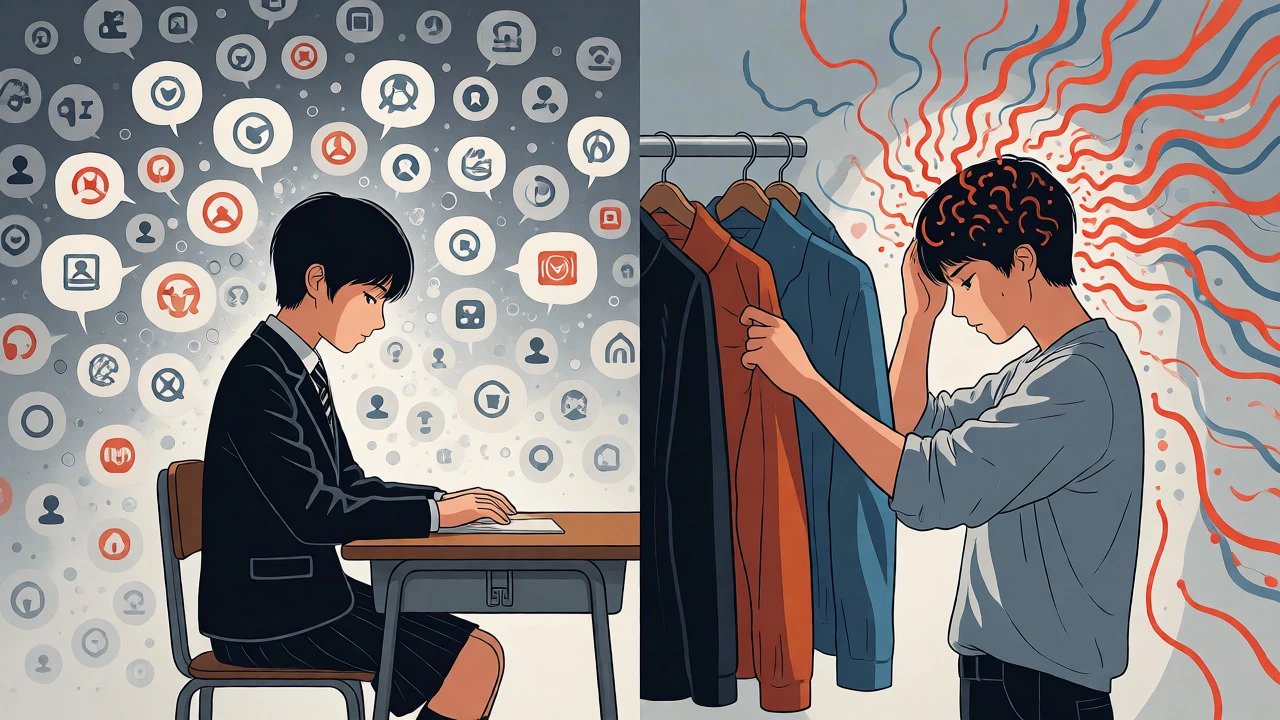
For younger children, the impact is likely minimal. A seven-year-old doesn’t suddenly become polite because he’s wearing a polo shirt. His behavior is driven by his teacher’s engagement, his sleep schedule, and his home life. For teenagers, however, the dynamic shifts. Adolescents are deeply concerned with identity. Forcing them into a standard mold can create resentment. That resentment might manifest as passive-aggressive behavior-tucking shirts in sloppily, rolling sleeves up defiantly, or complaining constantly. In this case, the uniform might actually worsen the mood in the classroom, even if it reduces overt disruptions.
Conversely, some teens find liberation in uniforms. The daily stress of choosing an outfit, worrying about fit, or fearing judgment disappears. This reduction in cognitive load can free up mental energy for learning. If a student isn’t stressed about whether their sneakers are cool, they might be more available for math problems. This isn’t about moral improvement; it’s about reducing decision fatigue.
Equity vs. Individual Expression
Proponents argue that uniforms level the playing field. Without them, socioeconomic status is visible instantly. Brands matter. Cleanliness matters. Mending clothes matters. When everyone wears the same thing, these markers fade. This can reduce bullying related to poverty. Kids aren’t teased for having last year’s model backpack if everyone has the same bag.
But critics argue that this leveling is superficial. Wealth still shows in other ways-technology, extracurricular activities, summer vacations. Hiding economic disparity under a uniform doesn’t solve it; it just masks it. Furthermore, suppressing individual expression can stifle creativity. School should be a place where kids learn to express themselves. If they can’t choose their clothes, where else can they exercise autonomy? Some students respond to this restriction by becoming more rebellious in other areas, testing boundaries through speech or action rather than appearance.
| Metric | Common Claim | Evidence Reality |
|---|---|---|
| Bullying Incidents | Significant decrease due to lack of brand rivalry | Mixed results; often shifts to verbal or cyberbullying |
| Attendance Rates | Higher attendance due to easier morning routine | Minimal statistical significance in most large-scale studies |
| Teacher Satisfaction | Teachers prefer uniformed students | High correlation with perceived order, not actual behavior |
| Gang Conflicts | Reduction in territory-based violence | Strong evidence in specific urban contexts only |
The Role of Enforcement
A uniform policy is only as good as its enforcement. This is the hidden variable. If a school mandates a tie but allows students to skip it with no consequence, the message is inconsistent. Inconsistency breeds confusion and disrespect. Students quickly learn where the lines are drawn. If teachers spend twenty minutes every morning checking skirt lengths or tuck-ins, they lose instructional time. This friction can sour the relationship between staff and students.
On the flip side, fair and consistent enforcement can teach accountability. Following rules, even arbitrary ones, is part of socialization. Learning to adhere to a dress code prepares students for workplaces that require professional attire. It teaches respect for institutional norms. However, this benefit depends heavily on how the rule is communicated. Is it framed as "we care about professionalism" or "because I said so"? The framing changes the student’s emotional response entirely.

Alternatives to Strict Uniforms
Many schools are moving away from rigid uniforms toward dress codes. These allow more flexibility while maintaining standards. For example, allowing any navy blue pants instead of a specific branded trouser gives students choice within boundaries. This approach respects autonomy while reducing distraction. It acknowledges that total uniformity isn’t necessary for order.
Some institutions use "free dress" days strategically. Allowing students to wear their own clothes once a week can serve as a release valve. It lets them express identity without disrupting the weekly rhythm. This hybrid model often satisfies both sides. Parents appreciate the structure; students appreciate the freedom. It also reduces the financial burden of buying multiple identical outfits, which can be expensive and ill-fitting.
Does It Matter to You?
If you’re a parent weighing this issue, consider your child’s personality. Do they struggle with decision fatigue in the mornings? A uniform might help them start the day calmly. Are they highly sensitive to peer judgment? Uniforms might shield them. Or do they thrive on creative expression? A strict uniform might feel suffocating.
Remember that behavior is multi-factorial. Sleep, nutrition, teacher quality, curriculum relevance, and home support all outweigh the influence of clothing. A well-taught class with engaging lessons will manage behavior effectively, regardless of whether students wear ties or t-shirts. A poorly managed class will struggle even if everyone is in military-grade attire.
Ultimately, uniforms are a tool, not a cure-all. They can contribute to a sense of community and belonging, which supports positive behavior. But they cannot replace strong relationships, clear expectations, and engaging education. Don’t expect a blazer to fix a broken system. Use it as part of a broader strategy for creating a respectful, focused learning environment.
Do school uniforms improve grades?
Research generally shows no direct causal link between wearing uniforms and higher test scores. Any improvements in grades are usually attributed to secondary factors, such as increased attendance or reduced distractions, rather than the clothing itself. Academic success is far more dependent on teaching quality and student engagement.
Why do some schools ban uniforms?
Schools may ban uniforms to promote individual expression, reduce costs for families, or address comfort concerns. Critics argue that uniforms suppress creativity and can cause discomfort, especially for students with sensory processing sensitivities. Additionally, enforcing strict uniform policies can consume valuable administrative time.
Are school uniforms expensive for parents?
The cost varies significantly. While basic pieces can be affordable, specialized items like blazers or branded ties can be pricey. Unlike regular clothes, uniforms often have limited resale value and must be replaced as children grow. Some schools offer second-hand swaps or subsidies to help low-income families manage these costs.
Can uniforms stop bullying?
Uniforms can reduce bullying related to clothing brands and socioeconomic status, but they do not eliminate bullying. Bullies often shift their focus to other attributes, such as physical appearance, speech patterns, or social skills. Therefore, uniforms are a partial solution that addresses specific types of social friction.
How do uniforms affect student identity?
For many students, uniforms foster a sense of belonging and school pride. However, others feel it erases their personal identity. The impact depends on the student's age and personality. Younger children may not notice the restriction, while teenagers might view it as a limitation on their autonomy and self-expression.