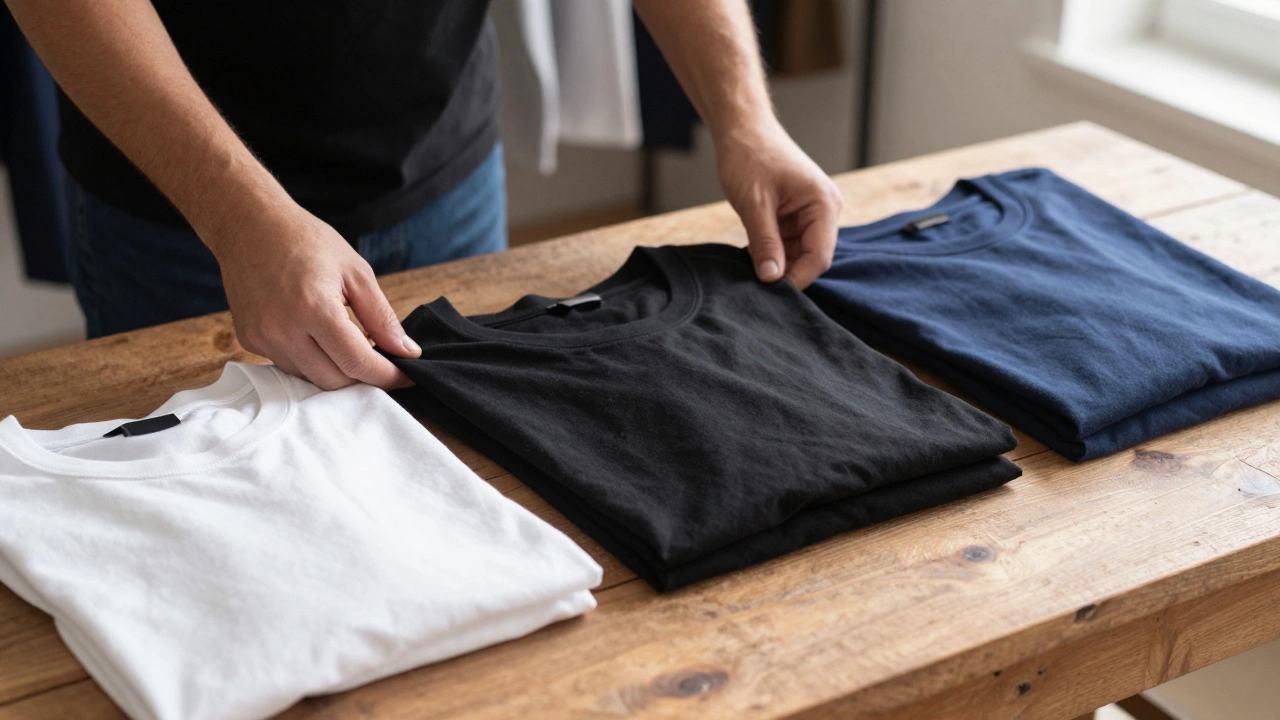
T-Shirt Fit Advisor
Not sure if that heavyweight tee will fit? Use this guide based on industry standards for garment construction.
Recommendation
Walk into any store or browse an online catalog, and you’ll see the same confusing pattern. One brand labels it Medium, another calls the exact same shirt Large. You grab what feels safe and order a size up, only to receive something that looks like a sail. Or worse, you order your usual size, and it arrives snug like a undershirt. The question isn’t just about vanity; it’s about comfort, durability, and whether the piece fits your life.
In today’s market, “size” means nothing without context. Fast fashion retailers have their own grading systems, while vintage-inspired brands play around with retro proportions. If you want to stop guessing and start wearing clothes that work, you need to understand the mechanics behind the tag. Is going up a size actually a smart move, or does it ruin the silhouette? It depends entirely on what you are wearing underneath and how you intend to wear it.
The Problem With Standardized Sizing
Most people assume a chest measurement defines a t-shirt size. In reality, the garment construction changes everything. Manufacturers use something called “spec sheets,” which dictate how many inches of ease they add to a body measurement. Ease is the extra room built in for movement.
T-Shirt Sizing is a system of standardized dimensions that vary significantly between manufacturers and countries. Also known as Apparel Grading, it determines how loose or tight a garment sits relative to the wearer.Take two different High Street brands. Brand A makes a Medium with a 42-inch chest width. Brand B makes a Medium with a 40-inch chest width. Both say Medium on the tag. If you buy Brand B thinking it matches Brand A, you’ll feel restricted. This inconsistency forces many buyers to instinctively size up. However, blindly sizing up leads to other issues, particularly regarding shoulder seams and length.
If the shoulders fall past your natural shoulder line, the shirt loses its structure. It starts to drape awkwardly, making you look sloppier than intended. A good fit usually ends right where your neck meets your shoulder muscle. Going bigger disrupts this anchor point. Unless you are specifically aiming for a dropped shoulder aesthetic, maintaining the seam placement is crucial for a sharp look.
Fabric Weight And Drape
You can’t talk about fit without discussing grams per square meter (GSM). This metric tells you how thick or thin the fabric is. Most basic tees hover around 150 GSM. These are thin and clingy. Heavyweight cotton sits around 220 to 250 GSM. This is the current standard for quality basics.
| Type | GSM Range | Typical Use | Sizing Advice |
|---|---|---|---|
| Lightweight | 120-150 GSM | Underlayers, Hot weather | Stay true to size to avoid transparency |
| Midweight | 160-190 GSM | Standard daily wear | True to size works best |
| Heavyweight | 200+ GSM | Streetwear, Cold weather | Can run stiff; consider sizing up for mobility |
When you buy a heavyweight tee, the material adds structure. It holds its shape well. If you size down, the heavy cotton restricts movement. Your arms won’t lift freely. Sizing up one notch here gives you that room without sacrificing the boxy premium look. However, with lightweight fabrics, sizing up often reveals underwear lines through the thin material or creates baggy bunches at the side seams.
Also consider fabric composition. Pure cotton shrinks. Synthetic blends stay static. If you buy a 100% cotton shirt and put it in a hot dryer, a Medium could turn into a Small after three washes. Knowing the care label helps. Buying slightly larger accounts for shrinkage, especially if you don’t plan to hand wash every time.
Style Intention: Boxed Vs. Tailored
Your goal dictates the cut. We have seen a massive shift in recent years away from slim fit toward relaxed and boxy cuts. In 2025 and beyond, the trend leans heavily toward comfort. People prioritize feeling comfortable over looking fitted. This cultural shift validates sizing up for many shoppers.
An Oversized Fit is a design philosophy prioritizing volume and loose silhouette over contouring to the body. If you want this style, you should intentionally buy a size bigger. Look for keywords like “drop shoulder” or “relaxed fit” in the product description. Brands selling these designs already account for the extra space. You don’t need to guess; the product listing tells you the intention.
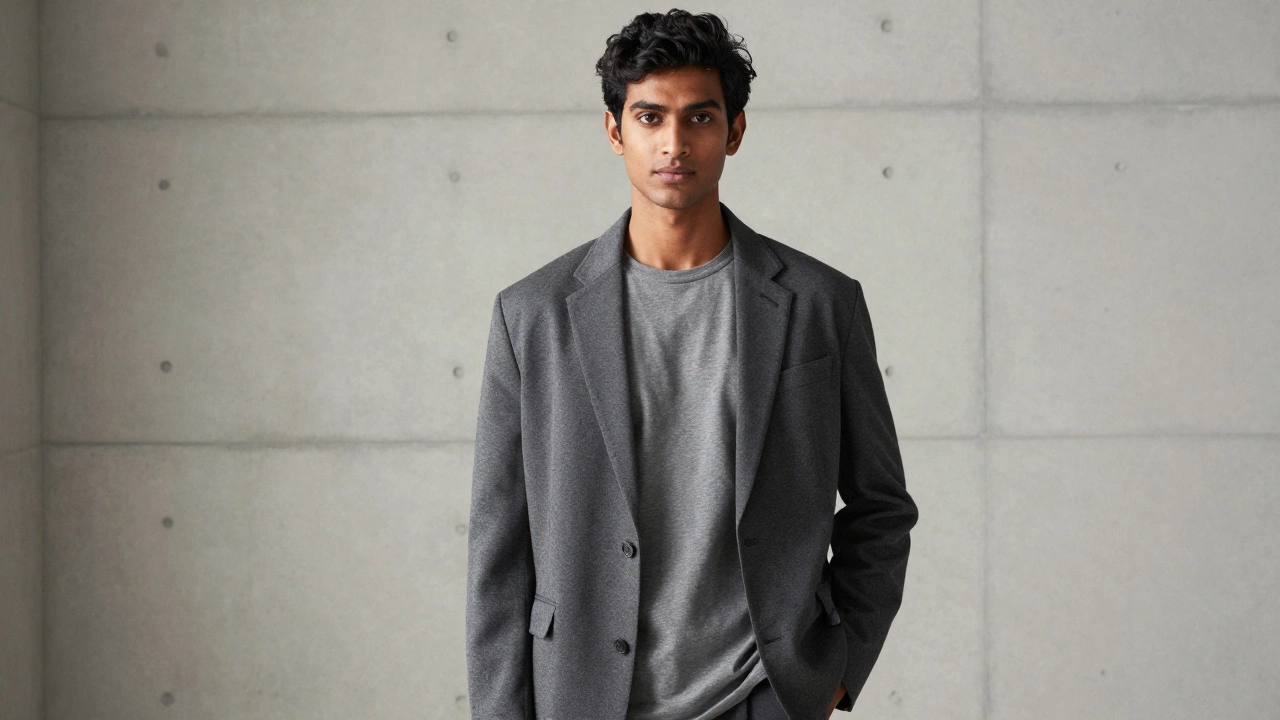
Conversely, if you want to layer, you need precision. A tight base layer under a blazer needs to lie flat. Sizing up a base layer creates friction points that bulge under jackets. Think about how much skin you show between layers. If the shirt is too long because you sized up, it sticks out below your waistcoat or cardigan. That looks unfinished.
For casual wear, however, the hemline can drop lower. Covering the zipper of your jeans often works better when the shirt has length. Sizing up typically increases both width and length. Some brands have longer sleeves on larger sizes too. Longer sleeves mean less risk of them riding up when you work or drive.
Body Shape Considerations
Not everyone builds muscle the same way. Broad shoulders benefit from a size-up if the standard cut is narrow. Narrow shoulders often drown in large shirts. There is no universal rule for "shoulders." It depends on your frame.
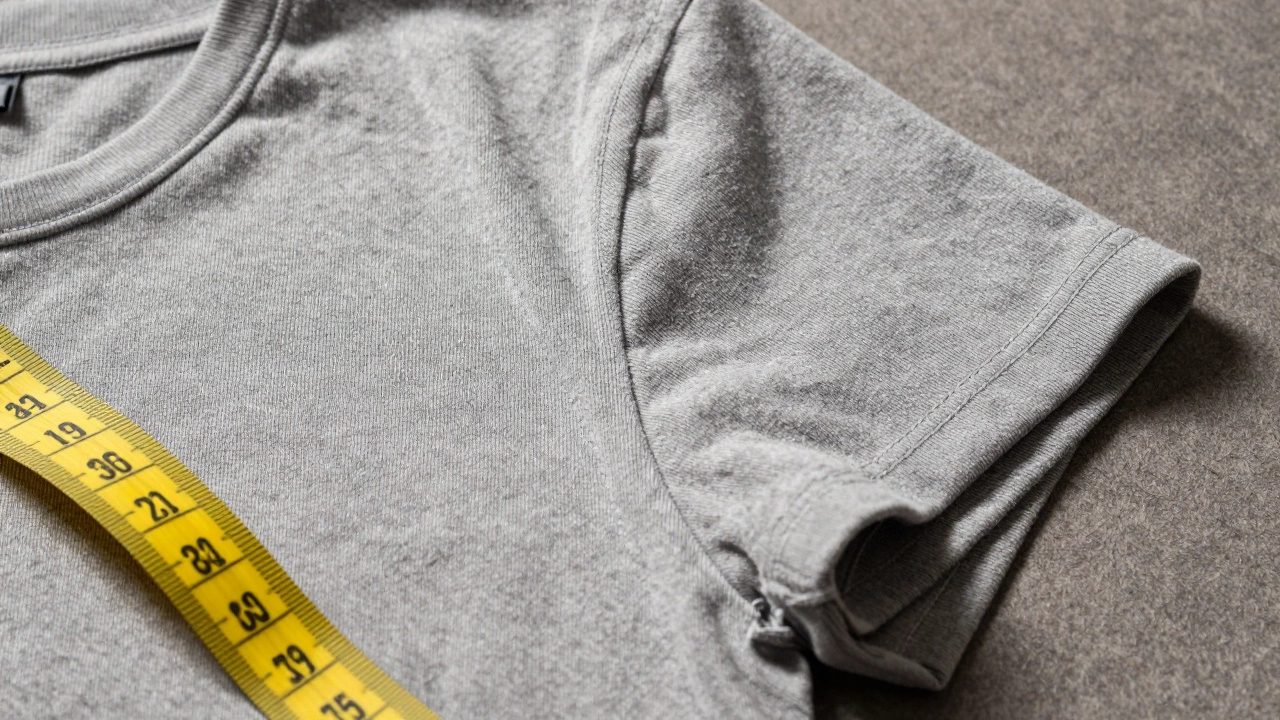
Chest Measurement is the circumference of the torso at the widest part of the rib cage. Also known as Bust Circumference, it is the primary determinant for t-shirt sizing.If you have an athletic build with developed lats and traps, a standard “Regular” fit might pinch under the arms. Tight armpits feel scratchy and reduce range of motion. In this case, sizing up allows for arm swing without straining the side seams. But be careful not to let the shirt balloon around the stomach. Volume in the middle wastes fabric and creates a sloppy appearance.
For softer body types, sizing up can sometimes camouflage the midsection too aggressively. It can hide definition but also widen your overall profile. A true-to-size shirt in a mid-weight fabric often drapes more smoothly over curves than a baggy garment. Smooth drape minimizes attention to problem areas. Baggy fabric draws attention to the volume of the fabric itself rather than the body underneath.
Shrinking And Durability Factors
New clothes aren't finished until washed. Unshrunk cotton fibers relax and contract during the first few cycles. This is natural physics. Buying a shirt with zero tolerance for movement means you fight the fabric forever. Planning for shrinkage is a form of preventative maintenance.
Check the washing instructions before checkout. Many modern pre-shrunk garments claim they won’t change size, but those claims often refer to machine washing on delicate cycles. If you throw a 100% cotton jersey into a standard tumble dry setting, expect some contraction. Sizing up provides a buffer against this. It extends the wearable life of the garment.
This applies even more to unisex sizing. Women buying men’s cuts often find the shoulders too wide. Men buying women’s cuts find the length insufficient. Gender neutral sizing is becoming popular, bridging this gap. Still, knowing your preferred fit within that neutral range saves returns.
How To Verify Before Buying Online
We live in a digital commerce world. You can’t try things on physically. The solution is measuring yourself and the item. Don’t guess based on a previous brand you loved. Different factories grade differently. Use a flexible tape measure to get your actual chest circumference.
- Measure around the fullest part of your chest.
- Find the specific measurements table on the retailer’s page.
- Compare your measurement to the garment’s listed flat width.
- Multiply the flat width by two to approximate circumference.
- Add 4 to 6 inches for a loose fit preference.
If the numbers match your ideal circumference, buy that size regardless of the letter printed on the tag. Ignore the 'M' or 'L'. Look at the inches or centimeters. This removes the emotional attachment to a number. Size 12 fits different bodies depending on whether it is Italian, American, or Australian made. Measurements are universal; labels are marketing.
Finally, check the return policy. Even with perfect data, fabric stiffness varies. Can you exchange easily? Free shipping returns remove the penalty for experimenting with a size up. If returns cost money, take the risk calculation seriously. Sometimes keeping the wrong size is cheaper than returning it twice.
Frequently Asked Questions
Does cotton shrink significantly?
Yes, untreated cotton can shrink up to 5% in the first wash and dry cycle. Pre-shrunk cotton is treated to minimize this, but tumbling on high heat still causes gradual shrinkage over time. It is safer to size up if you prefer frequent machine drying.
What is the best size for layering under a jacket?
For layering, select a true-to-size or slim fit. Excess bulk in the t-shirt will bunch up inside the jacket, creating visible creases and ruining the smooth silhouette of your outerwear. You want the shirt to disappear against your body.
Is oversized fit suitable for all body types?
Oversized fits work well for tall frames but can overwhelm shorter statures. If you are under 5’9”, look for cropped oversized styles to maintain proportion. For larger frames, oversized fits are naturally easier to manage.
Do polyester blends stretch less than cotton?
Pure polyester is less elastic than cotton fiber but often includes elastane for stretch. Cotton tends to mold to the body over time. Blends offer a hybrid feel but may pill faster. Always check the % of elastane for stretch recovery.
How do shoulder seams affect the fit?
The seam should sit at the edge of your bone. If it droops onto your upper arm, the shirt is too big. If it pulls up to your neck, it is too small. The shoulder seam is the most critical anchor point for determining correct size.