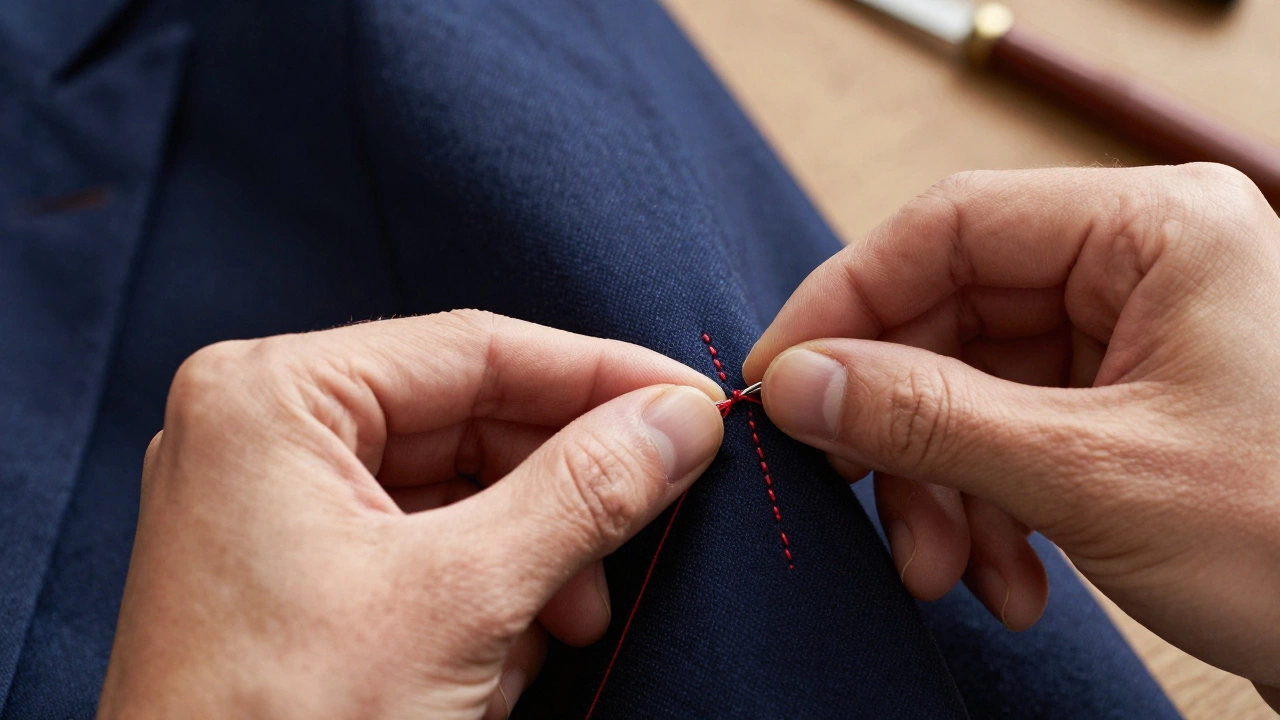
Pick Stitching Style Visualizer
Select a combination to see our recommendation.
You’ve spent weeks choosing the perfect fabric. You’ve debated between a two-button and three-button closure. You’ve even agonized over the width of your trousers. Now, the tailor asks you one final question: "Do you want pick stitching?" It sounds like a minor detail, almost invisible to the untrained eye. But in the world of menswear, this tiny stitch can be the difference between a suit that looks off-the-rack and one that screams personal style.
Pick stitching is exactly what it sounds like: a visible row of stitches used to secure layers of fabric or trim together. Unlike standard machine stitching, which aims for invisibility, pick stitching is designed to be seen. It adds texture, definition, and a touch of artisanal charm to your garment. But should you actually get it on your suit? The answer depends entirely on how you plan to wear it and what vibe you’re trying to project.
What Exactly Is Pick Stitching?
To understand whether pick stitching is right for you, we first need to break down what it actually is. In bespoke tailoring, a method of clothing construction where garments are made to measure from scratch, allowing for maximum customization and fit adjustments, every element is a choice. Pick stitching is often applied to the lapel edges, pocket flaps, buttonholes, and sometimes the back yoke of the jacket.
The technique involves pulling the needle through the top layer of fabric and the underlying canvas or lining, creating a small, deliberate loop or dash on the surface. Traditionally, this was done by hand, resulting in slight irregularities that prove human craftsmanship. Today, many high-end ready-to-wear brands use machines to mimic this look, but the effect remains the same: it highlights the structure of the garment.
- Location: Most commonly found on lapels (peak or notch) and pocket welts.
- Thread: Can match the fabric (subtle) or contrast sharply (bold).
- Density: Ranges from sparse, delicate dots to dense, continuous lines.
Think of it as the punctuation mark in a sentence. A period keeps things neat and tidy. An exclamation point demands attention. Pick stitching allows you to choose your tone.
The Case For: Why You Should Choose Pick Stitching
If you lean towards individuality and appreciate the history of tailoring, pick stitching is a powerful tool. Here is why many style-conscious men opt for it.
1. It Signals Craftsmanship
In an era of fast fashion, where suits are mass-produced in factories with zero regard for detail, visible stitching tells a story. It suggests that someone cared enough to finish the edges properly. When you walk into a room wearing a suit with distinct pick stitching, you signal that you understand quality. It’s a subtle flex, not a loud shout.
2. Contrast Thread Adds Personality
This is the most fun part of the decision. If you choose a contrasting thread color-say, bright red on a navy blue suit, or white on charcoal grey-you instantly break up the monotony of the fabric. This is particularly effective if you have a solid-colored suit without patterns. The stitching acts as a visual anchor, drawing the eye to the lapel line and framing your face.
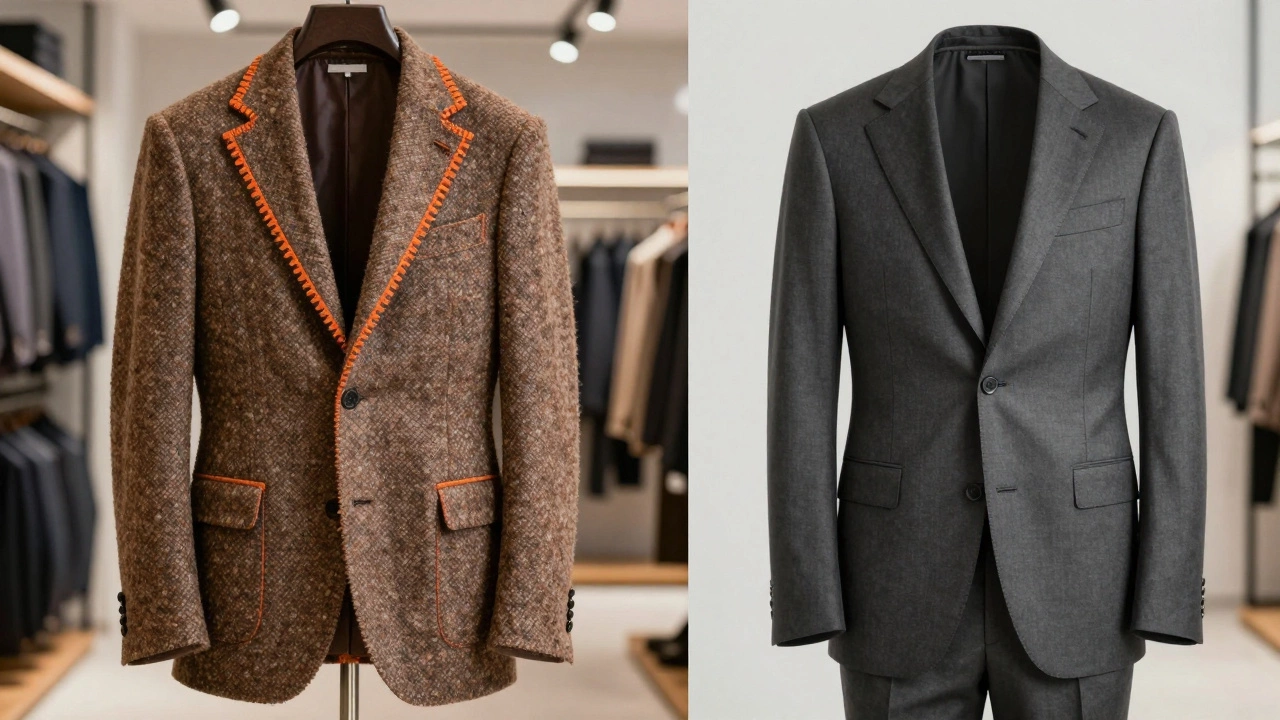
For example, imagine a classic British tweed suit in autumn. Adding a warm orange or rust-colored pick stitch ties the whole outfit together, echoing colors in a scarf or tie. It makes the suit feel alive rather than static.
3. It Defines the Silhouette
On softer fabrics like wool crepe or linen, the structure of the lapel can sometimes look flat or undefined. Pick stitching provides a physical boundary. It helps the eye follow the curve of the lapel, making the jacket look sharper and more structured, even if the fabric itself is soft and drapey.
The Case Against: When to Skip It
However, pick stitching isn’t always the right move. There are scenarios where it can detract from the overall look of your suit.
1. It Can Look Cheap if Done Poorly
Not all pick stitching is created equal. On lower-quality suits, the stitching might be too thick, too loose, or uneven. Instead of looking artisanal, it can look like a manufacturing error. If you are buying a mid-range off-the-rack suit, check the stitching closely. If it looks messy, ask your tailor to remove it or cover it with a patch if possible.
2. It Clashes with Ultra-Modern Minimalism
If your style is sleek, modern, and minimalist, you likely prefer clean lines and hidden details. Think of the suits worn by tech CEOs or modern architects. These styles rely on the purity of the fabric and cut. Visible stitching introduces "noise" into the design. If you want your suit to blend seamlessly into a corporate environment without drawing attention to its construction, skip the pick stitching.
3. Patterned Fabrics Don’t Need It
If you are wearing a pinstripe, herringbone, or plaid suit, the fabric already has plenty of visual interest. Adding contrast pick stitching on top of a busy pattern can create chaos. Your eye won’t know where to look. In these cases, matching thread (invisible pick stitching) is usually the safer bet, as it maintains the integrity of the pattern.
Choosing the Right Thread Color
If you decide to go ahead with pick stitching, the color of the thread is critical. This is where many people make mistakes. Here is a quick guide to pairing thread colors with suit fabrics.
| Suit Color/Fabric | Recommended Thread Color | Vibe/Style |
|---|---|---|
| Navy Blue Wool | Bright Red or White | Classic, Nautical, Bold |
| Charcoal Grey | Light Grey or Silver | Subtle, Modern, Elegant |
| Tweed/Brown | Orange, Rust, or Cream | Rustic, Autumnal, Heritage |
| Black Formal | None (Invisible) | Strictly Formal, Serious |
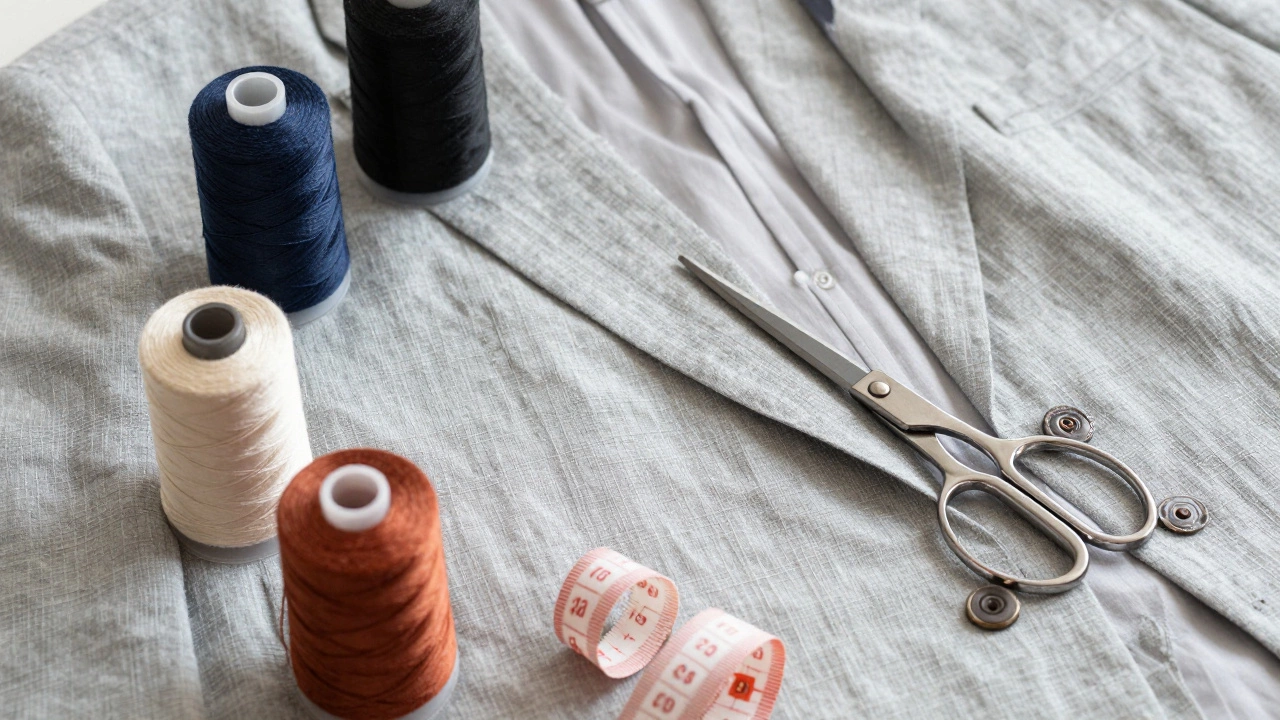
| Light Grey/Linen | Dark Navy or Black | High Contrast, Summer Chic |
A pro tip: If you are unsure, start with a thread that matches the fabric but is slightly lighter or darker. This gives you the benefit of definition without the risk of clashing. You can always change your mind later if you take the suit to a tailor for alterations, though removing stitching is tricky.
Where to Place the Stitching
It’s not just about color; placement matters too. Here are the most common spots for pick stitching and what they achieve.
- Lapels: The most traditional spot. It outlines the shape of the collar. Essential for peak lapels, optional for notch lapels.
- Pocket Flaps: Adds a nice frame to your breast pocket or side pockets. Great for adding a pop of color near the center of the chest.
- Buttonholes: Reinforces the buttons and adds a refined touch. Often done in a contrasting color to highlight the front closure.
- Back Yoke: Rare, but striking. A horizontal line of stitching across the upper back. Very military-inspired.
Don’t overdo it. If you have pick stitching on the lapels, pockets, AND buttonholes, you might look like a walking sewing kit. Pick one or two focal points and let them shine.
Hand-Stitched vs. Machine-Stitched
If you are getting a fully bespoke suit, your tailor will likely offer hand-pick stitching. This is the gold standard. Hand stitching is looser, more flexible, and allows the fabric to breathe and move naturally. It also has a unique texture that machines cannot replicate perfectly.
Machine pick stitching, on the other hand, is tighter and more uniform. While some argue it looks less authentic, modern high-speed machines can produce very convincing results. For a ready-to-wear suit, machine stitching is standard and perfectly acceptable. Just ensure the tension is correct-it shouldn’t pucker the fabric.
Final Verdict: Is It Worth It?
So, should you get pick stitching on your suit? If you value tradition, craftsmanship, and a bit of flair, then yes. It transforms a generic garment into a personalized statement piece. It shows you paid attention to the details that others miss.
However, if you prefer a clean, modern aesthetic or are wearing a highly patterned fabric, you might want to keep it simple. Invisible stitching is never wrong. It’s safe, timeless, and lets the fabric speak for itself.
Ultimately, your suit should reflect who you are. Are you bold and expressive? Go for contrast pick stitching. Are you understated and professional? Stick to matching thread or none at all. There is no right or wrong answer, only what feels right when you look in the mirror.
Can I add pick stitching to an existing suit?
Yes, but it requires skill. A skilled tailor can unpick the original seams and re-stitch them with visible pick stitching. However, this is labor-intensive and expensive. It is easier to add pick stitching during the initial construction of a bespoke suit.
Does pick stitching affect the durability of the suit?
No, pick stitching does not weaken the suit. In fact, it reinforces the edges of the lapels and pockets, potentially making them more durable against fraying. As long as the thread quality is good, it will last as long as the rest of the garment.
Is pick stitching considered formal or casual?
It leans slightly towards casual or creative formal. Traditional black-tie attire typically avoids visible contrast stitching. For business casual or smart-casual events, pick stitching is a stylish choice. For strict corporate environments, subtle matching thread is safer.
What is the best thread material for pick stitching?
Silk thread is the premium choice for bespoke suits because it has a natural sheen and blends beautifully with wool. Cotton thread is also excellent, especially for cotton or linen suits. Avoid synthetic threads like polyester unless you are on a tight budget, as they can look shiny and cheap under certain lights.
How much extra does pick stitching cost?
In bespoke tailoring, hand pick stitching is often included in the base price or charged as a small additional fee per hour of labor. Since it is time-consuming, expect it to add anywhere from $50 to $200 to the total cost depending on the complexity and the tailor's rates. For ready-to-wear suits, it is usually pre-applied and factored into the retail price.