How to Find Your True Foot Size for Slippers
Learn how to accurately measure your feet for slippers and choose the right size based on foot length, width, and material. Avoid common sizing mistakes and find slippers that actually fit.
moreWhen it comes to slipper fit, the way a slipper sits on your foot without pinching, sliding, or squeezing. Also known as slipper sizing, it’s not about the number on the box—it’s about how your foot feels after five minutes of walking around the house. Too tight and your toes ache. Too loose and you’re tripping over your own feet. Most people guess their slipper size based on their regular shoe size, but that’s where things go wrong. Slippers aren’t meant to grip like sneakers or support like boots—they’re designed to cradle, not clamp.
That’s why slipper size guide, a practical method to match your foot’s length and width to the right slipper. Also known as slipper sizing chart, it’s the only real tool you need matters more than brand names or online reviews. A size 8 in one brand might feel like a 7.5 in another, especially if the material doesn’t stretch. Think about your foot shape: wide forefoot? High arch? Swollen toes from standing all day? These aren’t quirks—they’re data points. If you’ve ever bought slippers that felt fine in the store but hurt by lunchtime, you already know fit isn’t optional. It’s the difference between slipping into comfort and slipping into pain.
And here’s the thing most guides skip: buy slippers larger, choosing a size bigger than your regular shoe size to account for foot expansion and lack of structure. Also known as slipper sizing up, it’s not a mistake—it’s a strategy. Unlike closed shoes, slippers don’t have laces or straps to tighten. They rely on snugness, not grip. If your foot swells during the day (and most do), going up half a size gives your toes room to breathe. But don’t go full two sizes up—that turns your slippers into foot hammocks. The goal is a gentle hug, not a loose glove.
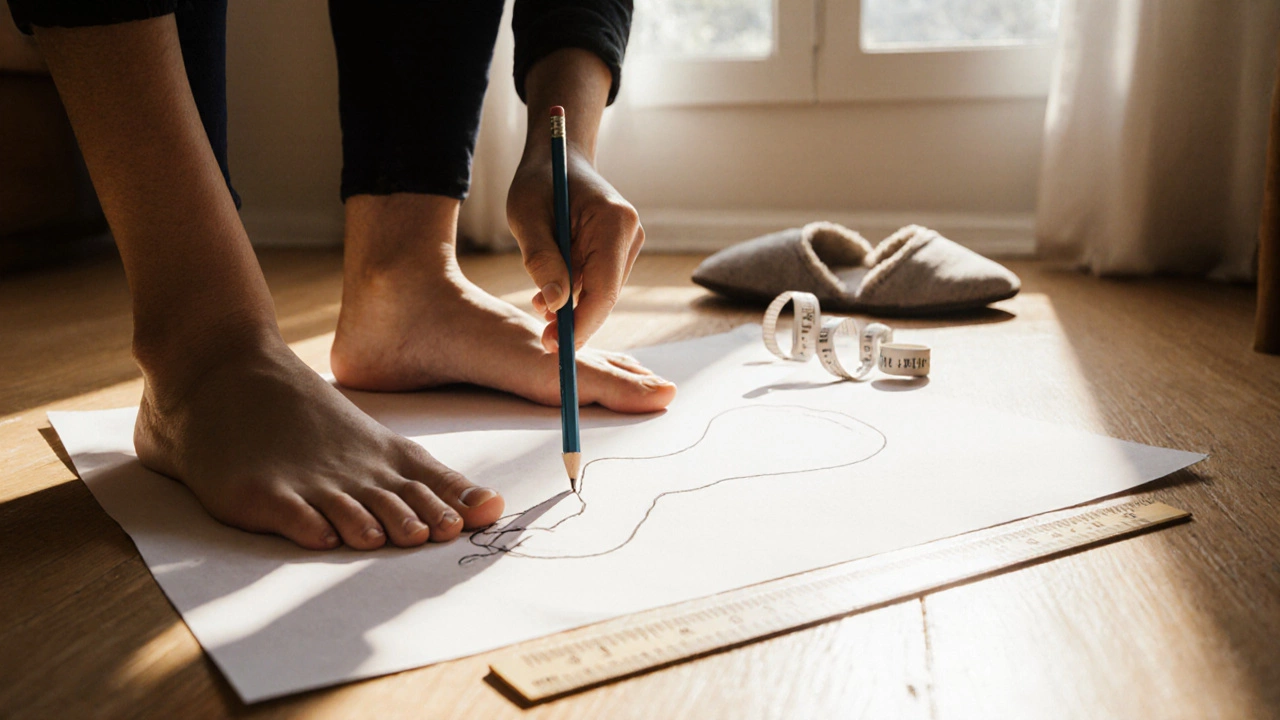
Measure your feet at the end of the day, when they’re at their largest. Stand on a piece of paper, trace around your foot, then measure from heel to longest toe. Compare that to the brand’s actual insole length—not just the size label. If you have bunions, hammertoes, or flat feet, look for slippers with a wide toe box and soft, moldable soles. Leather or memory foam will adapt better than stiff synthetics. And don’t fall for the myth that slippers need a break-in period. If they hurt on day one, they’ll hurt on day thirty.
What you’ll find below isn’t a list of the best slippers. It’s a collection of real, tested advice from people who’ve worn them—through long shifts, chilly mornings, and post-workout recovery. From why some slippers pinch the ball of the foot to how to tell if you’re wearing the wrong width, these posts cut through the noise. No fluff. No hype. Just what works when your feet are tired and you just want to feel like you’re walking on clouds.
Learn how to accurately measure your feet for slippers and choose the right size based on foot length, width, and material. Avoid common sizing mistakes and find slippers that actually fit.
more