Why is it called a T‑shirt? Origin and History Explained
Discover the surprising history behind the name "T‑shirt" - from early workwear and WWII uniforms to modern street style - and learn why the simple shape still defines casual fashion.
moreWhen you pull on a T-shirt, a simple, short-sleeved garment named for its T-shaped silhouette. Also known as tee, it’s the most common piece of clothing in the world — worn by kids, workers, athletes, and CEOs. But where did the name actually come from?
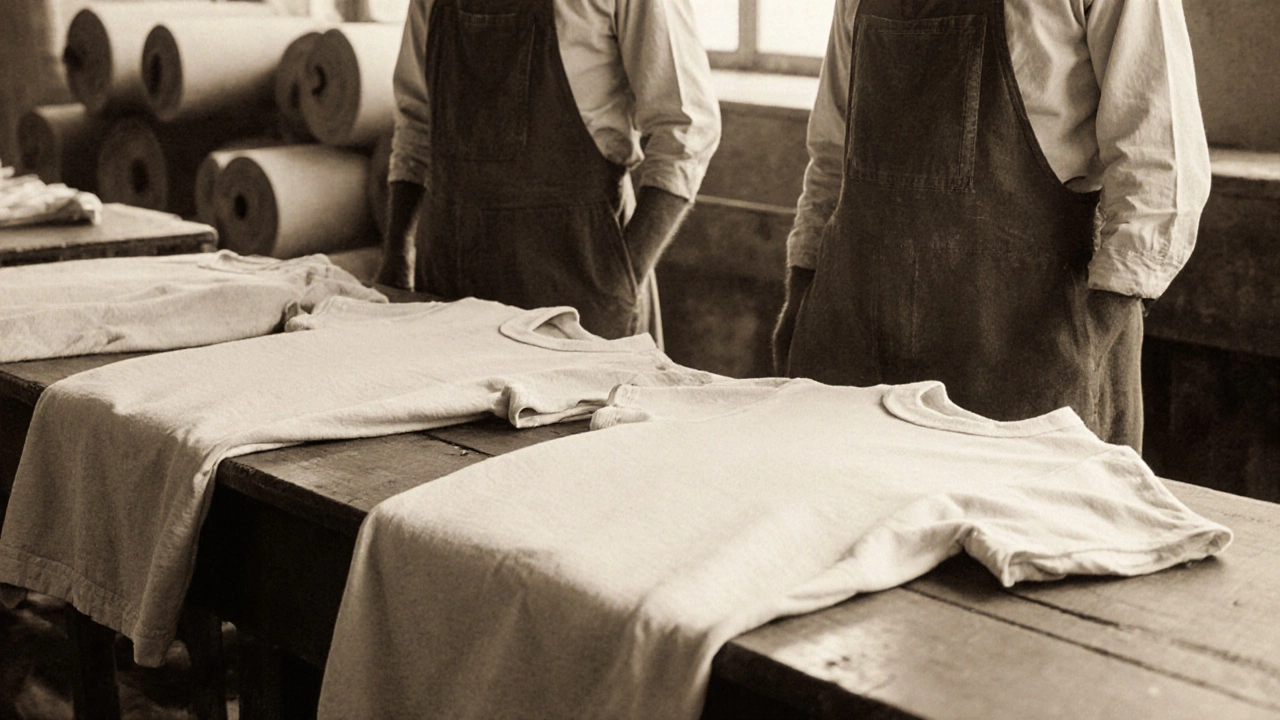
The answer isn’t branding or fashion trends. It’s geometry. Early 20th-century undergarments were called "union suits" — one-piece cotton garments for warmth. When manufacturers started making separate tops and bottoms, the top looked like a capital T when laid flat: a vertical body with horizontal sleeves. Workers in factories and the military started calling them "T-shirts" because of that shape. No fancy marketing. No trendsetters. Just practical naming. By the 1950s, Hollywood stars like Marlon Brando and James Dean wore them as outerwear, and the name stuck. It wasn’t about style — it was about simplicity.
The word "T-shirt" didn’t just describe a garment — it became a cultural marker. In the UK, people say "T-shirt" the same way Americans do, but in India, you’ll hear "tee" more often — a shorter, catchier version that fits the rhythm of local speech. Meanwhile, in Germany, they call it "T-Shirt" with a capital S, keeping the English spelling but adapting the grammar. The term traveled faster than the garment itself. And today, whether you’re wearing a plain white tee or one with a band logo, you’re still wearing something named for its shape — not its brand, not its price, not its trend status. That’s the power of a good, simple name.
What’s fascinating is how this tiny word connects to bigger things: labor history, military uniforms, pop culture, and even language evolution. The same way "trainers" in England means sneakers, "T-shirt" carries meaning beyond fabric. It’s a word that survived wars, revolutions, and fashion cycles because it described something real — not a trend, but a need. And that’s why you’ll still find it in dictionaries, on tags, and in every closet.
Below, you’ll find real posts that dig into how clothing terms like this one shape what we wear — from why Brits call sneakers "trainers" to how shoe leather became slang. It’s not just about fashion. It’s about language, identity, and the quiet history woven into every thread you put on.
Discover the surprising history behind the name "T‑shirt" - from early workwear and WWII uniforms to modern street style - and learn why the simple shape still defines casual fashion.
more