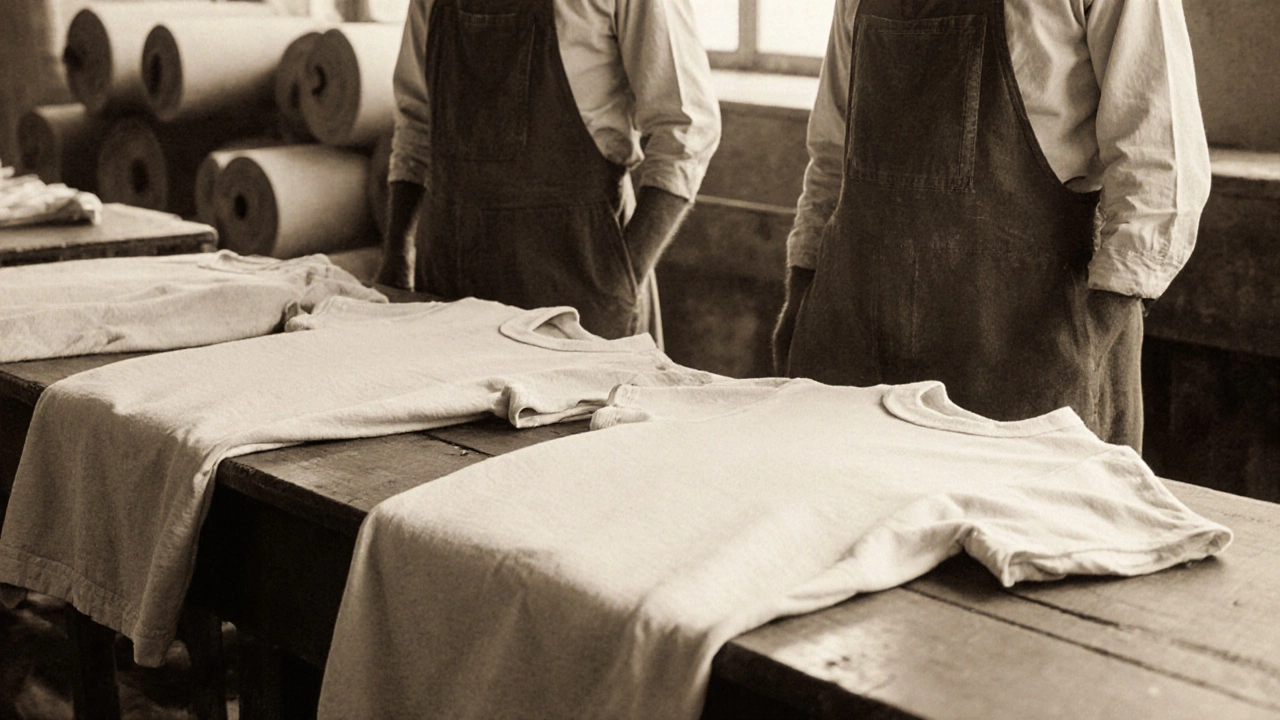
Why is it called a T‑shirt? Origin and History Explained
Discover the surprising history behind the name "T‑shirt" - from early workwear and WWII uniforms to modern street style - and learn why the simple shape still defines casual fashion.
moreWhen you buy a T-shirt, a basic, short-sleeved upper garment worn next to the skin. Also known as tee, it's one of the most universal pieces of clothing across cultures, ages, and climates. But not all T-shirts are created equal—what color you choose can make or break sales, comfort, and even how you feel wearing it.
The T-shirt color that sells most isn’t always white, even though everyone assumes it is. In 2025, neutral tones like black, heather gray, and navy lead the pack—not because they’re boring, but because they’re versatile. They pair with jeans, skirts, jackets, and even formal pants without clashing. Darker shades also hide sweat and dirt better, which matters more than you think. Meanwhile, soft pastels and earth tones are rising fast, especially among shoppers who care about sustainability and quiet luxury. Brands that stick to basic black or white are missing out—today’s buyers want subtle variety, not just repetition.
It’s not just about what looks good—it’s about color psychology, how certain hues influence mood, perception, and buying behavior. Black feels powerful. Gray feels calm. Olive green feels grounded. These aren’t random choices—they’re psychological triggers baked into design. And then there’s regional trends, how climate, culture, and local fashion norms shape what sells where. In humid cities, light colors win. In colder regions, darker tones dominate. Even social media plays a role: TikTok trends push certain shades into viral popularity overnight.
What you’ll find below isn’t a list of guesses. It’s a collection of real insights from people who’ve studied sales data, interviewed shoppers, tested fabrics under sunlight, and watched what actually gets bought—not just what looks good on a model. You’ll learn why some colors fade faster in the wash, why some sell out in hours, and how the same shade can mean different things in Mumbai versus Melbourne. Whether you’re shopping for yourself, stocking a store, or just curious why your gray tee outsold your red one, these posts cut through the noise and show you what’s real.
Discover the surprising history behind the name "T‑shirt" - from early workwear and WWII uniforms to modern street style - and learn why the simple shape still defines casual fashion.
more