
Suit Shirt Color Selector
Recommended Shirt Colors
Wearing a suit is one thing. Wearing it well? That’s where most men stumble. And it’s not always the cut of the jacket or the fit of the pants. More often, it’s the shirt underneath - specifically, the suit shirt color.
Think about it: you spend hours picking out a navy suit, maybe a charcoal grey, or even a crisp white. You polish your shoes. You tie the perfect knot. Then you grab the first white shirt you find in the drawer. Big mistake. The shirt isn’t just an afterthought. It’s the foundation. Get it wrong, and even the most expensive suit looks off. Get it right, and you look like you’ve been dressing for success your whole life.
White Shirts: The Default That’s Not Always Right
White shirts are everywhere. They’re in every men’s store, every online catalog, every wardrobe. And for good reason - they’re safe. But safety isn’t style. A white shirt under a navy suit? Classic. Under a charcoal? Still fine. But under a light grey or a tan suit? It can look like you’re wearing a hospital gown to a wedding.
Not all white is the same. Pure white (sometimes called ‘bright white’) pops under bright lights and can wash out fair skin. Off-white or ivory? Warmer. Softer. Better for older men, or anyone with a warm undertone. And if you’re wearing a patterned tie? White still works - but only if the shirt is clean, pressed, and the collar isn’t frayed. A stained or wrinkled white shirt ruins the whole look, no matter how expensive the suit.
Blue Shirts: The Secret Weapon
Here’s the truth most style guides won’t tell you: blue shirts are the most versatile color for suits - and they’re underused.
Light blue with a navy suit? That’s the gold standard. It’s professional without being stiff. It’s sharp enough for a job interview, relaxed enough for a Friday lunch meeting. And it doesn’t clash with silver or gold ties. Dark blue shirts? They work with charcoal suits, especially if you skip the tie. That’s the modern look - no tie, top button undone, sleeves rolled just once. It’s casual power.
Blue shirts also handle color better than white. A burgundy tie? Perfect. A patterned tie with reds and greens? Still looks intentional. White shirts can’t do that. They make patterns look random. Blue shirts make them look thoughtful.
When to Avoid White - And What to Wear Instead
Let’s say you’re going to a summer wedding. The suit is light beige. The venue is outdoors. The sun is high. You reach for your white shirt. Wrong. That shirt will glare. It’ll make you look like you’re trying too hard. And in the heat? White absorbs light. You’ll sweat faster.
Instead, go for pale blue, soft grey, or even a very light pink. These colors reflect less heat and blend naturally with light suits. Pale pink? Yes, really. It’s not feminine. It’s classic. Think of it as the modern version of a linen shirt - refined, not casual. Pair it with a navy or charcoal tie for structure. The result? You look cool, collected, and in control - even when it’s 28°C outside.
Black Suits and Shirts: The Rule That Breaks
Black suit? That’s formal. Very formal. Funerals. Black-tie events. Awards nights. And the traditional rule says: white shirt only. But here’s what happens in real life: white under black can look stark. Harsh. Like you’re wearing a costume.
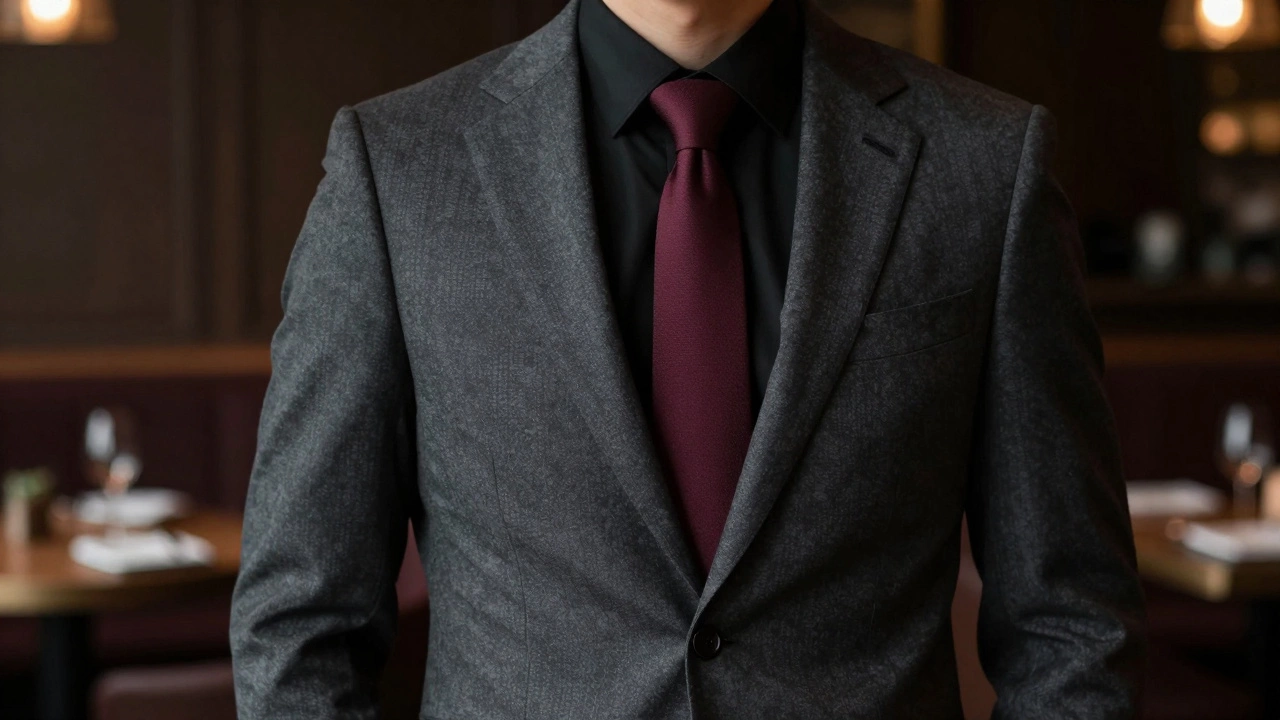
Try a black shirt. Not a t-shirt. A tailored, dress-weight black shirt with French cuffs. It’s not common, but it’s powerful. It’s what you see on actors at the Oscars. It’s what bankers wear when they’re closing a deal. The trick? Make sure the fabric has texture - subtle weave, not shiny. And pair it with a black tie or a deep burgundy one. No white pocket square. No flashy cufflinks. Keep it quiet. That’s the point.
Still nervous? Stick with white. But choose an ivory or eggshell shade. It’s softer. It’s more human.
Seasons Change. So Should Your Shirt.
Winter? Go darker. Navy suits with dark blue or even charcoal shirts. The contrast is subtle, but it adds depth. You look layered. Thoughtful.
Summer? Lighter. Linen-blend shirts in pale blue, light grey, or even a barely-there mint. They breathe. They move. They don’t cling. And they pair beautifully with tan or light grey suits - the kind you wear to the coast or a rooftop bar.
Spring and fall? That’s where you experiment. Try a pale lavender shirt with a charcoal suit. Or a soft cream with a navy. These aren’t ‘fashion’ colors. They’re just colors that work. They’re not loud. They’re not trying to be noticed. They’re just right.
Fit Matters More Than Color
Here’s something no one tells you: a shirt that doesn’t fit ruins even the perfect color.
A shirt that’s too tight? It pulls across the chest. It wrinkles at the shoulders. It looks like you’re about to burst out of it. Too loose? It hangs like a tablecloth. It looks sloppy, even if it’s the best shade of blue.
The right fit? Should skim your body - not cling, not drape. Should leave just enough space under the arms so you can raise your arms without the fabric pulling. The collar should sit flat. No gap. No bulge. And the cuffs? Should cover your wrist bone, but not hide your watch.
Color matters. But fit is the silent partner. Get the fit right, and even a white shirt can look expensive. Get the fit wrong, and even the best blue will look cheap.

What About Patterns?
Stripes? Checks? Micro-patterns? Yes - but only if you know how to use them.
Subtle stripes - thin, vertical, in a tone close to your shirt color - add texture without noise. A white shirt with faint blue stripes? Works with any suit. A light blue shirt with a barely-there grey check? Looks like you spent time thinking about it.
But avoid bold patterns. No big checks. No loud stripes. No polka dots. You’re wearing a suit. This isn’t a carnival. The shirt should support the suit - not compete with it.
Final Rule: Match Your Shirt to Your Skin
Not your suit. Not your tie. Your skin.
If your skin has cool undertones (blue or pink veins, silver jewelry looks better), then white, light blue, and pale grey will look best. If your skin has warm undertones (green veins, gold jewelry looks better), then ivory, soft pink, and light beige are your friends.
Try this: hold up a white shirt and a cream shirt next to your face in natural light. Which one makes your skin look brighter? Which one makes you look tired? That’s your answer.
There’s no universal ‘best’ color. There’s only the color that makes you look like the best version of yourself.
Quick Reference: Best Shirt Colors for Common Suit Colors
- Navy suit: White, light blue, pale pink, soft grey
- Charcoal suit: White, dark blue, black, ivory
- Black suit: White (ivory preferred), black
- Light grey suit: Pale blue, light pink, cream, soft grey
- Tan/beige suit: Light blue, cream, pale pink, soft green
Keep this list handy. But don’t treat it like a law. Try something new. The best look you’ll ever wear isn’t the one everyone else wears - it’s the one that makes you feel confident.
Can I wear a colored shirt with a black suit?
Yes, but only in formal settings where it’s intentional. A black dress shirt with a black tie and no pocket square works for modern black-tie events. Avoid bright colors like red or purple - they look like you’re trying too hard. Stick to black, deep burgundy, or very dark navy.
Is a white shirt always professional?
It’s safe, but not always the most professional. In creative industries, a light blue or pale pink shirt shows confidence and attention to detail. In finance or law, white is still the standard - but even there, an ivory shirt can look more refined than harsh white.
What shirt color works best with a patterned tie?
Choose a solid shirt that matches one of the tie’s base colors. If your tie has blue and red, pick a light blue shirt. Avoid white if the tie is busy - it can make the outfit look cluttered. A subtle pattern on the shirt, like micro-stripes, can also work if it’s in the same color family.
Should I match my shirt to my suit or my tie?
Neither. Match your shirt to your skin tone and the occasion. The suit is your foundation. The tie is your statement. The shirt is the bridge. It should connect them without competing. If your tie is bold, keep the shirt simple. If your suit is bold (like a patterned wool), keep the shirt plain and neutral.
Can I wear a dress shirt without a tie?
Absolutely - and it’s one of the most powerful looks today. Just make sure the shirt is well-fitted, the collar is buttoned or spread, and the fabric isn’t wrinkled. Light blue, white, or pale pink shirts work best. Pair with a navy or charcoal suit. Skip the pocket square. It’s modern, confident, and works for business casual or even semi-formal events.