T-Shirt Era & Style Builder
Military Undershirt
Standard IssueWorn strictly as underwear under heavy wool uniforms. Designed for breathability in tropical climates.
- Fabric: Lightweight Cotton
- GSM Weight: ~140 GSM (Thin)
- Social Status:
You’ve probably worn one every day this week. It’s the most ubiquitous piece of clothing on the planet. But have you ever stopped to ask why it’s called a T-shirt? Is it named after the letter T? A person named Tom? Or maybe a specific fabric technology?
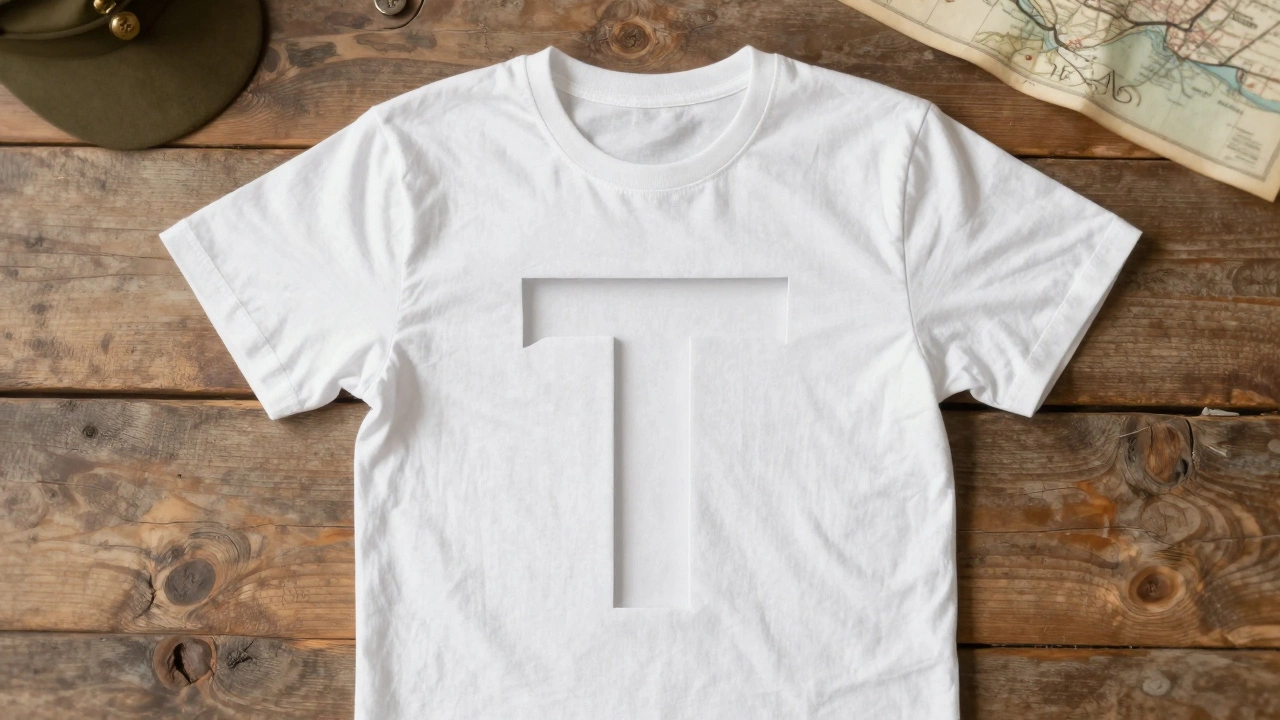
The short answer is simple: the "T" stands for the shape of the garment. When laid flat, the shirt resembles the capital letter T, with sleeves extending horizontally from a vertical body. It isn’t an acronym. There is no hidden code or secret society behind the name. Yet, despite its straightforward naming convention, the journey of this humble garment from underwear to high-fashion staple is anything but boring.
The Shape Defines the Name
Let’s clear up the biggest misconception first. Many people assume "T-shirt" might be short for something more complex, like "Technical Shirt" or "Thermal Shirt." None of these are true. The name is purely descriptive based on geometry.
If you lay a standard crew-neck shirt on a table, the torso forms the vertical line of the T, and the two sleeves form the horizontal crossbar. In the early 20th century, when standardized military uniforms were being developed, soldiers needed a quick way to identify different garments. Describing them by their silhouette was efficient. You had your T-shirts, your V-necks (which look like a V), and your crew necks. The visual cue became the official nomenclature.
This naming convention stuck because it was intuitive. You didn’t need a dictionary to understand what a T-shirt looked like if you knew the alphabet. It was a practical label that survived the transition from military barracks to civilian wardrobes.
From Underwear to Outerwear: The Military Roots
To understand the T-shirt, we have to look back at the late 19th and early 20th centuries. Back then, men typically wore button-down shirts as their primary undergarment. These shirts were often made of heavy cotton or wool and required buttons all the way down the front. They were hot, restrictive, and uncomfortable against the skin, especially in tropical climates.
The U.S. Navy played a pivotal role in changing this. Around 1913, the Navy introduced the one-piece undershirt as part of its uniform regulations. This new garment was designed to be worn directly against the skin, under the heavier outer shirt. It was seamless at the shoulders and easier to move in than buttoned undershirts.
During World War I, the Navy officially adopted this lightweight cotton undershirt. Soldiers found it comfortable and breathable. By World War II, the T-shirt had become standard issue for millions of American GIs. It served a dual purpose: it protected the outer uniform from sweat stains and provided a layer of warmth without bulk.
However, during this era, wearing a T-shirt outside was considered indecent. It was strictly underwear. If you walked into a diner or a movie theater in a T-shirt alone, you would likely be asked to leave. The social norms of the time dictated that exposed arms and a lack of a collar were signs of poverty or laziness.
The Cultural Turning Point: Hollywood and Rebellion
So, how did underwear become the global uniform of casual wear? Two words: Marlon Brando.
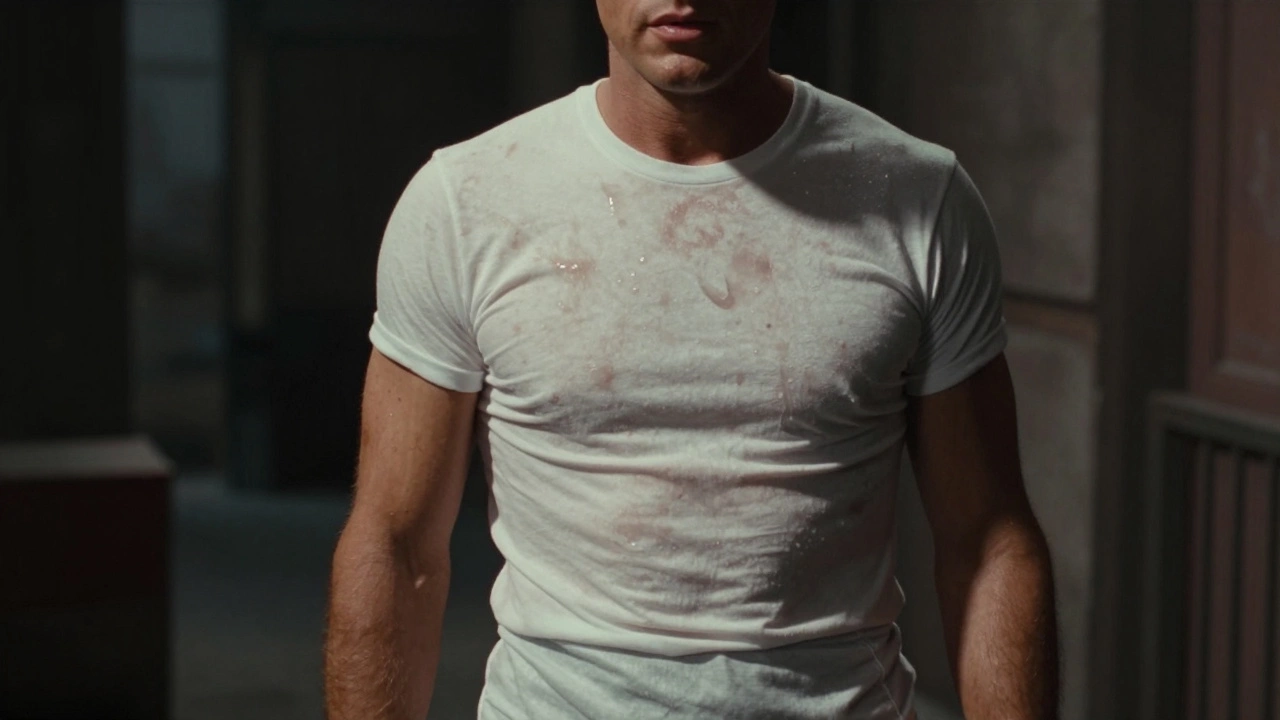
In 1951, actor Marlon Brando starred in the film A Streetcar Named Desire. He wore a white T-shirt while playing Stanley Kowalski, a character defined by his raw masculinity and working-class grit. The image of Brando sweating in a tight-fitting white tee captivated audiences. Suddenly, the T-shirt wasn’t just underwear; it was a symbol of rebellion, sex appeal, and authenticity.
James Dean followed suit in 1955 with Rebel Without a Cause, cementing the T-shirt as the uniform of teenage angst. Young people began buying T-shirts not to wear under their clothes, but to wear on top. They wanted to emulate the cool, detached attitude of these cinematic icons.
This shift marked the end of the T-shirt’s exclusivity as an undergarment. Manufacturers noticed the demand and began producing T-shirts specifically for outerwear. They improved the fabrics, added collars that wouldn’t stretch out, and started experimenting with colors beyond plain white.
The Rise of Graphic Tees and Self-Expression
Once the T-shirt was accepted as outerwear, it became a canvas. The 1960s and 70s saw the explosion of graphic tees. Bands, political movements, and college campuses used T-shirts to broadcast messages. Why buy an expensive poster when you could wear your message on your chest?
Screen printing technology advanced rapidly during this period. What started as simple single-color logos evolved into complex, multi-colored designs. Brands like Hanes and Fruit of the Loom dominated the market with basic blanks, while independent artists created limited-edition runs.
The punk rock movement of the late 70s took this further. Bands like The Sex Pistols and The Ramones used T-shirts to shock and provoke. DIY culture encouraged people to cut, paint, and pin their own shirts. The T-shirt became less about the brand and more about the individual’s statement. It was cheap, accessible, and disposable-perfect for a generation rejecting consumerist norms.
Modern Variations: Fit, Fabric, and Fashion
Today, the T-shirt has fractured into dozens of subcategories. The "T" still refers to the shape, but the execution varies wildly. Here is how the modern landscape breaks down:
| Type | Key Feature | Best For |
|---|---|---|
| Crew Neck | Round neckline, sits close to the base of the neck | Daily wear, layering |
| V-Neck | V-shaped neckline, elongates the torso visually | Slimming effect, semi-casual |
| Raglan | Sleeves extend to the collarbone (baseball style) | Athletic wear, comfort |
| Polo | Collared with button placket | Smart-casual, golf |
| Oversized | Loose fit, dropped shoulders | Streetwear, relaxed fit |
Fabric choice also matters more now than ever. The classic 100% cotton T-shirt is still popular for its breathability. However, blends with polyester offer durability and wrinkle resistance. For performance, moisture-wicking synthetics dominate the athletic market. And for luxury, Pima cotton or bamboo fibers provide a softer hand feel.
The weight of the fabric, measured in grams per square meter (GSM), indicates quality. A thin T-shirt (140-160 GSM) is great for hot weather but may show transparency. A heavyweight tee (200+ GSM) holds its shape better and feels more premium, making it ideal for graphic prints that don’t crack easily.
Sustainability and the Future of the T-Shirt
The T-shirt industry faces a significant challenge today: waste. Fast fashion brands produce billions of T-shirts annually, many of which end up in landfills within months. The environmental cost of conventional cotton farming-including water usage and pesticide application-is high.
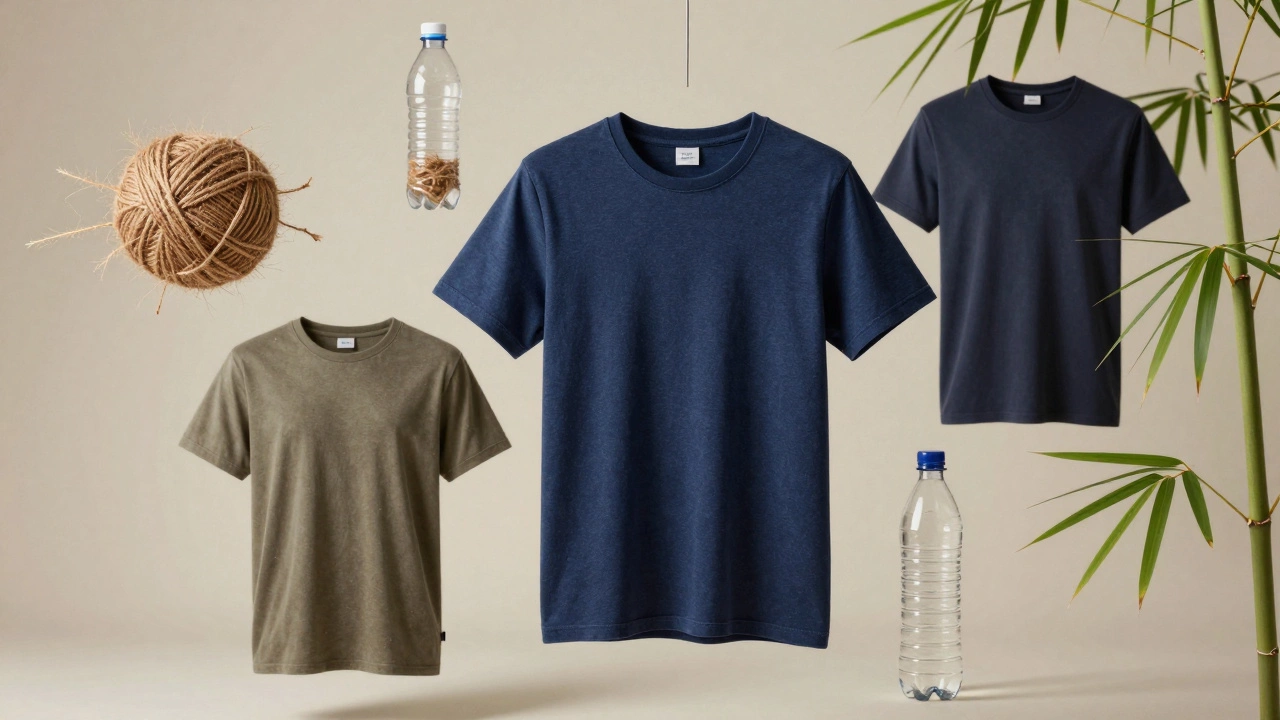
Consumers are increasingly looking for sustainable alternatives. Organic cotton reduces chemical runoff. Recycled polyester gives plastic bottles a second life. Some brands are even experimenting with hemp or tencel, which require fewer resources to grow. The trend is shifting towards "buy less, choose well," encouraging people to invest in higher-quality T-shirts that last longer rather than chasing cheap trends.
Technology is also changing production. On-demand printing reduces inventory waste. Digital printing uses less water than traditional screen printing. As materials science advances, we may see biodegradable T-shirts that return to the earth without leaving microplastics behind.
Why the T-Shirt Endures
Despite its simple construction, the T-shirt remains relevant because it adapts to everything. It can be tucked into tailored trousers for a smart-casual office look. It can be layered under a blazer for a night out. It can be ripped and faded for a grunge aesthetic. It is the chameleon of clothing.
The "T" stands for its shape, but the shirt itself stands for versatility. It bridges the gap between comfort and style. Whether you’re wearing a vintage band tee from the 80s or a minimalist white organic cotton tee, you’re participating in a century-long cultural evolution. Next time you pull one on, remember that you’re wearing a piece of history that went from naval underwear to global icon.
Did the T in T-shirt originally stand for "Technical"?
No, this is a common myth. The "T" strictly refers to the geometric shape of the garment when laid flat, resembling the capital letter T. There is no historical evidence linking it to technical specifications or thermal properties in its original naming.
When did T-shirts become acceptable as outerwear?
The shift occurred primarily in the 1950s, driven by Hollywood films like A Streetcar Named Desire (1951) and Rebel Without a Cause (1955). Before this, T-shirts were exclusively considered underwear, and wearing them outside was socially frowned upon.
Who invented the T-shirt?
There is no single inventor. The T-shirt evolved from earlier one-piece undershirts used by laborers and miners in the late 19th century. The U.S. Navy formalized its use as standard issue around 1913, but the design predates this military adoption.
What is the difference between a crew neck and a V-neck T-shirt?
A crew neck has a round neckline that sits close to the base of the neck, offering a classic, balanced look. A V-neck features a neckline shaped like a "V," which creates a vertical line that can visually elongate the torso and neck, often preferred by those seeking a slimmer appearance.
How do I know if a T-shirt is high quality?
Look at the fabric weight (GSM) and stitch density. High-quality T-shirts typically weigh between 180-220 GSM, providing structure without stiffness. Check the seams for reinforced stitching (like coverstitching) and ensure the collar is ribbed to maintain its shape after washing. 100% cotton or high-quality cotton blends usually offer the best balance of comfort and durability.