Work Shoe Comfort Finder
Answer a few questions about your daily routine to get personalized shoe recommendations.
Your Recommendation
Fit Tip
You know that feeling around 3 PM when your feet start screaming at you? It’s not just tiredness; it’s often a sign that your work shoe isn’t doing its job. You’re standing on hard concrete or walking miles across a warehouse floor, and your current pair is fighting against your body instead of supporting it. Finding the most comfortable work shoe isn’t about picking the prettiest option or even the most expensive one. It’s about matching specific features to your daily physical demands.
This guide cuts through the marketing noise. We aren’t here to tell you that every shoe with a logo will fix your back pain. Instead, we’ll look at what actually makes a shoe comfortable for long shifts, which materials hold up over time, and how to choose based on your specific work environment. Whether you are a nurse, a construction worker, or an office professional who refuses to wear stiff leather, there is a right fit for you.
The Science Behind Comfort: Why Your Feet Hurt
To find the right shoe, you first need to understand why your feet hurt. Discomfort usually stems from three main issues: lack of shock absorption, poor arch support, and improper fit. When you stand for eight hours, your body weight presses down on your feet repeatedly. If the sole doesn’t absorb that impact, the force travels up your legs into your knees and lower back.
Cushioning is the first line of defense. Modern midsole technologies like EVA foam, polyurethane, and air units are designed to compress under weight and then return to their original shape. Cheap foam flattens out after a few weeks, leaving you walking on flat plastic. High-quality cushioning maintains its bounce for months. But cushioning alone isn’t enough. Without proper arch support, your foot collapses inward (overpronation) or outward (supination), twisting your ankle and straining your plantar fascia. The most comfortable work shoe balances soft landing with firm structural support.
Matching Shoes to Your Work Environment
A shoe that feels great in a retail store might be terrible on a construction site. Context matters. Let’s break this down by common work scenarios.
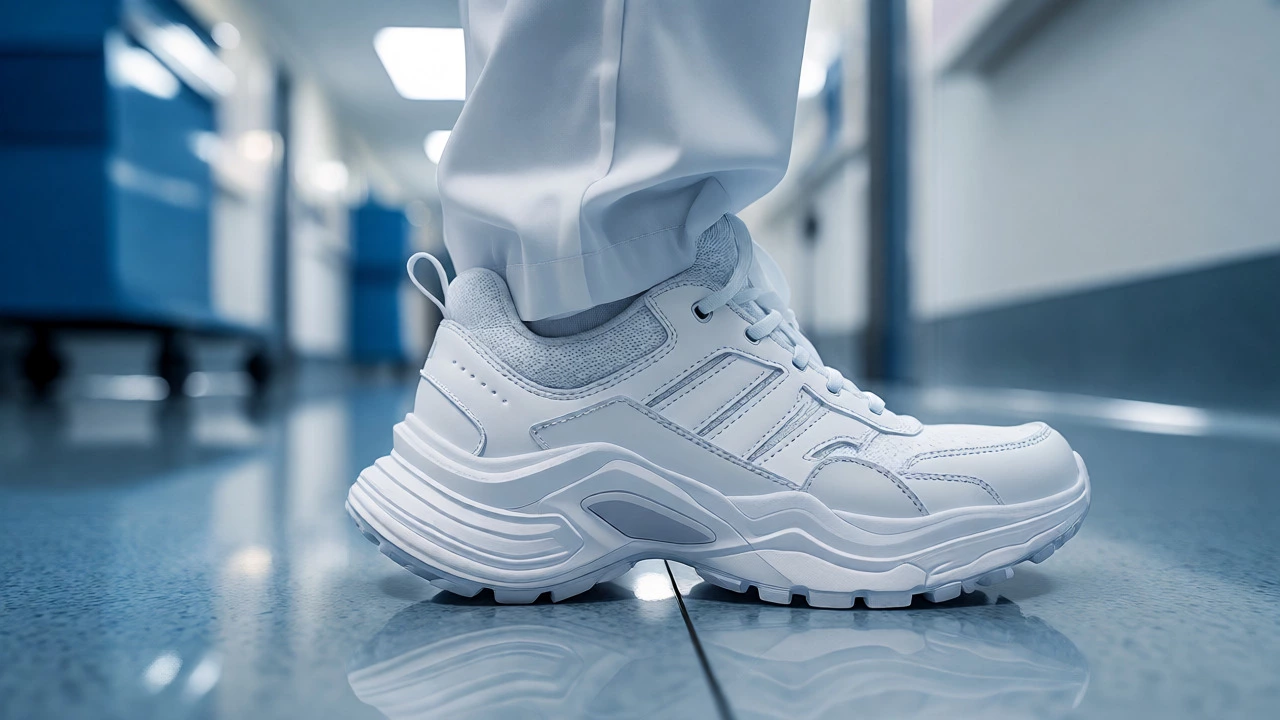
If you work in healthcare or hospitality, you’re likely on smooth, hard surfaces like tile or polished concrete. You walk fast, pivot quickly, and stand still for long periods. For these jobs, lightweight slip-on sneakers with deep heel cups are often the winner. Brands like Hoka and Brooks have gained massive popularity among nurses because their maximalist soles reduce joint impact significantly.
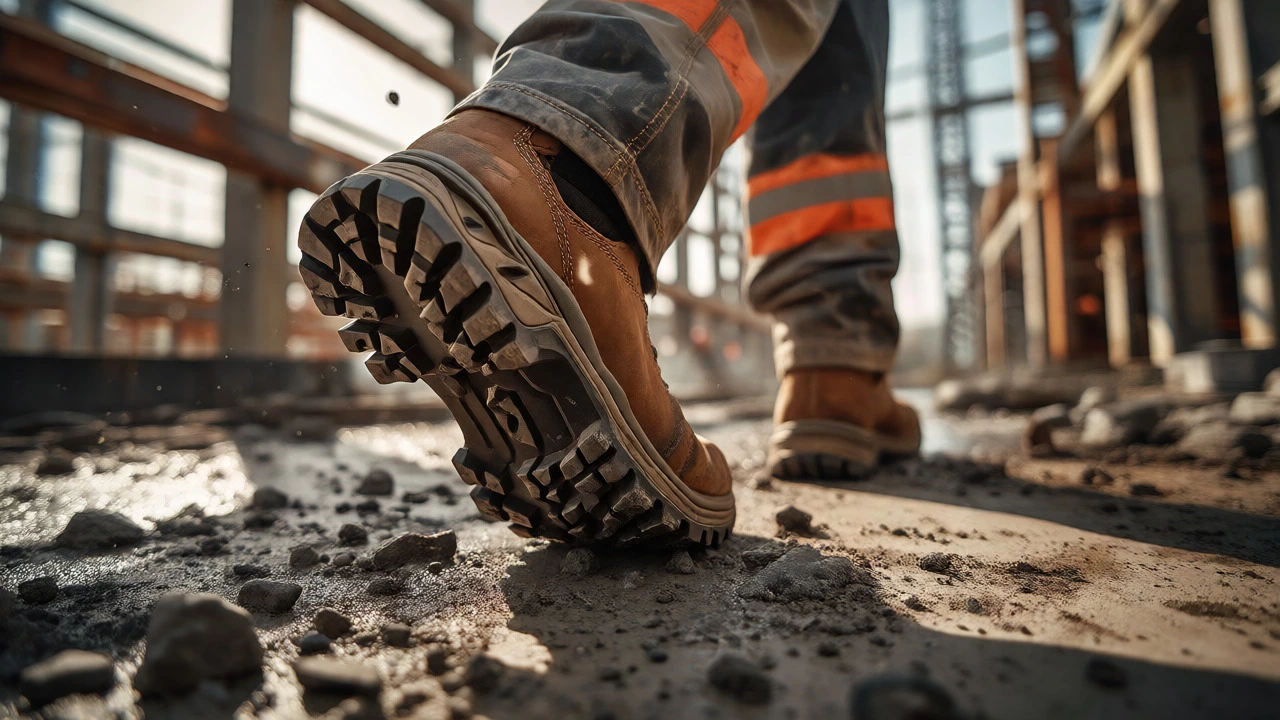
Construction and industrial workers face different hazards. Here, comfort must coexist with safety. You need composite toes instead of steel if you want lighter weight, as steel adds unnecessary bulk that can cause fatigue. Look for boots with aggressive tread patterns for grip on wet or oily surfaces. The key here is flexibility. A stiff boot restricts natural foot movement, causing muscle strain. Modern composite boots use flexible shanks that allow the foot to bend naturally while protecting against punctures.
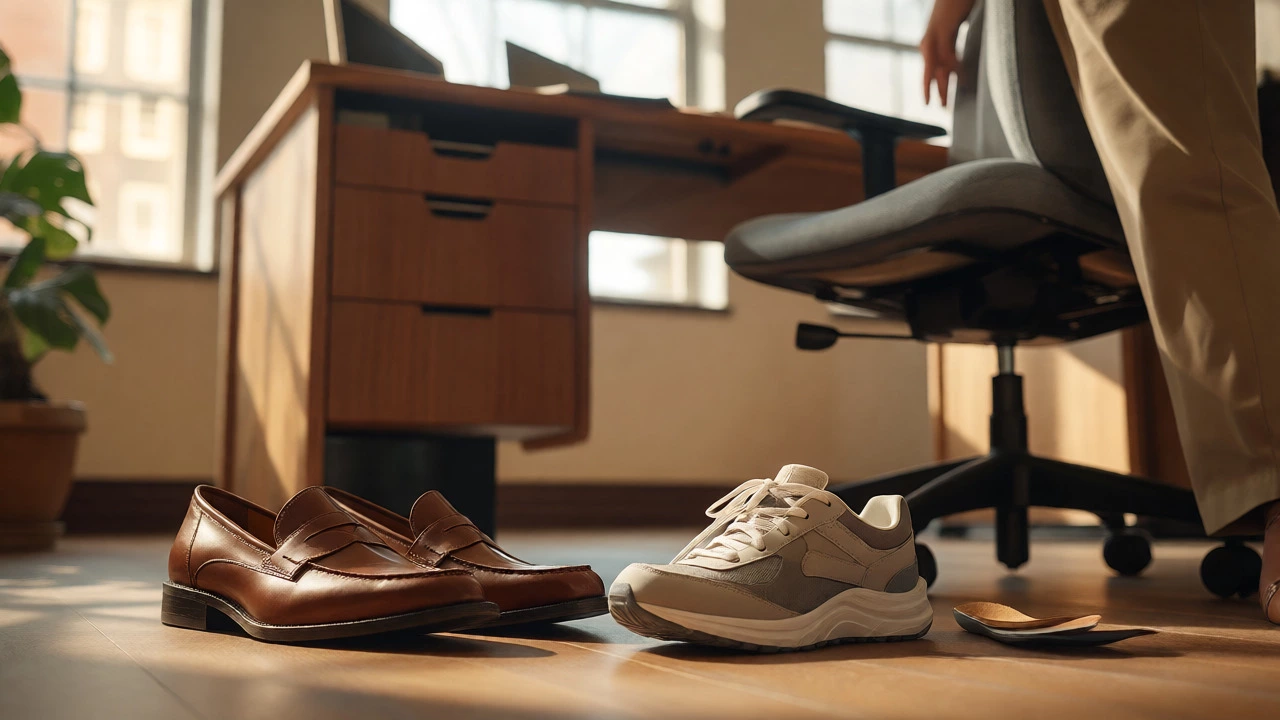
Office workers often ignore their shoes until they get home. But sitting for six hours and then walking five miles to catch a bus puts unique stress on feet. Leather dress shoes are notorious for being rigid and requiring long break-in periods. If you commute, consider switching to comfortable loafers or supportive derbies with memory foam insoles. Or better yet, keep a pair of high-quality trainers under your desk for those long walks.
Key Features That Define True Comfort
When shopping, ignore the color options for a moment. Focus on these technical attributes. They determine whether you’ll survive a ten-hour shift.
- Drop Height: This is the difference in height between the heel and the toe. A zero-drop shoe encourages a natural gait but requires strong calves. A higher drop (8-10mm) reduces strain on the Achilles tendon. If you have tight hamstrings, a moderate drop is safer.
- Width Options: Many people buy narrow shoes because they only come in standard widths. If your toes feel squeezed, your circulation suffers. Brands like New Balance offer wide sizes, which prevent bunions and neuromas from forming over time.
- Breathability: Sweaty feet lead to blisters and fungal infections. Mesh uppers allow air flow, while leather offers durability but traps heat. In warm climates like Auckland summers, mesh is king. In colder, wet environments, waterproof Gore-Tex linings keep feet dry without making them sweat excessively.
- Removable Insoles: This is a non-negotiable feature for serious comfort seekers. Factory insoles are usually thin and cheap. Being able to remove them allows you to insert custom orthotics or high-quality aftermarket insoles like Superfeet or Sole. This customization adapts the shoe to your unique foot shape.
Top Contenders: What Actually Works?
Let’s look at specific categories and types that consistently rank high in user reviews and expert tests. Note that "best" is subjective, but these brands have proven track records for reliability and comfort.
| Shoe Type | Best For | Key Feature | Durability Rating |
|---|---|---|---|
| Maximalist Sneakers | Nurses, Retail, Teachers | Thick foam midsole for shock absorption | Medium (foam degrades) |
| Composite Toe Boots | Construction, Warehousing | Lightweight protection, flexible shank | High |
| Ergonomic Loafers | Office, Sales, Management | Memory foam, slip-resistant sole | Medium-High |
| Stability Walkers | Delivery Drivers, Postal Workers | Firm heel counter, motion control | High |
For healthcare professionals, Hoka Bondi models are frequently cited as the gold standard for pure cushioning. The trade-off is stability; some users find them too wobbly on uneven ground. For those needing more structure, Brooks Ghost provides a balanced ride with reliable DNA Loft cushioning.
In the industrial sector, Timberland PRO has dominated the market for years. Their Pit Boss line uses anti-fatigue technology that many workers swear by. However, newer competitors like Keen Utility offer wider toe boxes, which is a game-changer for anyone with broad feet. Keen’s designs allow toes to splay naturally, reducing pressure points during long stands.
For office settings, traditional dress shoes are evolving. Brands like Cole Haan integrate sneaker-like Grand.OS technology into leather uppers. This hybrid approach gives you the professional look with the comfort of athletic footwear. It’s a smart compromise for corporate environments where strict dress codes still apply.
The Fit Test: How to Try Them On Correctly
Buying online is convenient, but trying shoes on in-store remains the safest bet for comfort. Follow these rules to avoid regret purchases.
First, shop late in the afternoon. Your feet swell throughout the day due to gravity and activity. A shoe that fits perfectly at 9 AM might pinch painfully by 5 PM. Always try on both shoes, as one foot is often slightly larger than the other. Wear the socks you plan to use at work. Thick wool socks change the internal volume of a shoe significantly compared to thin cotton ones.
Stand up and walk around. Don’t just sit and wiggle your toes. Simulate the movements you make at work. Do you climb ladders? Walk up stairs. Do you stand still? Shift your weight side to side. Check for heel slippage. If your heel lifts more than a few millimeters, the shoe is too loose, leading to blisters. If your toes touch the front end when you walk downhill, it’s too short. Leave about a thumb’s width of space between your longest toe and the shoe’s tip.
Maintenance and Longevity
Even the most expensive shoe loses comfort if you neglect it. Foam midsoles compress permanently over time. Most experts recommend replacing work shoes every 6 to 12 months, depending on usage intensity. If you notice creasing in the midsole or uneven wear patterns on the outsole, it’s time for a new pair. Continuing to wear worn-out shoes alters your gait and can cause knee or hip problems.
Clean your shoes regularly. Mud and debris packed into treads reduce traction and add weight. Rotate two pairs if possible. Allowing a shoe to rest for 24 hours lets the moisture evaporate and the foam recover its shape. This simple habit can extend the life of your footwear by weeks.
Are expensive work shoes really worth the cost?
Generally, yes. Higher-priced shoes typically use denser, longer-lasting foams and better quality adhesives. While a $50 shoe might last three months, a $150 pair could last a year. When you calculate the cost per month, the premium option is often cheaper. Plus, the reduced risk of injury saves money on medical bills.
Can I put orthotics in any work shoe?
Not always. You need a shoe with a removable insole and sufficient depth. Some low-profile sneakers don't have enough vertical space for thick orthotics, which can press down on your foot's top. Always bring your orthotics when trying on shoes to ensure a proper fit.
How do I know if my shoes are causing my back pain?
If your back pain improves on days you wear different shoes or go barefoot at home, your footwear is likely the culprit. Poor shock absorption sends impact waves up the kinetic chain. Also, check the wear pattern on your old shoes. Excessive wear on the inner edge suggests overpronation, which misaligns hips and spine.
Do waterproof shoes make feet sweat more?
Yes, traditionally. Waterproof membranes block water from entering but also trap sweat vapor inside. However, modern breathable membranes like Gore-Tex Surround or proprietary vents help mitigate this. If you live in a hot climate, prioritize breathability over waterproofing unless you work in rain constantly.
Is it okay to wear running shoes for work?
It depends on the job. Running shoes are excellent for forward motion but often lack lateral stability needed for pivoting or climbing. They also may not meet safety standards (like steel toe requirements) for industrial sites. For retail or office jobs, they are often the most comfortable choice available.