When you think of jeans, you probably picture blue pants, ripped knees, or a logo on a back pocket. But who made the very first pair? And how did jeans go from workwear to a global wardrobe staple? The answer isn’t just about fashion-it’s about sweat, innovation, and a stubborn immigrant who refused to let his customers’ pants fall apart.
The Real Story Starts in 1853
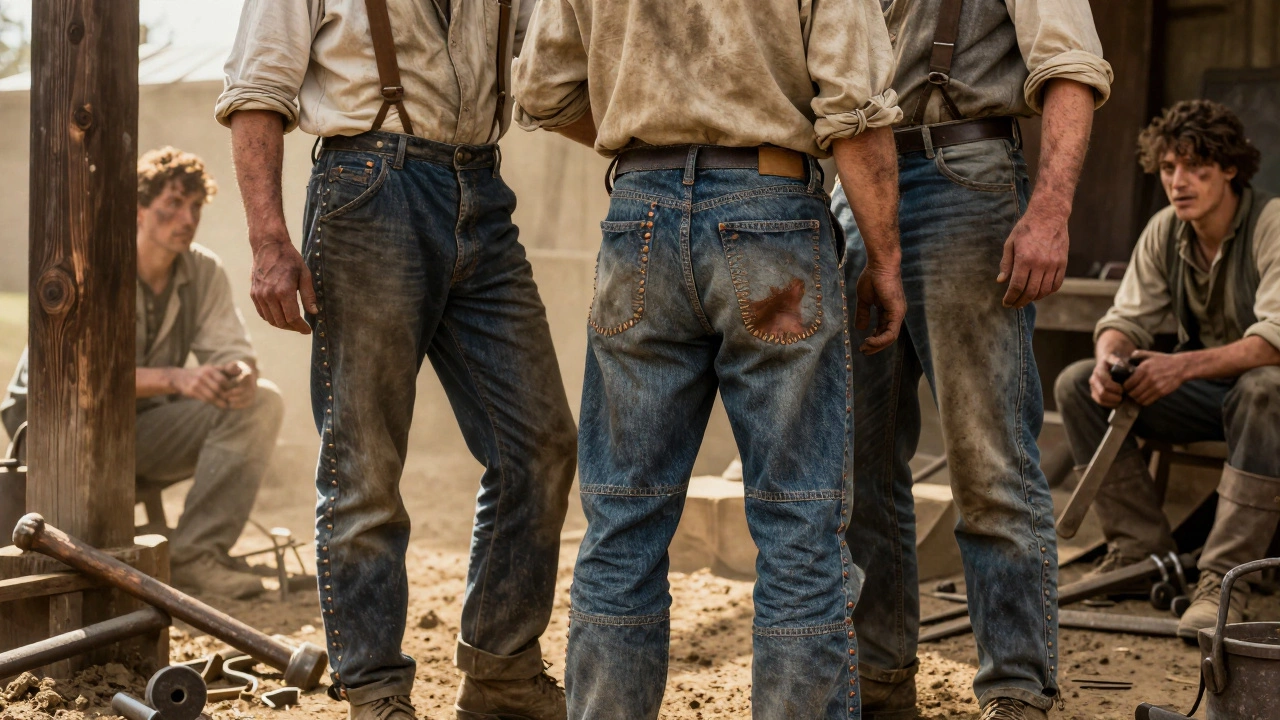
It wasn’t Italy, Japan, or even England that birthed the first true jeans brand. It was San Francisco, California, during the Gold Rush. Thousands of miners were digging for gold, but their pants kept tearing at the seams. Cotton canvas wasn’t strong enough. They needed something tougher.
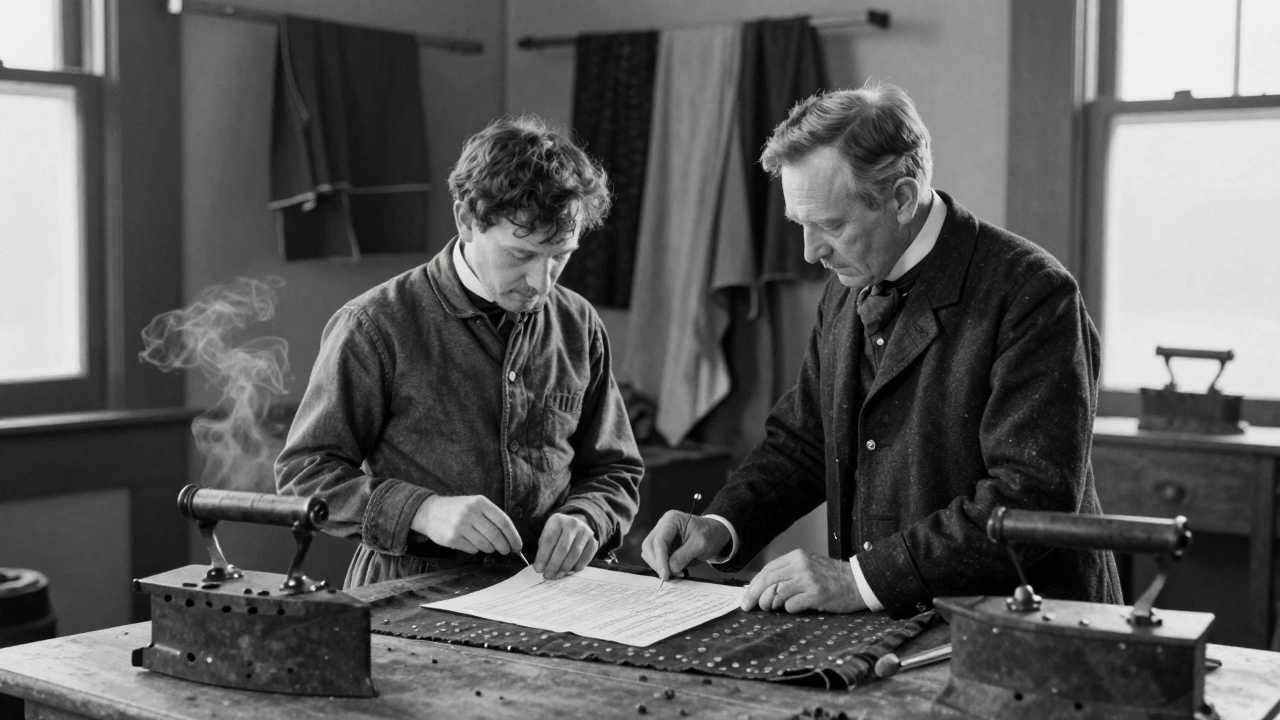
That’s when Jacob Davis, a Latvian tailor, had an idea. He’d been sewing copper rivets into the stress points of work pants-pockets, fly, and crotch-using scrap metal from his wife’s laundry business. The pants didn’t tear anymore. Miners loved them. But Davis didn’t have the money to patent the idea. So he did something smart: he went to a local dry goods merchant named Levi Strauss.
Levi Strauss wasn’t a tailor. He sold fabric, buttons, and tools to miners. But he saw the potential. On May 20, 1873, Levi Strauss & Co. and Jacob Davis filed U.S. Patent No. 139,121 for an “Improvement in Fastening Pocket-Openings.” That date is now the official birth of blue jeans as we know them.
Why Levi’s Is the Oldest Jeans Brand
Before 1873, people wore work pants made from denim fabric. But no one had branded them, patented them, or mass-produced them with rivets. Levi’s was the first to turn denim into a product with a name, a logo, and a guarantee.
They didn’t call them “jeans” back then. The term came later. Workers called them “waist overalls.” Levi’s called them “XX” (double X) pants. The famous red tab didn’t appear until 1936. The leather patch with the two horses pulling apart a pair of pants? That came in 1886.
No other company had a patent on riveted denim work pants before 1873. Brands like Lee and Wrangler didn’t even exist yet. Lee started in 1889. Wrangler didn’t launch until 1947. Even today, Levi’s holds the original patent documents and the earliest surviving pair of riveted denim pants-made in 1879.
What Made Levi’s Different?
It wasn’t just the rivets. Levi’s used a specific kind of denim: a sturdy, 100% cotton twill weave from the Amoskeag Manufacturing Company in New Hampshire. The fabric was dyed with indigo, which gave it that deep blue color and allowed it to fade naturally over time. That fading? That’s not a flaw-it’s a feature. And it’s why people still love vintage Levi’s today.
Levi’s also built a reputation for durability. In 1902, a miner in Nevada wore the same pair of Levi’s for 17 years. He didn’t wash them. He just let them dry in the sun. When he finally retired, he donated them to a museum. They still had the original rivets.
That kind of loyalty didn’t come from advertising. It came from reliability. Miners, railroad workers, cowboys-they trusted Levi’s to hold up under pressure. That trust stuck. Even after jeans moved from the mines to the streets, people kept buying them because they knew they’d last.
Myths About Other “Old” Jeans Brands
Some people claim brands like Lee or Wrangler are older. They’re not. Lee started as a family-owned undergarment company in 1889 and didn’t make jeans until 1910. Wrangler began as a manufacturer of workwear for cowboys in 1947. Neither had a patent on riveted denim.
Even older fabric makers like Denim of Nimes (France) or Genoa (Italy) didn’t make jeans. They made denim fabric. But jeans aren’t just fabric-they’re a product with stitching, rivets, pockets, and branding. Levi’s was the first to combine all those elements into one branded item.
There’s also a myth that Levi’s copied someone else’s design. No evidence supports that. The patent was filed under both Davis and Strauss. Davis got 50% of the profits from the patent. He stayed with the company for decades. There was no theft-just collaboration.
How to Spot an Original Levi’s from the 1870s
If you ever find a pair of old jeans labeled Levi’s, here’s how to tell if they’re real:
- Look for the arcuate stitching on the back pockets. It’s a double-arched design, like a sideways “U.” Levi’s used this pattern since 1886. No other brand had it then.
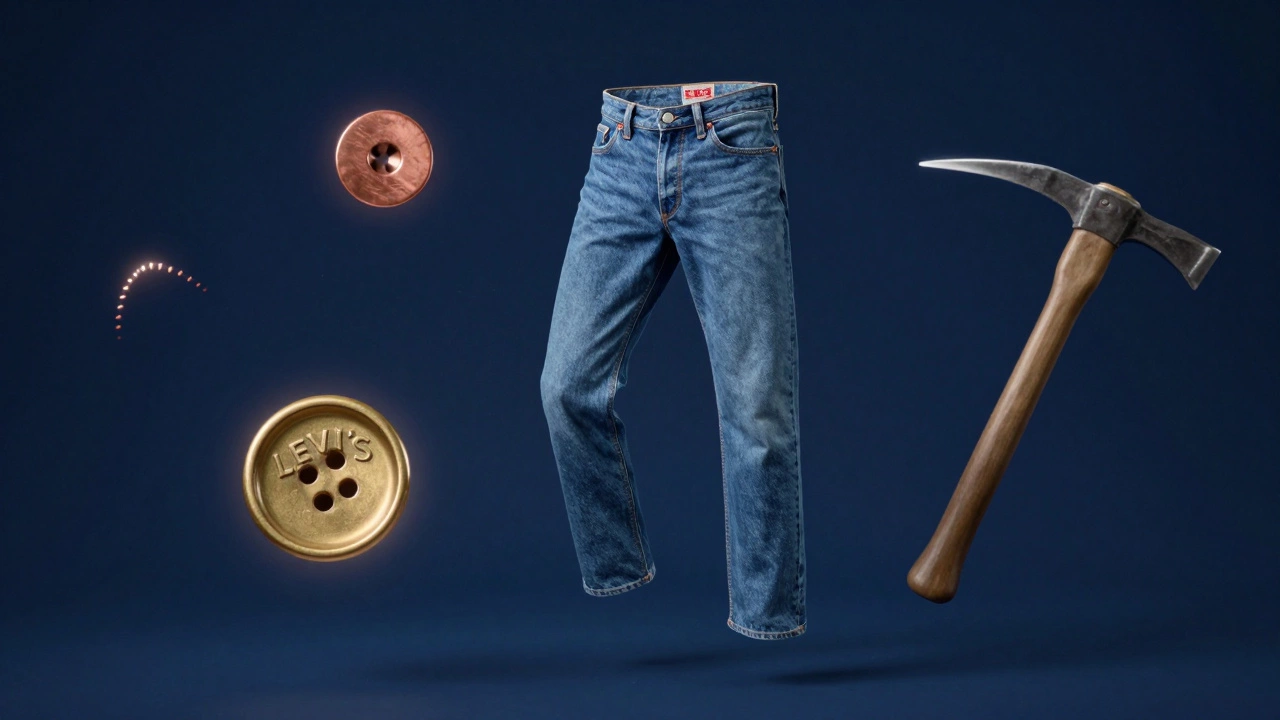
- Check the rivets. Early ones were copper, not brass. They were hand-set, so they’re slightly uneven.
- Look for the red tab. If it’s on the right back pocket and says “LEVI’S,” it’s from 1936 or later. Before that, the brand was only on the leather patch.
- Check the care tag. Pre-1950s jeans had no tags. They were sold plain.
- Look at the button. Early Levi’s had a brass button with the word “LEVI’S” stamped on it. Later ones switched to metal rivets.
These details matter because fake vintage jeans are everywhere. Sellers will slap on a “1873” label and charge $500. But if the rivets are plastic or the stitching is too perfect? It’s not real.
Why This Still Matters Today
Levi’s isn’t just the oldest jeans brand. It’s the reason jeans exist as a global symbol. Without their patent, denim might have stayed a regional workwear fabric. Instead, it became the uniform of rebels, rock stars, and teenagers.
Even today, Levi’s produces over 70 million pairs a year. They still make the 501 model-the original design-using the same looms in their own factory in the U.S. and Mexico. They haven’t outsourced everything. They still care about the craft.
And if you buy a pair of Levi’s now, you’re not just buying pants. You’re holding a piece of history. A patent from 1873. A miner’s need for durability. A tailor’s ingenuity. A brand that didn’t chase trends-it built something that lasted.
What Comes Next for Jeans?
Levi’s still leads in innovation. They’ve introduced waterless dyeing, recycled cotton, and AI-powered fit technology. But their core hasn’t changed: make jeans that last. That’s why they’re still the oldest-and still the most trusted.
Other brands come and go. Trends fade. But jeans? They’re here to stay. And it all started with one man, one patent, and one stubborn idea: make pants that won’t fall apart.
Is Levi’s really the oldest jeans brand?
Yes. Levi’s is the oldest brand to patent and mass-produce riveted denim work pants, starting in 1873. No other company had a patent on this specific design before then. While other brands made denim fabric earlier, none turned it into a branded, riveted jean like Levi’s did.
Did anyone else make jeans before Levi’s?
People wore denim pants before 1873, but they weren’t branded jeans. They were plain work pants made from denim fabric, often sewn without rivets. These weren’t sold under a specific brand name or with standardized features. Levi’s was the first to patent the riveted design and sell it as a branded product.
What was the first model of Levi’s jeans?
The first model was called “XX” (double X), introduced in the 1870s. It later became the 501 in 1890. The 501 is still in production today, with nearly the same cut, button fly, and rivet placement as the original. It’s the longest-running clothing model in history.
Are vintage Levi’s worth anything?
Yes, if they’re authentic. A pair of Levi’s from the 1880s to 1920s in good condition can sell for $1,000 to $5,000. The most valuable are those with original rivets, arcuate stitching, and no modern tags. But many “vintage” pairs on eBay are reproductions. Look for hand-sewn seams, copper rivets, and brass buttons with “LEVI’S” stamped on them.
Why do Levi’s have a red tab?
The red tab was added in 1936 as a trademark to help customers identify real Levi’s from knockoffs. Before that, the brand was only on the leather patch. The red tab made it easy to spot authentic jeans on store shelves. Today, it’s one of the most recognized logos in fashion.