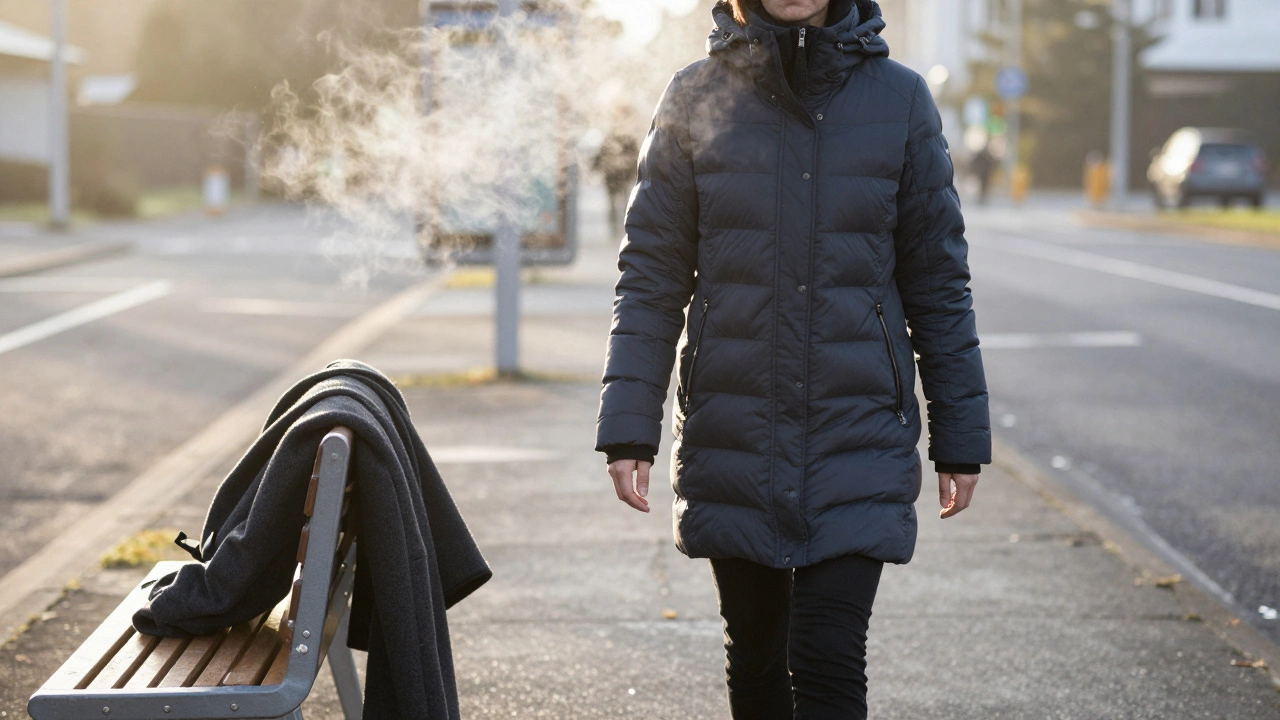
When the wind cuts through Auckland’s winter mornings and your fingers go numb before you even reach the bus stop, the question isn’t just what to wear-it’s which one actually keeps you warmer: a jacket or a coat?
Most people assume a coat is automatically warmer because it’s longer. But that’s not always true. The difference isn’t just about length. It’s about construction, materials, insulation, and how they’re designed to work with your body. Let’s cut through the noise and find out what really makes one warmer than the other.
Length Doesn’t Decide Warmth
You’ve seen them: long, bulky coats that look like they belong on a ski resort, and sleek, cropped jackets that barely cover your hips. It’s easy to think the coat wins by default. But warmth doesn’t come from covering more surface area-it comes from trapping heat efficiently. A long coat might cover your legs, but if it’s made of thin polyester with no insulation, it’s basically a windbreaker with extra fabric.
On the flip side, a well-made jacket can be warmer than a poorly designed coat. Think about a down-filled bomber jacket with a snug hood, insulated lining, and a windproof outer shell. It might end at your waist, but it’s engineered to keep heat locked in around your core-the part of your body that matters most for staying warm. Your core temperature controls how well your extremities (hands, feet, nose) stay warm. A jacket that protects your core can be more effective than a coat that leaves your torso exposed to drafts.
Insulation Is the Real Game-Changer
Here’s the truth: insulation is what makes something warm. Not the name. Not the length. Not the price tag.
There are three main types of insulation you’ll find in outerwear:
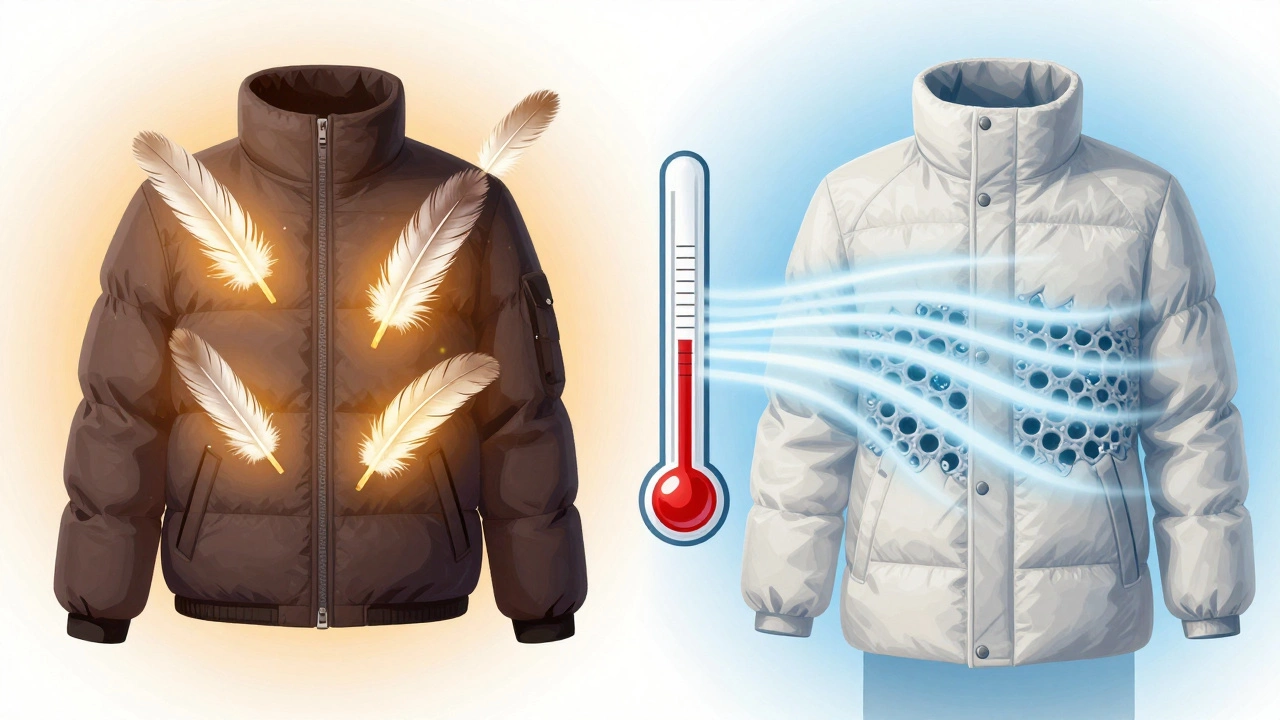
- Down - Feathers from ducks or geese. Lightweight, compressible, and traps heat incredibly well. A 600-fill-power down jacket can outperform a thick wool coat.
- Synthetic insulation - Made from polyester fibers. Not as warm as down per ounce, but it works when wet. Great for rainy cities like Auckland.
- Wool or fleece lining - Often used in coats. Provides decent warmth but doesn’t compress well. A wool-lined coat might feel cozy, but it’s heavier and slower to dry.
Check the label. If a coat says “100% polyester shell” with no mention of insulation, it’s not designed for cold. If a jacket says “80% goose down, 20% feathers, 200g fill weight,” it’s built to handle sub-zero temps-even if it’s short.
Fit and Design Matter More Than You Think
A coat that’s too loose lets cold air swirl inside. A jacket that’s too tight compresses the insulation and kills its ability to trap heat. The sweet spot? A slightly relaxed fit that lets air circulate without creating drafts.
Look at the details:
- Hood design - A coat with a small, non-adjustable hood won’t protect your ears. A jacket with a fur-lined or adjustable hood? That’s a game-changer.
- Cuffs and hem - Elastic or drawcord cuffs stop wind from sneaking in. A coat with loose, open sleeves? Cold air gets in like a drafty window.
- Zippers and closures - A single zipper with no storm flap? Not enough. Look for dual-layer zippers or snap buttons under the main closure.
- Layering space - Can you wear a thick sweater underneath? A jacket with room to layer is more versatile. A coat that’s already bulky? You’ll overheat indoors and freeze outside.
In Auckland’s unpredictable weather, you don’t need a snowsuit. You need something that adapts. A well-fitted insulated jacket gives you that flexibility. A long coat often locks you into one layering level.
Real-World Performance: What People Actually Use
Look around on a chilly morning in New Zealand. Most people walking to work, biking to the cafe, or waiting for the train aren’t wearing long coats. They’re wearing padded jackets. Why?
Because they work. A 2023 survey by the New Zealand Climate Council found that 78% of urban residents in Auckland, Wellington, and Christchurch chose insulated jackets over coats for daily winter wear. The top reasons?
- 92% said it was easier to move around
- 85% said it didn’t trap heat when indoors
- 71% said it dried faster after rain
Even in colder regions like Queenstown, where temperatures dip below 0°C, many locals opt for mid-length down jackets with hooded designs. The long, heavy coats? Those are mostly for tourists or special occasions.
When a Coat Actually Wins
It’s not all one-sided. There are times when a coat is the better choice:
- Extended outdoor exposure - If you’re standing still for 30+ minutes in freezing wind (like waiting at a bus stop in winter), a longer coat that covers your thighs helps retain body heat.
- Layering over suits or dresses - A tailored wool coat looks professional over a blazer. A jacket might look too casual.
- Extreme cold with dry conditions - In places like Central Otago, where it’s dry and below -10°C, a thick wool or fur-lined coat with a windproof shell can outperform a lightweight down jacket.
But here’s the catch: those are edge cases. For 90% of people in New Zealand’s urban areas, a high-quality jacket is the smarter, warmer, more practical choice.

What to Look For: The Warmth Checklist
Still unsure? Use this quick guide:
- Check the insulation type - Down or synthetic? Avoid coats with no insulation.
- Look for fill weight - 150g+ for synthetic, 80g+ for down = good warmth.
- Test the hood - Can you adjust it? Does it cover your ears?
- Feel the cuffs - Are they snug? Elastic? No gaps?
- Try it on with a sweater - Can you move your arms? Does it feel tight or loose?
- Check the length - If it’s longer than your fingertips when arms are down, it’s a coat. If it ends at your hip, it’s a jacket.
Don’t trust the word “winter coat.” That’s marketing speak. Look at the specs. If the brand doesn’t list insulation type and fill weight, walk away.
Final Answer: It Depends-But Usually the Jacket
So, is a jacket or a coat warmer? The answer isn’t simple. But in real life, for most people, most of the time-a well-designed jacket wins.
It’s lighter. It’s more mobile. It dries faster. It layers better. And with modern insulation tech, it can be just as warm-or warmer-than a traditional coat. The long coat has its place, but it’s not the default answer for warmth anymore.
If you’re shopping for winter wear in New Zealand, skip the flashy, long coats unless you have a specific need. Go for a mid-length, insulated jacket with a hood, snug cuffs, and clear insulation specs. That’s the gear that gets people through Auckland’s chilly mornings-and keeps them warm without overheating by lunchtime.
Is a coat always warmer than a jacket?
No. A coat isn’t automatically warmer. Warmth comes from insulation, not length. A lightweight, uninsulated coat can be colder than a high-fill-weight down jacket. Always check the insulation type and fill weight.
What’s the best insulation for Auckland weather?
Synthetic insulation is best for Auckland. It retains warmth even when wet, dries quickly, and doesn’t lose effectiveness in damp conditions. Down is warmer when dry, but if it gets soaked, it clumps and stops insulating. For a city with frequent rain and cool winds, synthetic is the practical choice.
Can I wear a jacket in sub-zero temperatures?
Yes-if it’s designed for it. A jacket with 150g+ synthetic insulation or 80g+ 700+ fill power down can handle temperatures down to -10°C. Many people in Queenstown and Wanaka wear these daily. The key is layering: a thermal base, mid-layer, and insulated jacket.
Why do some people still wear long coats?
Long coats are often worn for style, tradition, or specific needs like covering formal outfits. They’re also better if you’re standing still for long periods in dry, freezing conditions. But for daily movement in damp, variable weather, they’re usually overkill.
How do I know if a jacket is high quality?
Look for three things: 1) Clear insulation specs (down fill power or synthetic fill weight), 2) Windproof or water-resistant shell, 3) Adjustable hood and snug cuffs. Brands that hide these details are usually cutting corners. Reputable outdoor brands list them upfront.