Suit Quality Estimator
Don't just look at the price tag. Evaluate your suit (or one you're considering) based on the key markers of luxury and craftsmanship discussed in this article.
Assess Your Suit
Fill out the form to see your estimated suit quality score and detailed feedback.
You can spot a cheap suit from across the room. It’s not always about the price tag on the sleeve; it’s about how the fabric moves, how the collar sits against your neck, and whether the buttons look like they were picked up off a factory floor or chosen by someone who cares. You might think spending thousands guarantees quality, but I’ve seen $200 suits that look sharper than $2,000 disasters because the wearer understood the basics of construction. The difference between "cheap" and "luxury" often comes down to three things: natural materials, precise tailoring, and subtle finishing touches.
Let’s break down exactly what signals wealth and taste in suiting. Whether you’re buying your first professional jacket or upgrading your wardrobe for client meetings, knowing these markers helps you spend smarter. You don’t need a Savile Row budget to look like you have one. You just need to know where to look.
Fabric Is the Foundation of Luxury
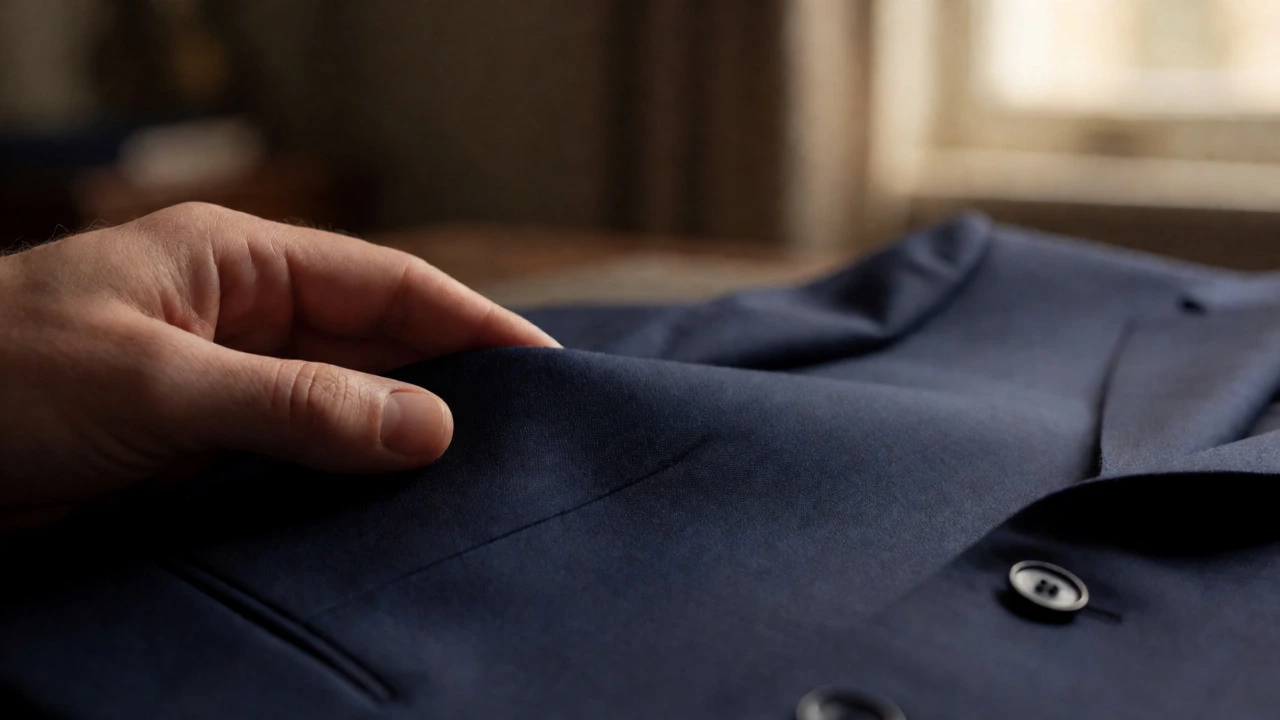
If there is one rule that never breaks, it’s this: synthetic fabrics scream cheapness. A shiny polyester blend catches the light in a way that looks plastic under office fluorescents. Real luxury breathes. It has weight and texture. When you touch a high-end suit, you should feel a slight resistance, a density that tells you it will drape correctly over your body rather than clinging to every bump.
Wool is the gold standard here. Specifically, look for Super numbers (like Super 120s or 150s), which indicate the fineness of the wool fibers. Higher numbers mean softer, finer threads. However, don’t chase the highest number blindly. Super 180s are incredibly soft but wrinkle easily and wear out faster. For daily wear, Super 110s to 130s offer the best balance of durability and elegance. If you live somewhere hot like Auckland, a Linen blend or tropical wool keeps you cool while maintaining a crisp appearance. Silk blends add a subtle sheen that looks expensive in evening settings but can look gaudy if the weave is poor.
Check the label. If it says "Polyester," "Rayon," or "Viscose" as the primary fiber, put it back. A small percentage (under 5%) for stretch is acceptable, but the core must be natural. Natural fibers age gracefully; synthetics pill and shine.
The Art of Tailoring and Fit
You could buy a $5,000 Brioni suit, but if it doesn’t fit your shoulders, it looks like a costume. Conversely, a $400 suit tailored perfectly looks bespoke. Fit is the single biggest factor in perceived value. An expensive suit fits your body, not the other way around.
Start with the shoulders. This is the hardest part to alter. The shoulder seam should end exactly where your natural shoulder bone ends. If it extends past your arm, you look sloppy. If it cuts into your arm, you look cramped. There should be no divots or wrinkles radiating from the sleeve head. If the shoulder pads are too thick, the suit looks boxy and dated. Modern luxury favors a natural, structured shoulder that follows your anatomy.
Next, look at the chest. The lapels should lie flat against your shirt. If they flare out away from your body, creating a gap, the jacket is too tight or poorly constructed. This is called "lapel roll." A good jacket has a gentle curve where the lapel rolls over, creating depth. Cheap jackets glue the lapel flat, making it look stiff and two-dimensional.
Pants are often overlooked. They shouldn’t pool at the ankles. A clean break-where the trouser hem lightly touches the top of your shoe-is the modern standard. Too much fabric bunching around the ankle adds visual weight and makes you look shorter. If you’re wearing dress shoes, ensure the trousers taper slightly toward the hem. This silhouette elongates the leg and looks intentional, not accidental.

Construction Methods That Matter
Turn the jacket inside out. What do you see? In a cheap suit, you’ll likely find fused construction. This means the canvas layer was glued to the outer fabric using heat and resin. Over time, this glue degrades, causing bubbles to form in the chest area. It also makes the jacket feel like cardboard.
A truly expensive suit uses canvas construction. There are two types: half-canvas and full-canvas. Full-canvas suits have a floating layer of horsehair canvas sewn between the lining and the outer fabric. This allows the suit to mold to your body over time, improving the fit with wear. It also lets the fabric breathe better. Half-canvas is a compromise, offering structure in the chest but fusing elsewhere. While not as premium as full-canvas, it’s far superior to fully fused options. You can test this by pinching the lapel. If you feel a distinct layer separate from the outer fabric, it’s canvas. If it feels like one solid piece, it’s fused.
| Feature | Fused | Half-Canvas | Full-Canvas |
|---|---|---|---|
| Durability | Low (Glue degrades) | Medium | High (Lasts decades) |
| Drape | Stiff/Cardboard-like | Good in chest | Natural/Molds to body |
| Breathability | Poor | Moderate | Excellent |
| Price Range | $200 - $600 | $600 - $1,200 | $1,500+ |
Details and Finishing Touches
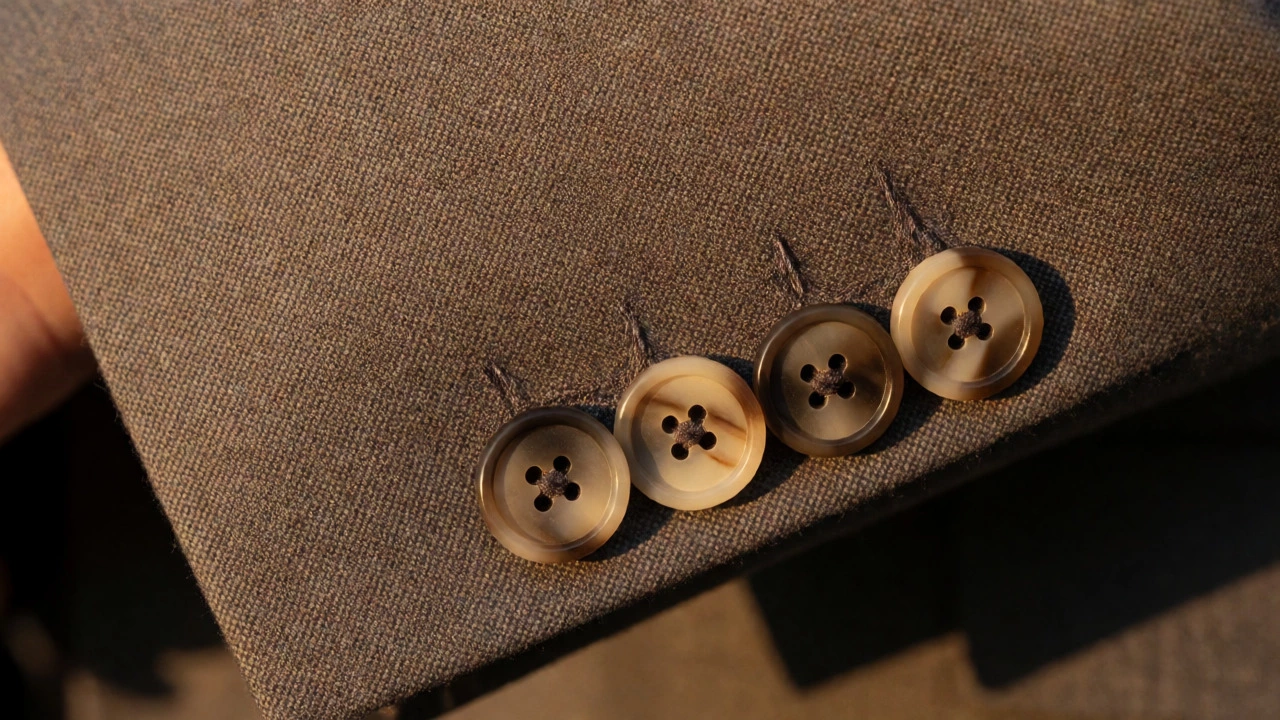
It’s the small stuff that separates the boys from the men. Look closely at the buttons. Cheap suits use plastic buttons that are molded directly onto the fabric. They feel light and look uniform. High-quality suits use natural materials like horn, mother-of-pearl, or corozo nut. These buttons have unique grain patterns and feel heavier. Crucially, check how they are attached. Are they stitched through the buttonhole? Or are they held by a shank? More importantly, look for the "surgeon’s cuff." Can you unbutton the sleeve? On a real bespoke or high-end ready-to-wear suit, the sleeve buttons are functional. This allows you to roll up your sleeves without damaging the jacket. It’s a signal of craftsmanship that most people miss, but those who know, know.
Check the stitching. Hand-stitching creates a slightly irregular line that looks organic. Machine stitching is perfectly straight. While machine stitching is fine for durability, hand-finishing on the lapel edge or buttonholes indicates higher labor costs and attention to detail. Look for working buttonholes on the cuffs and clean, dense stitching on the seams. Loose threads hanging inside the lining are a red flag of rushed production.
Another detail is the lining. A silk or Bemberg cupro lining slides easily over your shirt and helps the jacket slide on and off smoothly. Polyester linings trap heat and cling to static. If the lining pulls tightly when you move your arms, the cut is too narrow, regardless of the fabric cost.
Color and Pattern Choices
Even a perfect suit can look cheap if the color is wrong. Neon blues, stark whites, and overly bright patterns tend to look inexpensive because they lack subtlety. Deep, rich colors absorb light and convey seriousness. Navy, charcoal grey, and mid-grey are timeless. Black is formal but can look severe during the day. If you want pattern, choose subtle textures like herringbone, birdseye, or faint pinstripes. Large checks or loud plaids can look cartoonish if not executed with precision.
Consider the context. In New Zealand, we deal with varied light conditions. Darker navies look fantastic indoors but can appear almost black outdoors in low light. Charcoal is safer for versatility. Avoid suits that are too shiny. Matte finishes generally photograph better and look more sophisticated in person.
Care and Maintenance
An expensive suit stays expensive only if you take care of it. Dry cleaning is harsh on fibers. You don’t need to dry clean after every wear. Spot clean minor stains and air out the suit after use. Use a wooden hanger with wide shoulders to maintain the shape. Wire hangers distort the shoulder line. Brush your suit with a clothes brush after each wear to remove dust and skin particles. This simple step extends the life of the fabric significantly.
Rotation is key. Don’t wear the same suit two days in a row. Wool needs 24-48 hours to recover its shape and release moisture absorbed from your body. Having at least two suits in rotation doubles their lifespan. If you travel, use a garment bag, not a suitcase fold, to minimize creases. Steamers are better than irons for refreshing a suit before an event.
Is a higher Super number always better?
No. While Super 150s+ are softer, they are delicate and prone to wrinkling and tearing. For everyday business wear, Super 110s to 130s offer the best balance of durability, comfort, and appearance. Save higher numbers for special occasions.
Can I tell if a suit is canvas or fused just by looking?
Not always visually, but you can feel it. Pinch the bottom of the lapel and rub the layers together. If you feel a distinct inner layer sliding against the outer fabric, it's canvas. If it feels like one solid piece, it's fused. Also, fused suits often have a stiffer, shinier appearance on the lapels.
Do expensive suits require dry cleaning?
Yes, but infrequently. Dry cleaning solvents can degrade wool fibers over time. Aim to dry clean only once or twice a year unless heavily soiled. Regular brushing and airing out are more important for maintenance.
Why do my lapels flare out?
This usually means the jacket is too tight across the chest or shoulders, or the collar is too small. It can also happen if the interlining is poor quality. A tailor can sometimes fix this by letting out the chest, but if the shoulder fit is correct, it might be a structural issue.
Are plastic buttons ever acceptable?
For very casual or entry-level suits, yes. But for anything you consider 'business' or 'formal,' natural buttons (horn, corozo, mother-of-pearl) are expected. Plastic buttons reflect light differently and feel lighter, which subconsciously signals lower quality.