Interactive Timeline: The Evolution of School Uniforms
Look around a typical classroom. You see rows of students wearing identical navy blazers, crisp white shirts, or matching polo tops. It feels like a permanent fixture of childhood, doesn't it? But stop for a second and ask yourself: who actually decided we should all look the same? Was it a government mandate? A fashion trend from the 1950s? Or did someone specific sit down with a sketchpad and say, "This is how children must dress"?
The answer isn’t a single name on a patent certificate. There was no "Edison" of the school uniform. Instead, the story of school uniforms is standardized clothing worn by students to promote equality, discipline, and institutional identity is a messy, fascinating evolution involving Victorian philanthropists, ancient religious orders, and military logic. If you want to know who created them, you have to look at who needed them first.
The First "Uniforms": Religious Orders and Ancient Greece
Before schools had classrooms, they had communities. The earliest forms of standardized dress weren't about education; they were about belonging. In ancient Greece, philosophers like Socrates didn't wear suits, but their disciples often adopted simple, modest tunics to signal their dedication to learning over wealth. This wasn't a strict rule, but it was a visual cue that said, "I am here for ideas, not status."
However, the first true enforcers of uniformity were religious orders. During the Middle Ages, monks and nuns wore habits-specific robes that stripped away individual identity. Why? To emphasize humility and community. When the Catholic Church began running schools in Europe during the 16th century, they brought this logic with them. Students weren't just learners; they were part of a spiritual brotherhood or sisterhood. Wearing the same tunic or gown meant you were equal before God and the teacher.
This sets the stage for the modern uniform. It’s not just fabric; it’s a tool for social engineering. The goal was always the same: reduce distraction and increase cohesion.
Thomas Barnardo and the Birth of the Modern School Uniform
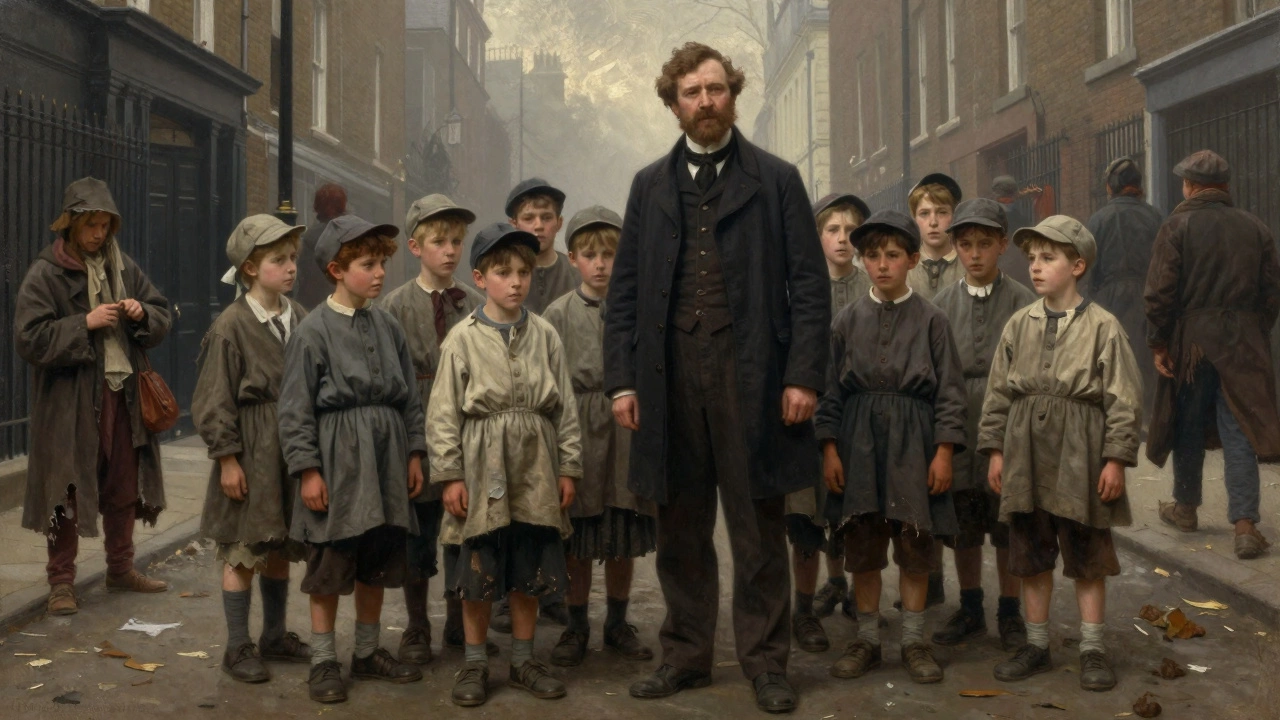
If you’re looking for a specific person who pushed the concept into the mainstream for poor children, the name you need to know is Thomas Barnardo, a Victorian philanthropist and founder of Barnardo's homes for orphaned and abandoned children. In the late 19th century, Barnardo ran homes for destitute children in London. He faced a massive problem: poverty was visible. Children arrived in rags, torn clothes, and mismatched outfits that screamed "poor" to anyone who looked at them.
Barnardo realized that if these kids were going to get jobs or integrate into society, they couldn't look like outcasts. So, he introduced a standard outfit for his residents. It was practical, durable, and most importantly, it hid their economic status. By dressing them identically, he removed the stigma of poverty. This was a revolutionary idea. It wasn't about looking sharp; it was about dignity and opportunity.
Barnardo’s approach influenced other charitable institutions across Britain. Soon, other schools for working-class children adopted similar policies. The uniform became a shield against bullying based on wealth. It was a pragmatic solution to a harsh social reality.
Why Did Public Schools Adopt Them? Class and Control
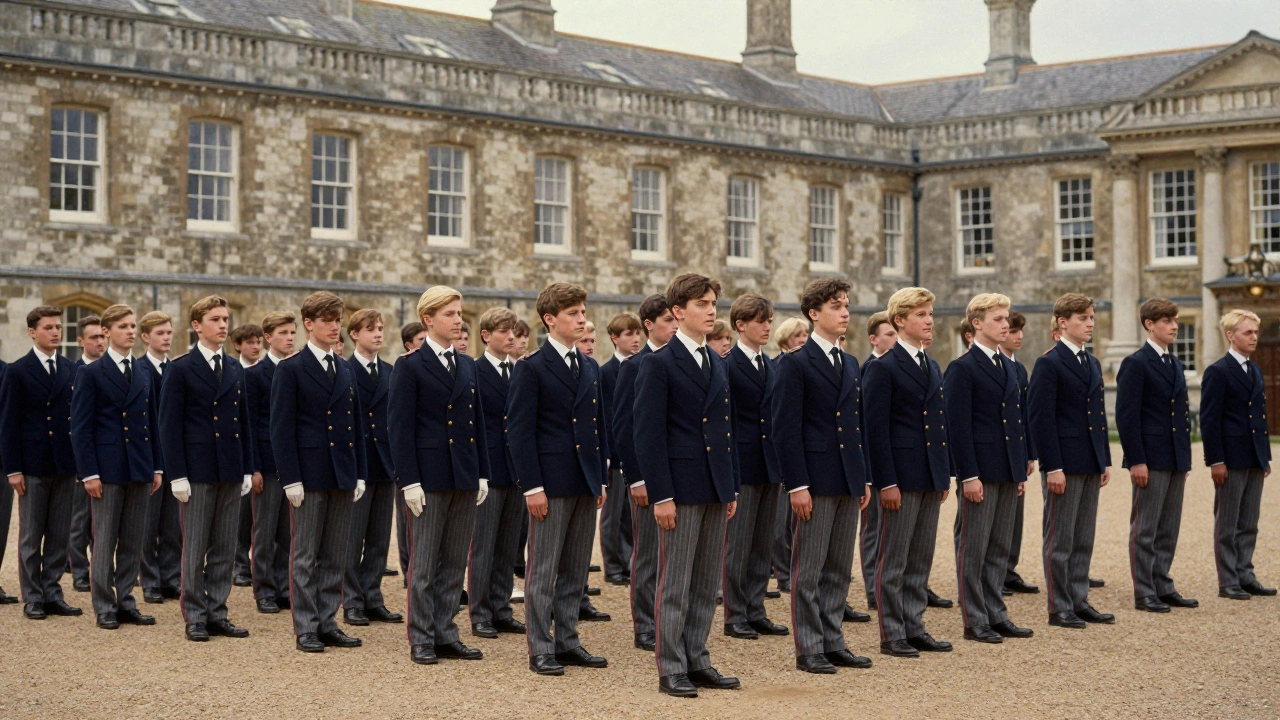
While charities used uniforms for dignity, elite British public schools (which are actually private) used them for control. In the 18th and 19th centuries, schools like Eton and Harrow started enforcing strict dress codes. These weren't just any clothes; they were miniature versions of military or aristocratic attire. Blazers, ties, and tailored trousers signaled discipline and hierarchy.
The logic was simple: if you can’t even manage your tie correctly, how will you manage your life? The uniform enforced order. It made students feel part of an exclusive club while simultaneously suppressing individual rebellion. This model spread globally through the British Empire. As British influence grew, so did the blazer-and-tie aesthetic in countries like Australia, India, and South Africa.
In the United States, the story was different. American culture values individualism. For decades, public schools resisted uniforms. However, by the mid-20th century, as gang violence and peer pressure rose in urban areas, some schools began experimenting with mandatory dress codes. They weren't copying the British blazer look exactly, but the principle was the same: reduce visible differences to reduce conflict.
| Era | Key Driver | Typical Attire | Primary Goal | |
|---|---|---|---|---|
| Middle Ages | Religious Orders | Habits, Robes | Humility, Community | Equalize spiritual status |
| 19th Century (UK) | Charity (Barnardo's) | Simple Tunics, Caps | Dignity, Poverty Masking | Hide economic status |
| Late 19th/Early 20th C. | Elite Private Schools | Blazers, Ties, Blazers | Discipline, Hierarchy | Enforce order and tradition |
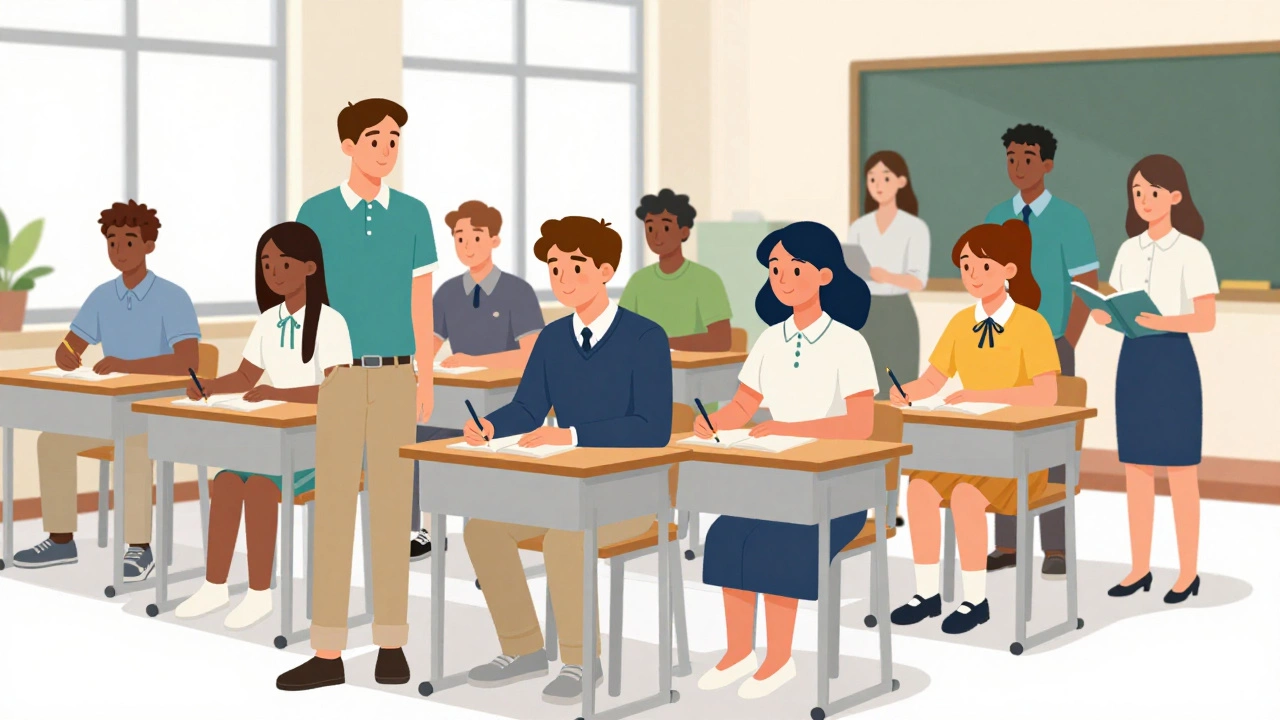
| Late 20th Century (US/Global) | Public Safety & Equity | Polo Shirts, Khakis, Skirts | Reduce Bullying, Focus | Minimize distractions and gang signs |
The Role of Military Influence
You can’t talk about uniforms without talking about the military. The structure of the modern school uniform-the rank-like buttons, the structured shoulders, the precise folding of caps-is heavily borrowed from military dress codes. In the 19th century, many educators believed that character was built through regimentation. Schools were seen as training grounds for future soldiers and citizens.
This influence is still visible today. Think about the way students are taught to wear their uniforms: shoes polished, collars straight, bags tucked in. These are military-style drills repurposed for the classroom. The idea is that external order leads to internal discipline. While few schools today prepare kids for war, the psychological link between neat appearance and serious intent remains strong.
How Uniforms Spread Globally
As colonial powers expanded, they exported their educational models along with their languages and laws. Japan, for example, adopted Western-style uniforms in the Meiji era (late 19th century) as part of its modernization drive. Japanese school uniforms, known as seifuku, became iconic, blending Western tailoring with local cultural expectations of group harmony.
In Latin America, Catholic missions played a huge role in spreading uniform policies. Today, countries like Brazil and Mexico have high rates of uniform usage, largely due to this historical religious and colonial infrastructure. Even in secular societies, the habit stuck because it worked: it simplified morning routines for parents and reduced decision fatigue for students.
Who Really "Created" Them? A Summary of Influencers
So, who gets the credit? It’s a shared legacy:
- Ancient Philosophers: Set the precedent for modesty in learning.
- Medieval Monks: Enforced uniformity for spiritual equality.
- Thomas Barnardo: Used uniforms to protect poor children from stigma.
- British Elite Schools: Turned uniforms into symbols of discipline and class.
- Modern Educators: Adapted them for safety and focus in diverse classrooms.
No single person holds the patent. Instead, the school uniform evolved as a response to social problems. Whether it was hiding poverty, enforcing discipline, or reducing bullying, the uniform was always a tool. The people who "created" it were those who saw a problem in diversity of dress and chose standardization as the solution.
Common Misconceptions About Uniform Origins
Many people believe school uniforms were invented to suppress creativity. While critics argue this today, the original intent was rarely about stifling art. It was about survival and integration. Another myth is that uniforms are a purely modern invention. In reality, standardized dress has been part of organized groups for thousands of years. The only new thing is applying it to compulsory education.
Some also think uniforms are designed to make students look professional for future jobs. That’s a secondary benefit. The primary driver has always been social management: making large groups of young people function together without constant friction over who has the latest sneakers or brand-name jacket.
Did Thomas Barnardo invent the school uniform?
No, he didn't invent the concept, but he popularized it for charitable institutions. Before him, religious orders and elite private schools used standardized dress. Barnardo’s innovation was using uniforms to mask poverty and give dignity to orphaned children, which influenced later public school policies.
Why do schools use uniforms instead of letting kids wear what they want?
Schools use uniforms to reduce socioeconomic disparities, minimize distractions, and lower bullying related to clothing brands. It creates a level playing field where students are judged by their actions, not their wardrobe. It also simplifies morning routines for families.
Are school uniforms older than public schools?
Yes. Standardized dress dates back to medieval religious orders and ancient philosophical groups, long before the concept of universal public education existed. The application to mass schooling came much later, primarily in the 19th and 20th centuries.
Did the military influence school uniforms?
Absolutely. Many elements of school uniforms, such as blazers with brass buttons, structured collars, and strict grooming standards, are directly borrowed from military dress codes. This reflects the 19th-century belief that discipline in appearance leads to discipline in behavior.
Which country started the trend of school uniforms?
There is no single starting country, but the UK played a major role in formalizing uniforms in both charity homes (via Thomas Barnardo) and elite private schools (like Eton). This model then spread globally through colonization and cultural exchange, influencing systems in Asia, Latin America, and beyond.