Japanese Home Footwear Etiquette Simulator
Select a zone below to learn the specific footwear rules and cultural reasons behind them.
Outdoor Shoes
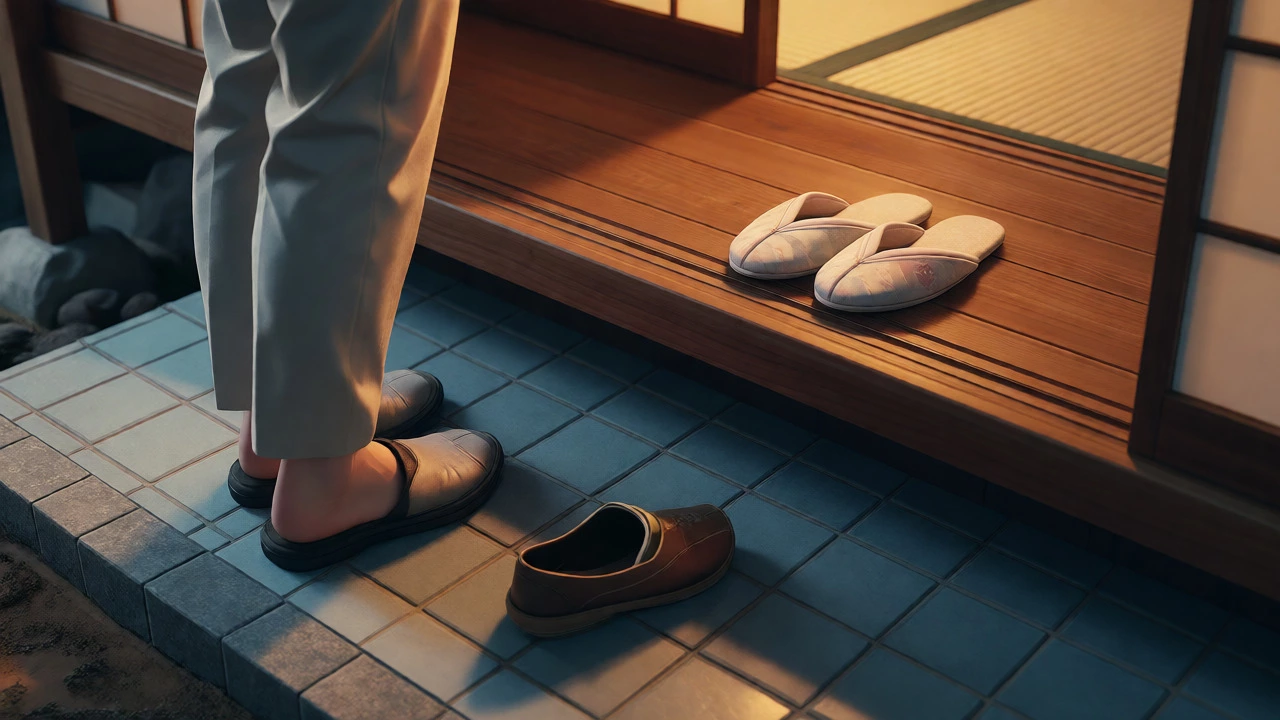
Why? The genkan is considered "outside" (soto). Stepping up signifies entering a clean, protected space (uchi).
Quick Reference Table
| Zone | Footwear | Material |
|---|---|---|
| Genkan | Outdoor Shoes | Leather/Sneakers |
| Living/Tatami | Indoor Slippers | Fabric/Cotton/Wool |
| Bathroom | Plastic Slippers | Rubber/Plastic |
| Kitchen | No Slippers/Barefoot | N/A |
You walk into a friend’s home in Tokyo. You kick off your street shoes at the entrance, step onto the smooth wooden floor, and expect to feel the cool surface under your socks. But wait-there’s a pair of fluffy, colorful slippers waiting for you right where you stepped out of your sneakers. This isn’t just a comfort thing; it’s a strict cultural rule that confuses many visitors. Why do Japanese people wear slippers inside? It’s not because their floors are cold or dirty in the way we think of "dirty." It’s about a deep-seated concept of cleanliness, respect, and a specific architectural feature called the genkan.
If you’ve ever felt awkward standing barefoot on someone’s tatami mat while everyone else is wearing cute cartoon slippers, you’re not alone. The confusion usually stems from a misunderstanding of what "clean" means in Japan versus the West. In many Western countries, taking shoes off is optional or reserved for muddy days. In Japan, removing outdoor footwear is mandatory, non-negotiable, and tied to the very structure of the home. Understanding this habit requires looking at history, hygiene practices, and the unspoken social codes that govern daily life.
The Genkan: Where the Outside World Ends
To understand the slippers, you first have to understand the door. Every traditional Japanese home, apartment, and even many offices has an entryway called the genkan. This is a lowered area, usually tiled or concrete, separated from the main living space by a small step up. Think of it as a decompression chamber for your feet. The genkan is considered "outside" (soto), while the raised floor above it is "inside" (uchi).
This architectural separation creates a physical boundary between public dirt and private purity. When you step down into the genkan, you leave the grime of the street behind. Stepping up onto the living room floor signifies entering a clean, protected space. Wearing outdoor shoes on that upper level would be like tracking mud into a sterile operating room-it’s seen as disrespectful to the host and contaminating to the home environment. So, the moment you cross that threshold, your shoes come off. But why put new ones on?
Hygiene and the Tatami Factor
The primary reason for indoor slippers is practical hygiene, specifically regarding flooring materials. Traditional Japanese homes often use tatami mats, which are woven straw coverings with a cloth border. Tatami is incredibly sensitive to moisture and abrasion. Sweat from bare feet can stain the mats, and the oils from skin can degrade the natural rush grass over time. Once a tatami mat gets stained or worn unevenly, it’s difficult to clean without professional help.
Slippers act as a barrier. They protect the expensive flooring from foot sweat and dirt that might remain on socks. But there’s another layer here: the concept of kegare, or spiritual impurity. Historically, feet were considered the lowest part of the body, both physically and spiritually. Bringing the "dirtiness" of the outside world directly onto the sacred family space was undesirable. Slippers serve as a ritualistic buffer, ensuring that only the cleanest possible surface touches the interior floors.
The Bathroom Slipper Switch
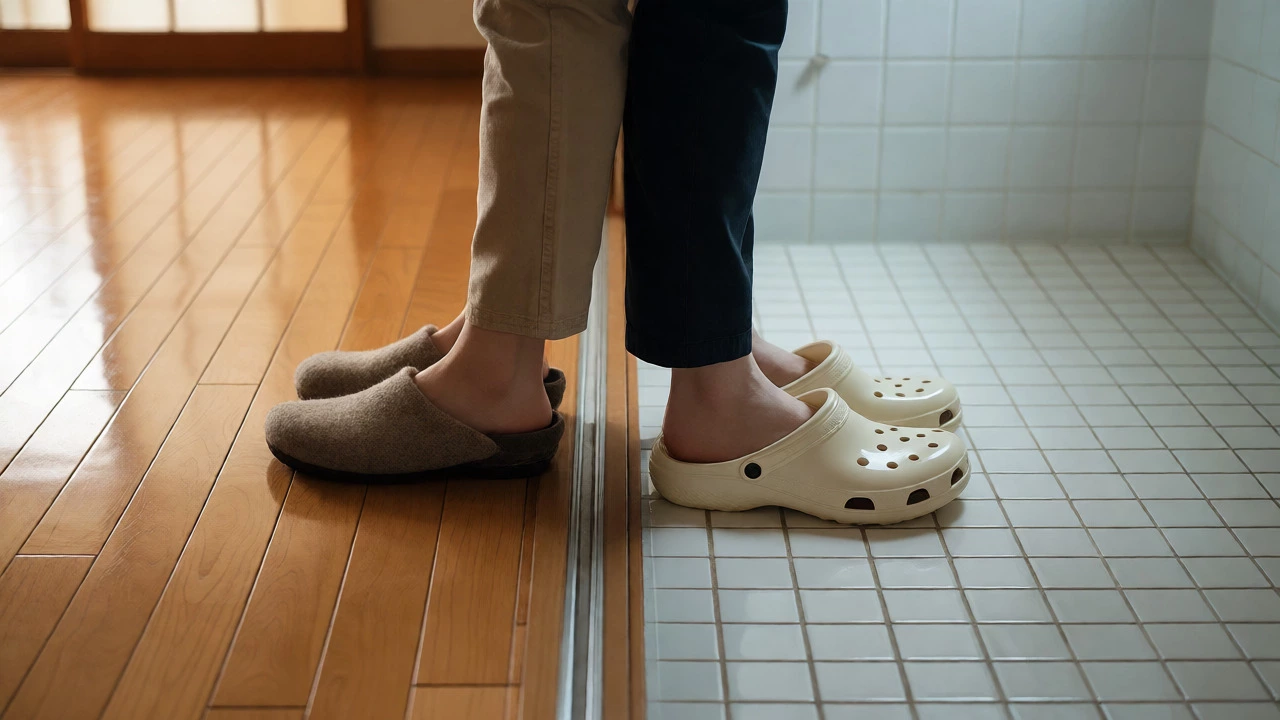
Here is where things get tricky for foreigners. If you think one pair of slippers works for the whole house, you’re going to make a mistake. In Japan, different rooms have different rules, and nowhere is this more obvious than the bathroom. You will almost always find a separate pair of plastic or rubber slippers designated strictly for the toilet and bath areas.
Why? Because bathrooms are viewed as wet, humid, and potentially less hygienic spaces compared to the dry living room. You don’t want to track water or bathroom germs back into the bedroom or kitchen. The rule is simple but easy to forget: when you enter the bathroom, swap your living room slippers for the bathroom slippers. When you leave, swap them back. Forgetting to do this is a common faux pas that can cause immediate embarrassment. Imagine walking back into the living room wearing the plastic bathroom clogs while everyone else is in soft fabric mules. It signals that you didn’t quite grasp the zoning of the home.
| Zone | Footwear Required | Material Type | Cultural Reason |
|---|---|---|---|
| Genkan (Entry) | Outdoor Shoes | Leather/Sneakers | Contact with street dirt |
| Living Room/Tatami | Indoor Slippers | Fabric/Cotton/Wool | Protecting mats from sweat/oils |
| Bathroom/Toilet | Plastic Slippers | Rubber/Plastic | Water resistance/hygiene isolation |
| Kitchen (sometimes) | No Slippers/Barefoot | N/A | Safety against spills/grease |
Tatami Exceptions: When Slippers Are Forbidden
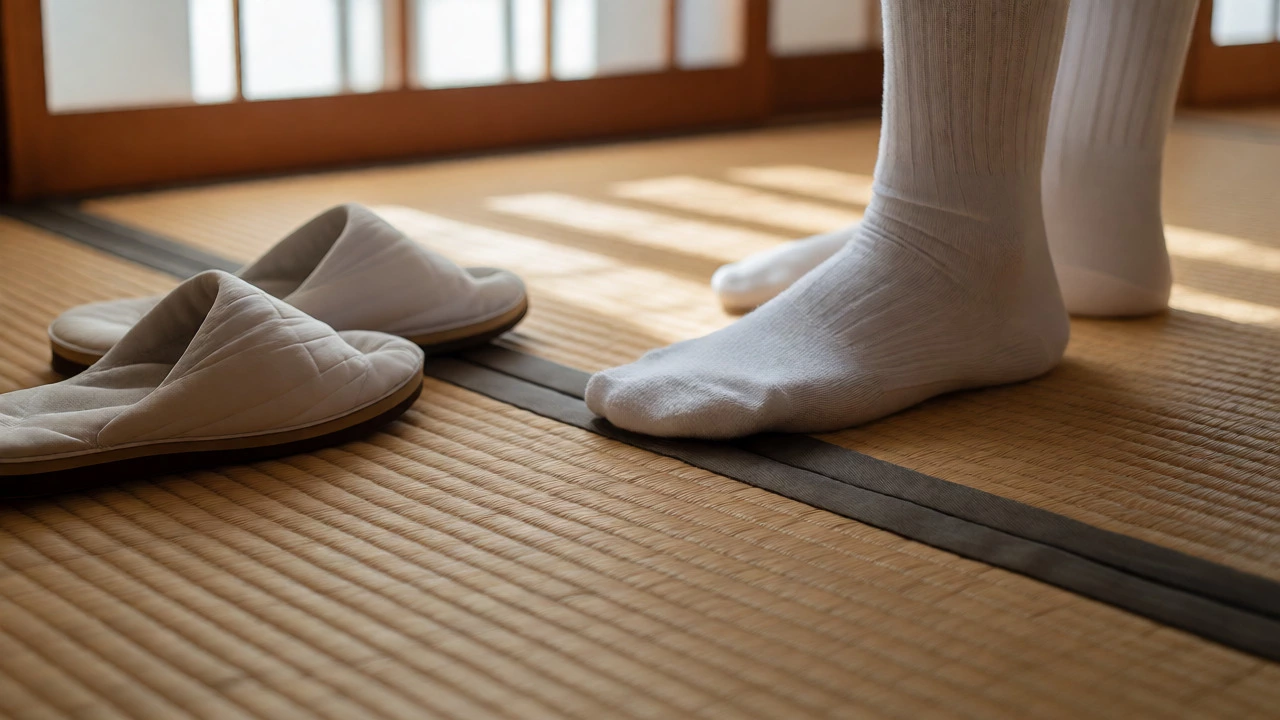
Wait, didn’t we just say you need slippers to protect tatami? Yes, but there’s a major exception. If you are sitting on a tatami mat to eat at a low table, you typically take the slippers off. Walking on tatami with hard-soled slippers can damage the weave. However, walking across a tatami room to get to the other side? Keep the slippers on. Sitting down? Take them off.
This nuance highlights the flexibility within the rules. It’s not about rigid uniformity; it’s about context. If the floor is wood or vinyl, you keep slippers on whether you’re standing or sitting. If the floor is tatami, you remove them before sitting. This distinction shows how deeply integrated these habits are with the actual materials used in construction. It’s a tactile awareness of the environment that most visitors lack until they are corrected.
Gift-Giving and Personalization
Slippers in Japan aren’t just utilitarian; they’re personal. Many households provide guest slippers, but hosts often buy high-quality, personalized pairs for themselves. It’s common for families to have matching sets, or for individuals to have unique designs reflecting their personality. Some people even bring their own slippers to work or school if the institution doesn’t provide them, or if they prefer better arch support.
This personalization extends to gift-giving. Giving a nice pair of indoor slippers is a thoughtful present for housewarmings or New Year’s celebrations. It signifies comfort and care for the recipient’s daily life. Because people spend so much time indoors wearing them, quality matters. Cheap, slippery slippers are frowned upon because they pose a safety risk on polished floors. Good slippers have non-slip soles and breathable fabrics to prevent foot odor, which is a significant social concern in close-quarters living.
Workplace and School Etiquette
The slipper culture isn’t limited to homes. Most Japanese schools require students to change into uwagi (indoor shoes) upon entering the building. These are usually white canvas shoes with rubber soles. Offices often follow suit, though modern corporate environments vary. Some tech companies allow street shoes, but traditional firms still enforce the change.
In schools, the changing process is a daily ritual that teaches discipline and collective responsibility. Students store their outdoor shoes in lockers and put on their indoor shoes. This reinforces the boundary between the chaotic outside world and the structured learning environment. It also keeps the school floors cleaner, reducing maintenance costs. If you visit a Japanese school, you’ll see rows of neatly arranged outdoor shoes in the genkan-a visual testament to the orderliness valued in society.
Common Mistakes Visitors Make
If you’re visiting Japan, avoid these three pitfalls:
- Wearing outdoor shoes upstairs: Never step on the raised floor with street shoes unless explicitly told to do so.
- Forgetting the bathroom switch: Always check for a second pair of slippers near the toilet. If you don’t see any, ask. Don’t assume the living room slippers are okay for the bathroom.
- Stepping on the genkan in socks: While some hosts are lenient, stepping onto the tiled genkan in socks after taking off your shoes can look sloppy. Ideally, step directly from shoe to slipper, or stand on the tile in your socks only briefly while arranging your footwear.
Understanding why Japanese people wear slippers inside reveals more than just a habit-it exposes a culture that values cleanliness, respects boundaries, and pays attention to detail. It’s a small action, but it carries the weight of centuries of tradition and practical necessity. Next time you see those fluffy slippers waiting for you, appreciate the thought behind them. They’re not just for warmth; they’re a welcome into a carefully maintained sanctuary.
Is it rude to wear shoes inside a Japanese home?
Yes, it is generally considered very rude to wear outdoor shoes inside a Japanese home. The standard practice is to remove shoes at the genkan (entryway) and either go barefoot, wear socks, or put on provided indoor slippers. Wearing shoes on the living area floors is seen as bringing street dirt into the private, clean space of the home.
Do I need to take off my slippers when using the toilet?
Usually, yes. Many Japanese homes provide specific plastic slippers for the bathroom and toilet areas. You should swap your living room slippers for these bathroom-specific ones when entering the restroom and swap back when leaving. This prevents tracking water or bathroom germs into the main living areas.
Can I wear socks instead of slippers?
In many casual settings, wearing clean socks is acceptable, especially if the host says so. However, providing slippers is a sign of hospitality. On tatami mats, socks are preferred over slippers when sitting, but slippers are fine for walking across the room. Always observe what the host does or politely ask if you are unsure.
What happens if I forget to change my slippers?
If you accidentally wear bathroom slippers into the living room, it’s a minor social blunder. Hosts will likely smile and point out the mistake gently. It’s best to apologize briefly and correct it immediately. It’s a common mistake for tourists, so don’t worry too much, but be mindful next time.
Are Japanese slippers sold separately from outdoor shoes?
Yes, indoor slippers (called "uwabaki" or simply "slippers") are distinct products. They are designed for comfort, quietness, and protecting indoor floors. Outdoor shoes are built for durability and weather protection. Mixing them defeats the purpose of maintaining separate hygiene zones.