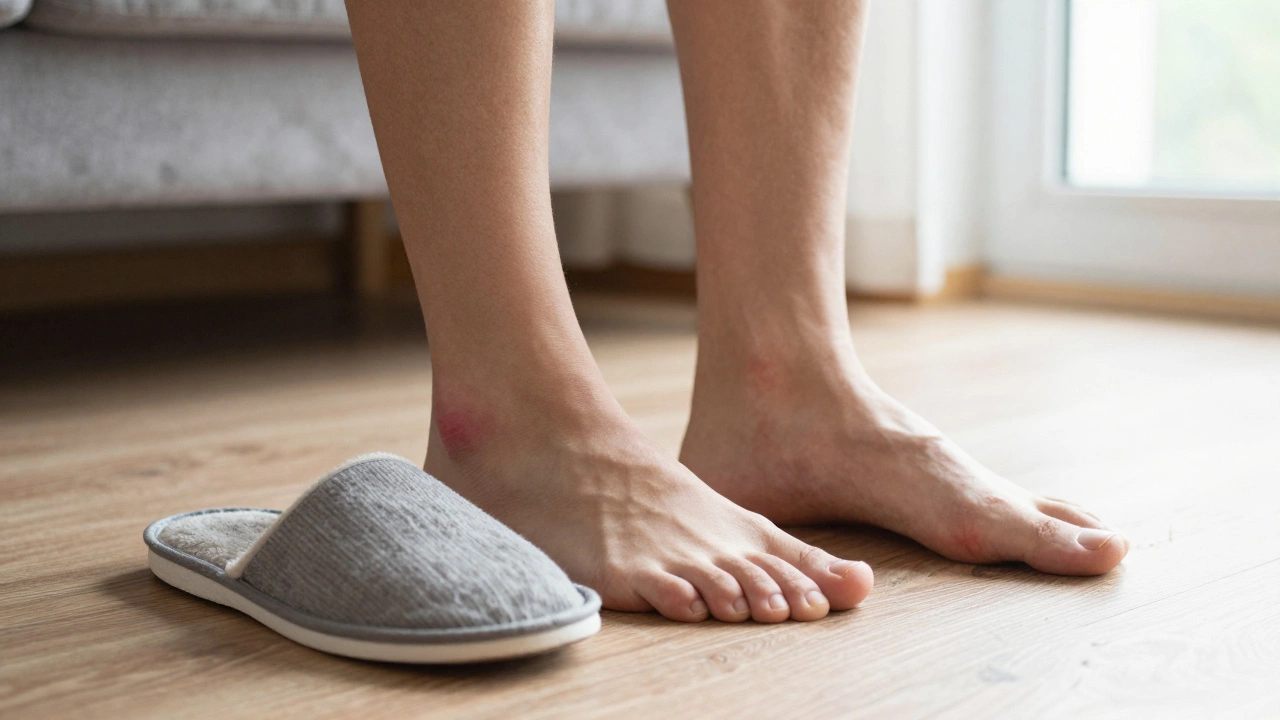
Ever put on a pair of slippers and felt like your feet are either trapped or about to fall out? You’re not alone. Slippers are meant to be easy, cozy, and effortless-but if they don’t fit right, they can turn from comfort into a nuisance. The big question isn’t just about style or looks-it’s about safety, foot health, and real daily comfort. So, should slippers be tight or loose? The answer isn’t as simple as you might think.
Too Tight? Here’s What Happens
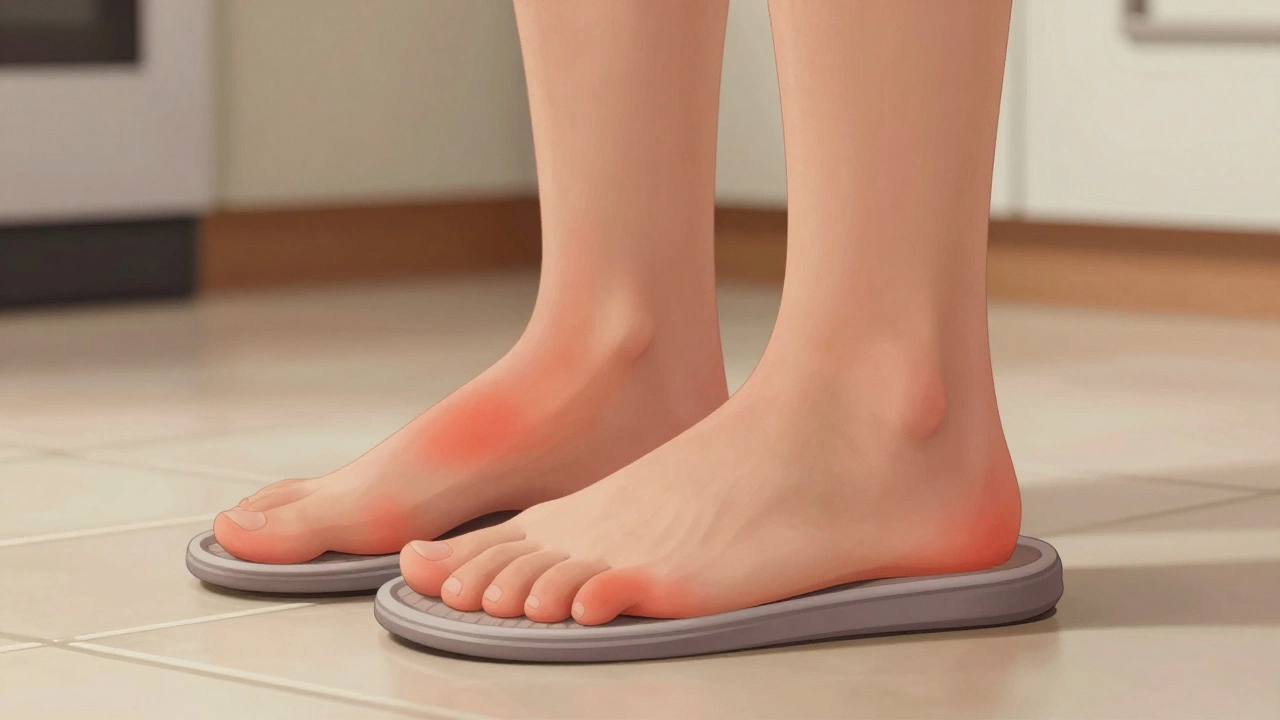
Slippers that are too tight don’t just pinch-they cause real problems. If the toe box is squeezed, your toes get crushed. That’s not just uncomfortable; it can lead to corns, calluses, or even nerve damage over time. People with wider feet, bunions, or swollen feet from standing all day are especially at risk. I’ve seen customers come in with red marks across the top of their feet from slippers that were too snug. They thought they were getting a snug fit for support, but all they got was pain.
Slippers aren’t meant to hold your foot in place like a shoe. They’re meant to cradle it. Tight slippers restrict blood flow, especially if you’re sitting still for long periods. That’s why older adults often complain of numb toes after wearing tight slippers all morning. And if your heel is pinched? You’ll start limping. Not because you’re injured-but because the slipper is rubbing your Achilles tendon raw.
Too Loose? The Hidden Danger
On the other end of the spectrum, slippers that are too loose are just as dangerous. Think about walking on a slippery kitchen floor. If your heel slips out with every step, you’re one misstep away from a fall. Loose slippers don’t just feel awkward-they’re a trip hazard. The strap or back of the slipper should hug your heel just enough to stay put without digging in.
And let’s talk about the sole. Loose slippers often mean the sole shifts under your foot. That’s why some people end up with sore arches or plantar fasciitis. Your foot isn’t getting support-it’s wobbling around inside the slipper like a sock full of sand. I’ve had people tell me their slippers feel great at first, but after a few hours, their feet ache. Nine times out of ten, it’s because the slipper was too big and their foot had to work overtime to keep it on.
The Goldilocks Zone: Just Right
The right fit isn’t about being tight or loose-it’s about being secure. Your foot should feel held, not crushed. When you stand up in your slippers, your toes should have about a thumb’s width of space between them and the front. That’s not a lot, but it’s enough to prevent pressure. Your heel should stay put without slipping. If you can easily slide your foot in and out without pulling the slipper off, it’s too loose.
Try this simple test: Walk around your house in them. If you feel your foot sliding forward with every step, they’re too big. If your toes feel squished or you can’t wiggle them, they’re too small. The sides should follow the curve of your foot without pinching. The top should feel soft, not tight. And the sole? It should flex naturally under your foot, not feel stiff or like you’re walking on a board.
Foot Shape Matters More Than Shoe Size
Here’s something most people don’t realize: your slipper size doesn’t always match your regular shoe size. Slippers are made differently. Many are designed with extra room for socks, or they’re cut wider to feel cozy. A size 8 in sneakers might be a size 7 in slippers-or even a 9, depending on the brand.
Women with narrow feet often struggle because most slippers are built for average to wide feet. Men with high arches might find slippers that feel fine at first but collapse under pressure. That’s why trying them on is non-negotiable. Don’t just grab your usual size. Walk around. Stand on a hard floor. Squish your toes. Check the heel.
And don’t trust online size charts blindly. A size 8 in UGGs isn’t the same as a size 8 in Crocs. Even within the same brand, styles vary. Look for brands that offer multiple width options-narrow, standard, wide. If you have bunions or swollen feet, look for slippers with stretchy uppers or adjustable straps.
Seasons Change, Your Feet Change
Feet swell during the day. They swell in heat. They swell after standing all day. They swell if you’ve been sitting too long or if you’re on certain medications. That’s why the same pair of slippers might feel perfect in the morning but tight by evening. In New Zealand, where winters get damp and feet swell from being indoors all day, this is common.
That’s why you should try slippers on later in the day, not first thing in the morning. If you’re buying online, look for return policies that let you test them for a week. And if you wear socks with your slippers, bring them with you when you try them on. A thin sock changes the fit. A thick wool sock changes it even more.
What to Look for in a Good Slipper
Not all slippers are made equal. Here’s what to check for:
- Flexible sole: Should bend easily when you walk. No rigid plastic or thick foam that doesn’t move with your foot.
- Cushioned insole: Should feel soft under your arch and heel, not like walking on cardboard.
- Secure heel counter: The back should hug your heel without being stiff. A slight grip is good. A clamp is bad.
- Adjustable fit: Straps, laces, or elastic panels let you fine-tune the fit. Even a simple buckle helps.
- Breathable material: Felt, cotton, or leather let your feet breathe. Synthetic materials trap sweat and make feet feel clammy.
Slippers with memory foam are popular, but they’re not for everyone. If your feet are sensitive, memory foam can feel too soft and unstable. Some people prefer firm, supportive foam instead. It’s personal.
When to Replace Your Slippers
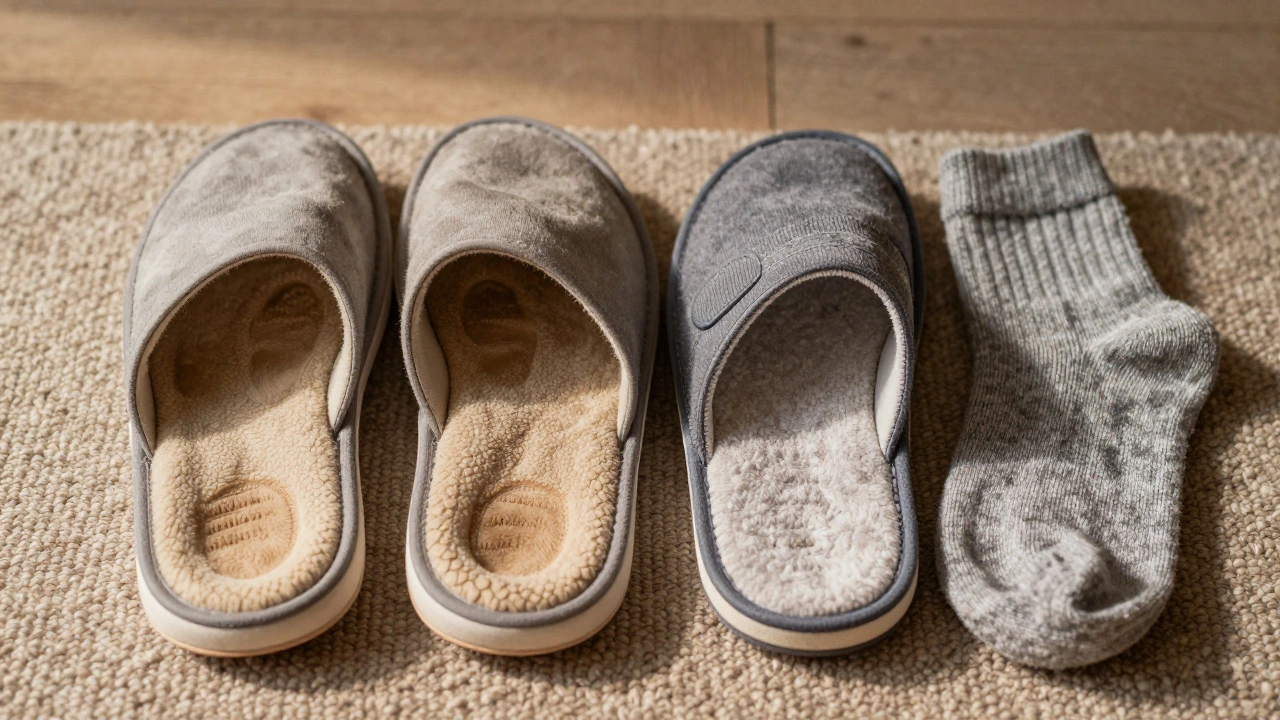
Slippers wear out faster than you think. The sole flattens. The insole compresses. The heel breaks down. If your slippers are more than a year old and you wear them daily, they’ve likely lost their shape. You might not notice until your feet start aching. That’s not your fault-it’s just physics.
Replace them if:
- The sole is worn thin or shiny on the bottom
- You can see your foot imprint in the insole
- The slipper no longer holds your heel
- You feel your foot sliding forward or sideways
Don’t wait for pain. If your slippers feel different than they did when you bought them, it’s time for a new pair.
Final Rule: Comfort Isn’t Optional
Slippers are the one piece of footwear you can afford to be picky about. You’re not running a marathon. You’re not hiking a trail. You’re just walking from the couch to the kitchen. That’s why comfort isn’t a luxury-it’s a necessity. A slipper that’s too tight hurts. One that’s too loose risks injury. The right fit? It feels like your feet are finally at home.
Don’t settle for ‘close enough.’ Your feet carry you every day. They deserve better than a guess.
Should slippers be tight or loose?
Slippers should neither be tight nor loose-they should be secure. Your toes should have about a thumb’s width of space at the front, your heel should stay in place without slipping, and the sides should gently hug your foot without pinching. A good fit feels supportive, not restrictive.
Why do my slippers hurt after a few hours?
Pain after wearing slippers usually means they’re too tight, too loose, or lack proper support. Tight slippers crush toes or pinch the top of the foot. Loose ones force your foot to grip the slipper to stay in place, straining muscles and tendons. Check the sole-flattened or worn-out soles don’t absorb shock anymore.
Can I wear slippers with socks?
Yes, but only if you try them on with the socks you plan to wear. Thick wool socks add bulk and can make slippers feel tight. Thin cotton socks might make them feel loose. Always test the fit with your typical sock choice to avoid sizing mistakes.
Do slippers stretch over time?
Some materials like leather or knit fabric can stretch slightly, but not enough to fix a bad fit. If a slipper feels tight when you first try it on, don’t count on it loosening up. If it’s too loose, it won’t tighten. Buy the right size from the start.
How do I know if my slippers are the right size?
Stand up and walk around in them. Your heel shouldn’t lift when you step. Your toes shouldn’t press against the front. You should be able to wiggle your toes freely. If your foot slides forward or feels cramped, go up or down a size. When in doubt, choose the size that feels slightly roomier-not snug.